



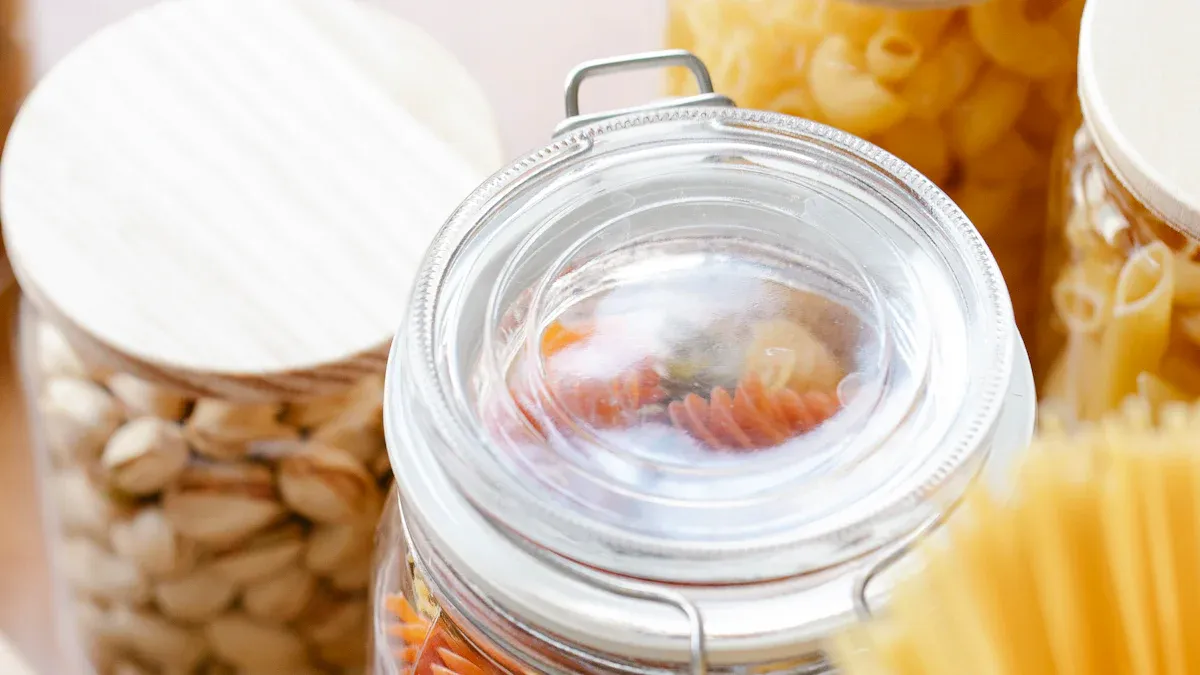
Yes, you can use a desiccant to keep your food fresh. A food storage desiccant helps you maintain freshness by absorbing moisture that causes spoilage. When you place Food Desiccant in packaging, it protects snacks, dairy, spices, and dried fruits from mold and clumping. You get longer shelf life, better taste, and safer meals. You should always choose desiccants made for food to avoid safety concerns.
Key Takeaways
Desiccants soak up water. This keeps food fresh. It stops food from going bad.
Always use food-grade desiccants for safety. Check for FDA-approved labels every time.
There are different desiccants like silica gel and clay. Each one helps with moisture in a different way.
Put desiccants in the right spot in packages. This helps control moisture and keeps food safe.
Check desiccants often and change them when needed. This keeps them working well and protects your food.
Desiccants help keep snacks, grains, and dried foods tasty. They also help keep the texture good.
Desiccants in emergency food supplies keep food safe. They make sure food is ready to eat.
Store desiccants in airtight containers. This helps them last longer and work better.
What Is A Food Storage Desiccant
Definition And Purpose
You may wonder what a food storage desiccant does. A desiccant is a special material that takes water out of the air. It helps keep things dry. When you use a food storage desiccant, your food packaging stays dry inside. This keeps snacks, grains, and spices crisp and fresh. You can trust a food storage desiccant to stop mold, clumping, and spoilage. Food safety experts say desiccants help food stay safe and tasty for longer.
Here’s why you need a food storage desiccant:
Purpose | Description |
|---|---|
Moisture Removal | Desiccants take away extra water, so mold and bacteria cannot grow. |
Equilibrium Relative Humidity | They keep humidity steady, so food stays crunchy and does not get soggy. |
Oxidation Prevention | Less water slows down oxidation, which keeps flavor and nutrients. |
Extending Shelf Life | Controlling moisture lets you store food longer without spoilage. |
Maintaining Product Integrity | Desiccants protect food from humidity changes during shipping and storage. |
How Desiccants Work
You might ask how a food storage desiccant keeps food dry. The answer is easy. Desiccants grab water from the air and hold it inside. This keeps the air around your food dry and safe. When you put a food storage desiccant in your package, it blocks water from reaching your food. The tiny holes and layers inside the desiccant help soak up water vapor fast. You get better moisture control, and your food stays fresh longer.
Here are some cool facts about how desiccants work:
Desiccants hold water molecules and keep your package dry.
They pull humidity from the air, which helps your food stay good.
The tiny holes around desiccant particles help absorb more water.
Placing desiccant layers in the right spot makes it harder for water vapor to reach your food.
Common Forms: Powders, Granules, Beads
You have many choices for a food storage desiccant. The most common types are powders, granules, and beads. Each kind has its own good and bad points.
Powders: You can measure and mix powders easily. They dissolve fast and work well for big amounts. Powders are good if you want quick results and flexibility. Some people think powders are bulky or hard to carry, and they may taste bad.
Granules: Granules soak up moisture slowly and steadily. You can use them in packets or loose in containers. They are easy to use and do not make a mess.
Beads: Beads, like silica gel, are popular because they are clean and simple. You can put a packet of beads in your food container and leave it there. Beads soak up lots of moisture and are safe for most foods.
Here are some common desiccant types you’ll find in food storage:
Molecular sieves: Work well at high heat and soak up water and other stuff.
Clay desiccants: Made from natural materials, good for basic moisture control.
Activated charcoal: Holds moisture and smells.
Calcium chloride: Soaks up water even when humidity is low.
Tip: Always make sure your food storage desiccant is safe for food. Look for FDA-approved choices to keep your meals safe and fresh.
Benefits Of Using Desiccant In Food Storage
Extending Shelf Life
You want your snacks to last longer. Desiccants help you do this. When you put a desiccant in food packaging, it keeps things dry. Less moisture means bacteria and mold cannot grow. Your food stays good for more time. Controlling moisture is important for keeping food fresh.
See how desiccants help food last longer:
Mechanism | Description |
|---|---|
Moisture Absorption | Desiccants soak up water and keep air dry. This stops food from spoiling. |
Preservation of Quality | Less water means better taste and texture. Food stays high quality. |
Microbial Growth Inhibition | Desiccants keep water low, so germs and mold cannot grow. |
Absorption is the main thing that helps. Desiccants grab water from the air and hold it. This keeps humidity low and stops water drops on food. Your food lasts longer without needing extra chemicals.
Preventing Mold And Bacteria
No one wants moldy bread or spoiled nuts. Desiccants help stop these problems. Mold and bacteria need water to grow. If you control moisture, you stop them. Desiccants lower water in your food package. This makes it hard for mold and bacteria to live.
Here’s a table showing how desiccants help stop mold and corrosion:
Benefit | Description |
|---|---|
Lowering available water activity | Desiccants cut down water that helps germs grow. |
Creating a dry microenvironment | They make the package too dry for mold and bacteria. |
Reducing risk of microbial proliferation | This is important for foods with no preservatives. |
You may wonder how this works for different foods. Silica gel desiccants soak up water from the air. They help stop mold, bacteria, and other germs. By keeping humidity low, you protect your food and keep it safe longer.
Preserving Texture And Flavor
Crunchy chips and chewy jerky taste best when fresh. Moisture can ruin these textures fast. Desiccants help keep snacks crispy and baked goods fresh. When you use a desiccant, you control humidity. This stops food from getting soggy or stale. Absorption keeps starches firm and powders loose.
Here’s how desiccants help different foods:
Food Type | Issue with Moisture | Role of Desiccants |
|---|---|---|
Dried Fruits and Nuts | Mold, bad taste, soft texture | Keep food dry all the time |
Snack Foods | Stale, not crunchy | Soak up extra water to keep snacks crisp |
Powdered Goods | Clumps and lumps | Stop clumping by lowering humidity |
Baked Goods and Confections | Soggy, bad texture | Keep packages dry to save taste and texture |
Processed Meats and Jerky | Germs grow from leftover water | Make food last longer by controlling moisture |
You get better taste and texture with desiccants. Absorption keeps food tasting good. Moisture control helps you enjoy snacks and meals like when you first bought them.
Tip: If you want your food to stay fresh and safe, always use a desiccant in your containers. You will see a difference in taste, texture, and how long food lasts.
Types Of Desiccants For Food Storage
Food-Grade Silica Gel
You probably see those little packets in snack bags or vitamin bottles. That’s food-grade silica gel. This desiccant works by pulling moisture from the air inside your food package. Silica gel has a special structure with lots of tiny holes. These holes trap water vapor and keep your food dry. You can use silica gel for snacks, dried fruits, or even spices.
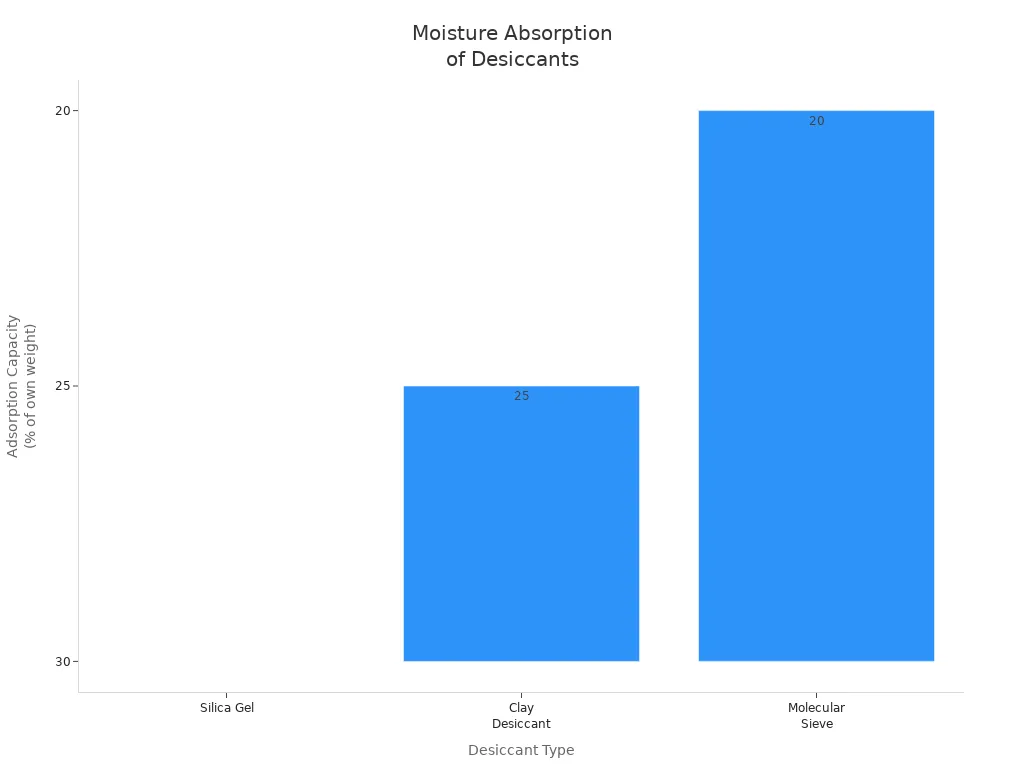
Silica gel is safe for food when labeled as food-grade. It can absorb up to 40% of its own weight in water, especially when the temperature stays below 77°F (25°C). This makes it a top choice for keeping food fresh and crunchy. Silica gel works best when the humidity is between 40% and 70%. You don’t have to worry about dust, since it stays clean and neat in its packet.
Here’s a quick look at how silica gel compares to other desiccants:
Desiccant Type | RH Range of Peak Efficiency | Adsorption Capacity (at 50% RH, 25°C) | Thermal Stability | Dust Generation |
|---|---|---|---|---|
Silica Gel | 40-70 % RH | ≈ 30 % of its own weight | Up to 149 °C (300 °F) | Very low |
Clay Desiccant | 30-60 % RH | ≈ 25 % of its own weight | Drops sharply above 50 °C (122 °F) | Moderate if crushed |
Molecular Sieve | 0-30 % RH | ≈ 20 % of its own weight | Up to 260 °C (500 °F) | Negligible |
Tip: If you want to keep your food dry and safe, always check for food-grade labels on silica gel packets.
Clay And Natural Desiccants
Clay desiccants come from natural minerals like bentonite. You can use them for basic moisture control in food storage. Clay works by soaking up water vapor from the air, just like a sponge. It’s non-toxic and safe for most foods. Many people like clay because it’s eco-friendly and easy to find.
Bentonite clay is a popular choice. It’s acid-free and keeps working for a long time. You might use clay packets for grains, seeds, or emergency food kits. Clay works best when the humidity is between 30% and 60%. If the temperature gets too high, clay loses its power to hold moisture. You should avoid crushing clay packets, since that can make dust.
Here are some natural desiccants you might see:
Bentonite: Non-toxic, safe, and good for long-term storage.
Clay: Works well for basic moisture control.
PackFreshUSA Desiccant: Protects food from mold, insects, and moisture for over 20 hours.
Clay desiccants are a smart pick if you want a natural way to fight humidity in your food storage.
Molecular Sieve Options
Molecular sieves are a special kind of synthetic desiccant. They have tiny, uniform pores that trap water molecules based on size and shape. You can use molecular sieves when you need strong moisture control, especially in places with low humidity. These desiccants work even better than silica gel or clay when the air is very dry.
Molecular sieves can handle high heat, up to 500°F (260°C), and they don’t make dust. You might use them for foods that need extra protection, like vitamins or freeze-dried meals. They keep working longer than other desiccants because they hold onto moisture tightly. If your food might face changing temperatures or humidity, molecular sieves are a great choice.
Molecular sieves pull in water vapor faster and hold it longer.
They work best at low humidity and low temperatures.
You can trust them for foods that need the driest conditions.
Note: Always pick the right desiccant for your food and storage needs. Each type has its own strengths for fighting moisture and keeping your meals safe.
Identifying Safe Desiccants
You want to keep your food safe and fresh. Picking the right desiccant makes a big difference. Not every product you see is safe for food storage. You need to check a few things before you use any desiccant with your meals.
First, look for food-grade labels. These labels show that the desiccant meets safety rules. If you see “non-toxic” or “FDA-approved,” you know it is safe for food. Never use desiccants meant for shoes, electronics, or other non-food items. Those can have chemicals that are not safe to eat.
You should also think about how well the desiccant works. It needs to grab moisture from the air and hold it tight. If it cannot do this, your food will not stay dry. You want a product that keeps humidity low inside your container. Some desiccants come with humidity indicator cards. These cards change color when moisture levels rise. You can check them to see if you need to replace your desiccant.
Storage matters too. Keep your desiccant in an airtight container until you use it. If you leave it out, it will soak up moisture from the room and lose power. You should store it in a cool, dry place. High temperatures can break down the material and make it less effective.
Here is a table to help you spot safe desiccants for food storage:
Criteria | Description |
|---|---|
Effectiveness | The desiccant must capture and hold moisture well. |
Storage Conditions | Store in airtight containers to keep it strong. |
Material Properties | The material should stay safe and non-toxic, even after losing power. |
Humidity Control | Use humidity indicator cards to track moisture levels. |
Temperature Stability | Keep in a cool, dry spot to avoid damage from heat. |
You should always read the package before you buy. If you see warnings or missing safety info, pick another brand. You want to protect your food and your health.
Tip: If you are not sure about a desiccant, ask the seller for safety details. You can also look for reviews from other people who use it for food storage.
Choosing a safe desiccant helps you control moisture and humidity. You keep your food dry, tasty, and safe to eat. Make smart choices, and your meals will stay fresh much longer.
How To Use Desiccants In Food Storage
Choosing The Right Desiccant
Picking a desiccant can seem hard. You need to think about what food you want to store. Some foods, like dried fruits, need strong moisture control. Jerky also needs lots of protection from water. Crackers only need a little help to stay crisp. Check how humid your area is. If you live where it is damp, you need stronger desiccants.
Factor | What To Consider |
|---|---|
Foods with lots of water need stronger packets. | |
Special Foods | Some foods lose texture if they get wet. |
Local Humidity | Wet climates need extra moisture control. |
Storage Duration | Storing food for a long time needs more packets. |
See if your food packaging is airtight. If air gets in, moisture will too. Always pick food-grade desiccant packets. These are safe for food and work well.
Tip: Silica gel works for many foods. Clay is good for cool places. Molecular sieves are best for very dry needs.
Determining Quantity Needed
You may wonder how many packets you need. It depends on a few things. First, check the size of your food package. Bigger packages have more air and moisture. Next, look at how humid your area is. More humidity means you need more packets.
Factor | What It Means For You |
|---|---|
More water in the air means more packets. | |
Package Size and Volume | Large packages need extra control. |
Packaging Material Permeability | Airtight packages need fewer packets. |
Product Moisture Sensitivity | Sensitive foods need more protection. |
Desired Shelf Life | Longer shelf life needs more packets. |
Temperature Extremes | Hot places need more desiccant packets. |
Suppliers can give you charts to help. These charts show how many packets to use for each package size. Always use enough packets for long-term storage.
Placement In Packaging
Using Packets
Put desiccant packets in the right spot. Drop them in after you fill the package. Keep packets away from the seal so they do not get crushed. If you use big bags, spread the packets out. This helps every part of the package stay dry.
Put packets in before sealing.
Keep packets away from edges and seals.
Spread packets out in large containers.
Avoiding Direct Contact
Do not let packets touch food directly. Use packets made for food packaging. These packets have covers that keep desiccant inside. Loose desiccant can spill and mix with food. That is not safe.
Note: Check that packets are sealed and not broken. If you see a broken packet, take it out right away.
Using desiccant packets the right way keeps food fresh. You get better taste, texture, and safety for every meal.
Monitoring And Replacement
You want your stored food to stay fresh and safe. Keeping an eye on your desiccant packets is just as important as choosing the right ones. If you forget about them, moisture can sneak in and ruin your snacks or supplies. So, how do you know when it’s time to check or swap out your desiccants? Let’s break it down.
Here’s a simple routine you can follow:
Check the Packaging
Start by looking at the packaging of your desiccant packets. Many brands print a recommended replacement schedule or expiration date right on the packet. If you see a date, mark it on your calendar. This helps you remember when to check next.Monitor the Humidity Level
Use a hygrometer to track the humidity inside your storage container. If the humidity starts to climb, that means your desiccant isn’t soaking up moisture like it should. High humidity can lead to mold or spoilage. When you see the numbers go up, it’s time to replace the packets.Observe the Desiccant
Take a look at the packets themselves. If you notice they look clumped, wet, or even moldy, swap them out right away. Desiccants that have absorbed too much moisture lose their power. You want them dry and loose, not sticky or soggy.Change Desiccants Periodically
Even if everything looks fine, you should still change your desiccant packets every few months. If you live in a humid area, you might need to do this more often. For short-term storage, a few days might be enough. For long-term storage, set a reminder to check every three to six months.
Tip: If you use humidity indicator cards, watch for color changes. These cards make it easy to spot when moisture levels get too high.
Here’s a quick table to help you decide when to replace your desiccants:
Situation | What To Do |
|---|---|
Expired packet | Replace immediately |
High humidity reading | Swap out for fresh packets |
Visible clumping or mold | Remove and replace |
Routine check (3-6 months) | Change packets even if dry |
You don’t need fancy tools to keep your food safe. Just pay attention to moisture and check your packets often. Staying on top of monitoring and replacement means you’ll enjoy fresh, tasty meals every time you open your storage.
Safety And Best Practices
Food Safety Considerations
You want your food to be safe. You need to use desiccants the right way. Not all desiccants are good for food storage. Some, like calcium chloride, must stay sealed in a container. The container should be made from food-safe materials. It should be big enough so you do not eat the packet by mistake. Desiccant packets have warning labels. These labels tell you not to eat or open them. They help you avoid accidents. The food package should say how much food is inside. It should not count the desiccant packet. If you find a packet in your snack bag, look for warnings. Never mix the packet with your food.
Tip: Always check for clear labels and warnings on packets. If you do not know, ask the seller or read the packaging for safety info.
Here’s a quick list of things to check:
The packet needs a warning label and should not look like food.
The food package should list only the food, not the packet.
Never eat or open a desiccant packet.
Avoiding Contamination
You want your food clean and fresh. Desiccants help, but you must use them right. If a packet breaks or leaks, it can get into your food. You might see powder or beads in your snacks. That is not safe. Always use packets made for food storage. These packets keep the desiccant inside and away from food.
Contamination can make food taste bad or look spoiled. It can also hurt equipment in storage rooms. To stop this, use sealed packets and check them often. If you see a broken packet, take it out fast.
Here’s how to keep food safe:
Check packets for damage before using.
Remove broken or leaking packets.
Store desiccants away from food.
Use filtration products or breathers in storage areas to keep things clean.
Note: Clean storage and careful handling keep food safe and equipment working well.
Disposal And Regulations
When you finish using desiccants, throw them away the right way. Some, like calcium chloride, can go down the drain. But you should check your local rules first. Others, like Ecobag desiccants, break down in compost piles. You can put them in your compost bin if your city says it is okay. KeepDry desiccants come in recyclable packaging. You can recycle the packet to cut down on waste.
Here’s what you can do:
Separate calcium chloride from its packet and follow local rules.
Compost biodegradable desiccants if allowed.
Recycle packaging when you can.
Always check local guidelines before throwing away desiccants.
♻️ Throwing away desiccants the right way keeps your home safe and helps the planet. If you do not know, ask your local waste office for help.
If you follow these safety tips, your food stays fresh and your kitchen stays safe. You also help the environment when you throw away desiccants the right way.
Common Mistakes With Desiccants
Using Non-Food-Grade Products
Some people think any desiccant packet is fine for food. That is not true. Some packets are not safe for food storage. If you use the wrong kind, chemicals might get near your snacks. Food-grade silica gel is safe for food. Standard white or clear silica gel is not harmful, but you should never eat it. Blue silica gel has a coating that can be a little toxic, so you must be careful.
Here is a table to show the differences:
Aspect | Information |
|---|---|
Chemical Composition | Silica gel is made from silicon dioxide. It has a large surface and soaks up water well. |
Toxicity | White or clear silica gel is not toxic. Swallowing it is usually safe. |
Choking Hazard | Silica gel packets can be a choking risk, especially for kids. |
Food Grade Safety | Food grade silica gel is safe for storing food. |
Indicator Coating | Blue silica gel is a bit more toxic, but small amounts are still safe. |
Tip: Always read the label before using a desiccant. Look for “food-grade” or “FDA-approved” to keep your food safe.
Incorrect Amounts
You want your food to stay good, but using too much or too little desiccant is a problem. If you use too little, water stays in the package. Mold can grow, and your food may spoil. If you use too much, your food can get too dry. This can make it lose taste and texture. You need to use the right amount.
Check this table to see what can go wrong:
Consequence | Description |
|---|---|
Too much water can cause mold to grow, especially in big packs. | |
Rancidity | Wrong moisture can make fats go bad and taste weird. |
Flavor Loss | Changing moisture can make food lose its smell and taste. |
Note: Use the number of packets the package says. If you do not know, ask the seller or check the instructions.
Poor Packaging Choices
You might pick a good desiccant, but if your packaging is not right, food can still spoil. Packaging must keep water out. If it does not, the desiccant cannot work well. Thin bags or loose lids let air and water inside. This makes it hard for desiccants to keep food safe. Even eco-friendly options like bio-silica need strong packaging. If you want your food to last, use airtight containers and tough packaging.
Tip: Always use packaging made to stop moisture. Airtight containers help desiccants keep your food fresh and safe.
Neglecting Replacement
You might think desiccant packets last forever. They don’t. If you forget to replace them, your food storage can run into big problems. Moisture sneaks in over time. Old desiccants lose their power to absorb water. When that happens, your snacks, grains, or emergency supplies become easy targets for spoilage.
Let’s look at what can go wrong if you neglect replacement:
Mold starts to grow inside your containers.
Bacteria and other tiny organisms multiply quickly.
Food safety drops, and you risk eating spoiled or unsafe meals.
You want to keep your food fresh and safe. Ignoring desiccant replacement makes that tough. You might notice stale smells or see fuzzy spots on your food. Sometimes, you won’t see anything until you taste it. That’s risky.
Here’s a table to show what happens when you skip replacing desiccants:
Problem | What You Might Notice | Why It Happens |
|---|---|---|
Mold Growth | Green, black, or white fuzzy spots | Moisture builds up |
Organism Proliferation | Bugs or bacteria in your food | Humidity rises |
Spoilage | Bad smell, taste, or texture | Desiccant stops working |
Health Risks | Upset stomach or illness | Food safety gets compromised |
You don’t want to eat food that’s gone bad. You can avoid these problems by checking your desiccant packets often. Set a reminder on your phone or calendar. If you use humidity indicator cards, watch for color changes. That’s a quick way to know when it’s time for a swap.
Tip: Fresh desiccant packets keep moisture out and food safe. Replace them every few months, or sooner if you live in a humid area.
You can make a simple checklist to help you remember:
Check packets for clumping or wetness.
Look for expiration dates or recommended replacement times.
Swap out old packets during routine pantry cleaning.
Use indicator cards for easy monitoring.
Staying on top of desiccant replacement means you get fresh, tasty food every time. You protect your family from health risks. You also save money by avoiding wasted supplies. Don’t let a small packet ruin your food storage. Keep your desiccants fresh, and your meals will stay safe.
Food Types That Benefit From Desiccants
Grains And Dry Goods
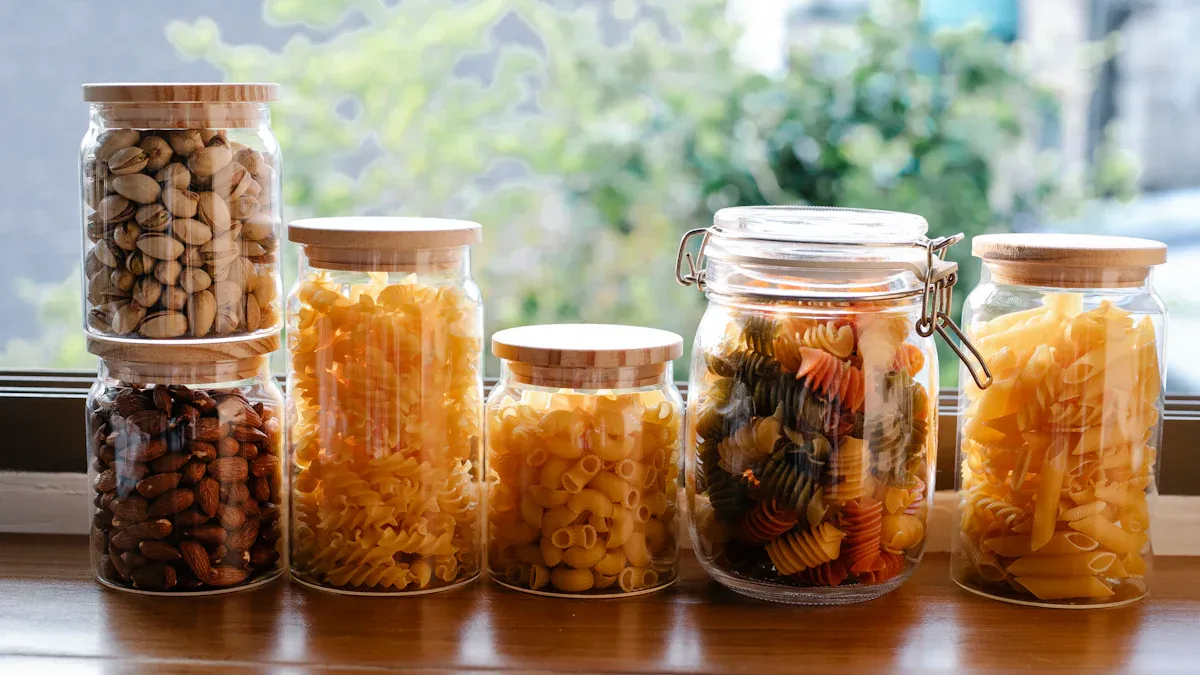
You probably keep rice, beans, pasta, and flour in your pantry. These grains and dry goods can last a long time, but moisture is their enemy. When humidity sneaks in, grains can clump, spoil, or even attract bugs. You want to keep your pantry staples fresh and safe. Desiccants help you do that. Place a packet in your storage container. It will soak up extra moisture and keep everything dry.
Here’s a quick table to show how desiccants help different dry goods:
Dry Good | Problem Without Desiccant | Benefit With Desiccant |
|---|---|---|
Rice | Clumping, mold | Stays loose and fresh |
Beans | Spoilage, pests | Longer shelf life |
Flour | Lumps, off taste | Smooth texture |
Pasta | Soggy, sticky | Remains firm |
Tip: Always use airtight containers with desiccant packets for best results. You’ll notice your grains stay fresher for months.
Snacks And Baked Items
You love crunchy chips, crispy crackers, and chewy cookies. These snacks and baked items taste best when they’re fresh. Moisture can ruin their texture fast. Chips get soggy. Crackers lose their snap. Cookies turn hard or mushy. You can fix this problem with desiccants. Drop a packet into your snack jar or cookie tin. The desiccant grabs moisture before it reaches your treats.
Try these ideas to keep snacks and baked goods fresh:
Put a desiccant packet in each snack bag after opening.
Store cookies in tins with a packet to keep them soft or crisp.
Use packets in bread boxes to prevent mold.
Note: If you bake at home, add a desiccant packet to your storage container. Your homemade treats will taste better for longer.
Spices And Seasonings
Spices and seasonings make your meals pop with flavor. You want them to stay dry and aromatic. Moisture can cause clumping, fading, or even mold. Paprika, garlic powder, and salt are especially sensitive. Desiccants help you keep your spice jars dry. Place a small packet in each jar or container. Your spices will stay loose and flavorful.
Here’s a list of spices that benefit from desiccants:
Garlic powder
Onion powder
Paprika
Salt
Chili flakes
Tip: Use food-safe desiccant packets in your spice rack. You’ll notice your seasonings stay fresh and easy to sprinkle.
Desiccants work quietly in the background. You get longer shelf life, better taste, and less waste. Try adding packets to your pantry, snack shelf, and spice rack. You’ll see the difference every time you cook.
Emergency Supplies
When you make your emergency kit, you want it to last. Moisture can ruin your supplies very quickly. Canned goods are safe, but dry foods need more help. Desiccants help keep your emergency kit safe. They keep things dry and fresh for you.
Think about opening your kit and finding wet crackers or moldy rice. That would be bad in an emergency. You can stop this by using desiccant packets in your containers. These packets soak up water and block mold, bacteria, and clumps. Your food stays safe and tastes good.
Here are some things you might put in your kit:
Dried fruits
Rice and pasta
Powdered milk
Snack bars
Instant soup mixes
Vitamins and supplements
All these foods get worse when they get wet. You want them dry for a long time. Desiccants help you do that.
Here’s a table showing how desiccants help emergency foods:
Emergency Item | Problem Without Desiccant | Benefit With Desiccant |
|---|---|---|
Dried fruits | Mold, sticky texture | Stays dry and edible |
Powdered milk | Clumps, bad taste | Mixes smoothly |
Snack bars | Soggy, stale | Remains crisp |
Vitamins | Degrades, loses potency | Stays effective |
Instant soup mixes | Lumps, spoilage | Easy to prepare |
Tip: Always use food-grade desiccant packets in your kit. This keeps your food safe to eat.
Check your emergency kit every few months. Look for wet spots or spoiled food. Change desiccant packets if they look wet or clumped. This keeps your kit ready for emergencies.
You can store supplies in buckets, bins, or sealed bags. Put a desiccant packet in each container. Make sure packets do not touch the food. Use sealed packets to stop leaks.
If you live where it is humid, you need more protection. Add extra packets or use stronger desiccants like molecular sieves. Your kit will last longer and stay safe.
Remember pet food and medical supplies too. These also need to stay dry. Desiccants help keep everything in good shape.
When you get ready for emergencies, you want to feel safe. Desiccants help you do that. Your supplies stay dry, fresh, and ready when you need them. You protect your food and your health.
You can keep your food fresh and safe with desiccants. These packets fight moisture, stop mold, and help snacks last longer. Always pick food-grade options and check packets often. Place them in airtight containers and swap them out when needed. Want more tips? Check out guides on food storage or ask your local store for advice. 😊
Remember: Using desiccants is an easy way to protect your pantry and enjoy better meals.