



Entschwefelung Aktivkohle ist ein hervorragendes Mittel zur SO2-Entfernung. Es hat eine hohe Adsorptionskapazität und funktioniert gut in feuchter Luft. Dieses Material nimmt SO2 sehr gut auf und kann viele Male verwendet werden. Viele Industrien entscheiden sich für Entschwefelungsaktivkohle, weil sie besser funktioniert als andere Methoden. Neue Typen, sogar aus Lebensmittelabfällen, können adsorbieren noch mehr SO2. Sie können sich darauf verlassen, dass Entschwefelungsaktivkohle Ihnen hilft, strenge Emissionsvorschriften einzuhalten und Ihr Unternehmen sicher zu halten.
Wichtigste Erkenntnisse
Entschwefelungsaktivkohle entfernt SO2 sehr gut. Sie ist eine gute Wahl für Unternehmen, die Emissionsvorschriften einhalten müssen. Aktivkohle kann wieder verwendet werden nachdem es gereinigt wurde. Dies trägt zur Verringerung des Abfalls bei und spart den Unternehmen Geld. Durch die Wahl von Aktivkohle mit größerer Oberfläche und weniger Asche kann mehr SO2 aufgefangen werden. Es gibt verschiedene Arten von Aktivkohle, z. B. körnige und pulverförmige. Jede Art eignet sich am besten für bestimmte Zeiten und Geschwindigkeiten der SO2-Entfernung. Einige spezielle Typen, wie imprägnierte und nanoporöse Kohle, können sogar noch mehr SO2 auffangen. Wenn man die Aktivkohlesysteme überprüft und pflegt, bleiben sie oft lange funktionsfähig. Die Verwendung von Aktivkohle in Verbindung mit anderen Methoden zur SO2-Entfernung kann den Prozess verbessern. Die Herstellung von Aktivkohle aus umweltfreundlichen Quellen trägt dazu bei, die Umwelt zu schützen und den CO2-Fußabdruck zu verringern.
SO2 und seine Auswirkungen
Was ist SO2?
Vielleicht kennen Sie so2 als ein Gas, das einen starken Geruch hat. Es wird Schwefeldioxid genannt und hat die Formel SO2. Dieses Gas mischt sich mit Wasser und bildet eine starke Säure. Aus diesem Grund kann so2 in der Luft und in deinem Körper schnell reagieren. Es löst sich in Wasser schneller auf als Kohlendioxid. Das bedeutet, dass es schneller in Wasser und Lebewesen eindringen kann. Wenn Menschen versuchen, so2 aus Gasen zu entfernen, verwenden sie oft basische Lösungen. Deshalb ist es bei vielen Arbeiten wichtig, so2 zu kontrollieren.
Aspekt | Einzelheiten |
|---|---|
Chemische Formel | SO2 |
Erscheinungsbild | Farbloses Gas mit stechendem, erstickendem Geruch |
Löslichkeit | Sehr gut wasserlöslich; bildet starke Säure |
Hauptobjekt | Reagiert schnell mit anderen Chemikalien und lebenden Geweben |
Warum SO2-Kontrolle?
Es ist wichtig, so2 zu kontrollieren, weil es Mensch und Natur schaden kann. Selbst ein kurzer Aufenthalt in der Nähe von so2 kann Menschen krank machen oder zum Tod führen. Wissenschaftler haben herausgefunden, dass so2 in Städten zu mehr Todesfällen führen kann, selbst wenn andere Schadstoffe hinzukommen. Hier sind einige Ergebnisse aus neuen Studien:
Studie | Fundstücke |
|---|---|
PAPA-Studie | Höhere So2-Werte stehen im Zusammenhang mit mehr täglichen Todesfällen in Städten. |
Xu et al. (Peking) | so2 steht in Verbindung mit täglichen Todesfällen und Krankheiten, nicht nur mit Staub. |
Venners et al. (Chongqing) | so2 wirkt sich auf die tägliche Sterblichkeit aus, selbst wenn andere Partikel entfernt werden. |
Studie aus Hongkong | So2 aus Kraftstoffen führt zu mehr Todesfällen an Herz und Lunge. |
Zhang et al. | Zusammenhang zwischen dem So2-Gehalt und dem Tod durch Langzeiterkrankungen in Peking. |
Für kurze Zeit bei so2 sein erhöht das Sterberisiko, insbesondere durch Atemprobleme.
Wissenschaftler sind der Meinung, dass es einen eindeutigen Zusammenhang zwischen so2 und Gesundheitsproblemen gibt.
Sie müssen auch So2 kontrollieren, weil es sauren Regen verursacht. Saurer Regen kann Ernten, Wasser und Gebäude schädigen. Viele Orte haben Strenge Regeln, um So2 niedrig zu halten. In der Europäischen Union und anderen Gebieten wurden beispielsweise Grenzwerte für Kraftwerke, Schiffe und Kraftstoffe festgelegt.
SO2-Quellen
So2 findet man in der Natur und bei Menschen. In der Natur entsteht so2 durch Vulkane, Waldbrände und das Meer. Der Mensch produziert viel mehr so2, vor allem in Städten und in der Nähe von Fabriken. Die wichtigsten Quellen sind:
Quelle Typ | Beschreibung |
|---|---|
Vulkane, Meeresprozesse, Waldbrände, Schwefelquellen, Meersalz. | |
Verbrennung von Kohle und Öl, Erdölraffination, Metallverhüttung, Herstellung von Schwefelsäure, Papier und Schwefel. | |
Kraftwerke | Bei der Verbrennung von Kohle oder Öl werden große Mengen an So2 freigesetzt. für Strom. |
Herstellung | Metallverhüttung und chemische Fabriken stoßen bei der Produktion So2 aus. |
Tipp: Wenn Sie in der Energiewirtschaft oder in Fabriken arbeiten, überprüfen Sie Ihren so2-Wert. Ein niedrigerer so2-Wert hilft Ihnen, die Regeln einzuhalten und sorgt für die Sicherheit der Menschen.
Mechanismus zur SO2-Entfernung
Adsorptionsverfahren
Sie können so2 aus Gas entnehmen, indem Sie Aktivkohle. Dies geschieht durch Adsorption. Es gibt zwei Hauptarten: physikalische Adsorption und chemische Adsorption.
Physikalische Adsorption
Bei der physikalischen Adsorption werden schwache Kräfte genutzt, um so2 auf dem Kohlenstoff zu halten. Für diesen Schritt ist keine chemische Reaktion erforderlich. Das so2 haftet aufgrund von Van-der-Waals-Kräften an der Kohle. Dies funktioniert am besten, wenn es kühler ist und der Druck höher ist. Man kann die physikalische Adsorption aufheben, indem man die Kohle erwärmt oder den Druck senkt. Dadurch kann man die Kohle wieder verwenden.
Chemische Adsorption
Die chemische Adsorption ist anders. Hier reagiert das so2 mit der Oberfläche der Aktivkohle. Das so2 bildet starke Bindungen mit speziellen Stellen auf der Kohle. Dadurch entstehen neue Verbindungen auf der Oberfläche. Die chemische Adsorption ist schwieriger rückgängig zu machen als die physikalische Adsorption. Aber sie kann so2 fester halten. Beide Arten der Adsorption treten in realen Systemen oft zusammen auf.
Stadien der SO2-Adsorption
Der so2-Adsorptionsprozess hat mehrere Schritte. Jeder Schritt trägt dazu bei, so2 vom Gas zum Kohlenstoff zu bewegen.
Gasfilmdiffusion: So2 bewegt sich zunächst durch eine dünne Gasschicht um jedes Kohlenstoffstück herum. Wenn diese Schicht dick oder klebrig ist, verlangsamt sie die Bewegung. Zum Beispiel können dicke Flüssigkeiten verhindern, dass das So2 den Kohlenstoff erreicht.
Poren-Diffusion: Nach dem Gasfilm dringt das So2 in die winzigen Poren der Aktivkohle ein. Die Größe und Form dieser Poren ist wichtig. Wenn Sie zu viel Material auf die Kohle geben, können Sie die Poren verstopfen. Dadurch verringert sich die Menge an so2, die die Kohle aufnehmen kann.
Oberflächenadsorption: Im Inneren der Poren haftet so2 an der Kohlenstoffoberfläche. Dies kann durch physikalische oder chemische Adsorption geschehen. Mehr Oberfläche bedeutet, dass man mehr so2 einfangen kann.
Anmerkung: Ionische Flüssigkeiten auf porösen Kohlenstoff bringen kann dazu beitragen, dass sich so2 schneller bewegt. Dies kann die Entfernung verbessern, aber zu viel kann die Poren verstopfen.
Faktoren, die die Adsorption beeinflussen
Es gibt viele Faktoren, die beeinflussen können, wie gut die Aktivkohle das So2 entfernt. Sie sollten bei der Auswahl Ihres Systems an diese Faktoren denken.
Kohlenstofffraktion: Aktivkohle mit mehr Kohlenstoff funktioniert in der Regel besser. Zum Beispiel funktioniert Kohle mit 89% fester Kohle besser als 80%. Weniger Asche bedeutet mehr Platz für so2.
C-O-Komplexe: Sauerstoffgruppen auf dem Kohlenstoff helfen beim Einfangen von so2. Diese Gruppen bieten mehr Stellen für die chemische Adsorption.
Aschegehalt: Zu viel Asche kann die Poren verstopfen. Dadurch sinkt die Menge an So2, die die Kohle aufnehmen kann. Weniger Asche ist besser für die Adsorption von so2.
Quelle des Materials: Aktivkohle aus lignozellulosehaltiger Biomasse ist gut für die Tiefenentschwefelung geeignet. Das Rohmaterial verändert die Struktur des Kohlenstoffs und seine Funktionsfähigkeit.
Der Prozess der Adsorption von so2 an Aktivkohle läuft von selbst ab und gibt Wärme ab. Der Prozess kann chaotisch aussehen, weil das So2 in einzelnen oder mehreren Schichten anhaften kann. Es findet sowohl eine physikalische als auch eine chemische Adsorption statt, sodass man in verschiedenen Situationen mehr So2 auffangen kann.
Faktor | Wirkung auf die SO2-Adsorption |
|---|---|
Hohe Kohlenstofffraktion | Erhöht die Adsorptionsleistung |
Weitere C-O-Komplexe | Fügt aktive Stellen für so2 hinzu |
Geringerer Aschegehalt | Öffnet mehr Poren für so2 |
Biomasse Quelle | Verbessert die Ultra-Tiefenentschwefelung |
Tipp: Um das meiste so2 aufzufangen, wählen Sie Aktivkohle mit hoher Kohlenstoffgehalt, wenig Asche und eine große Oberfläche.
Entschwefelung Aktivkohle-Typen
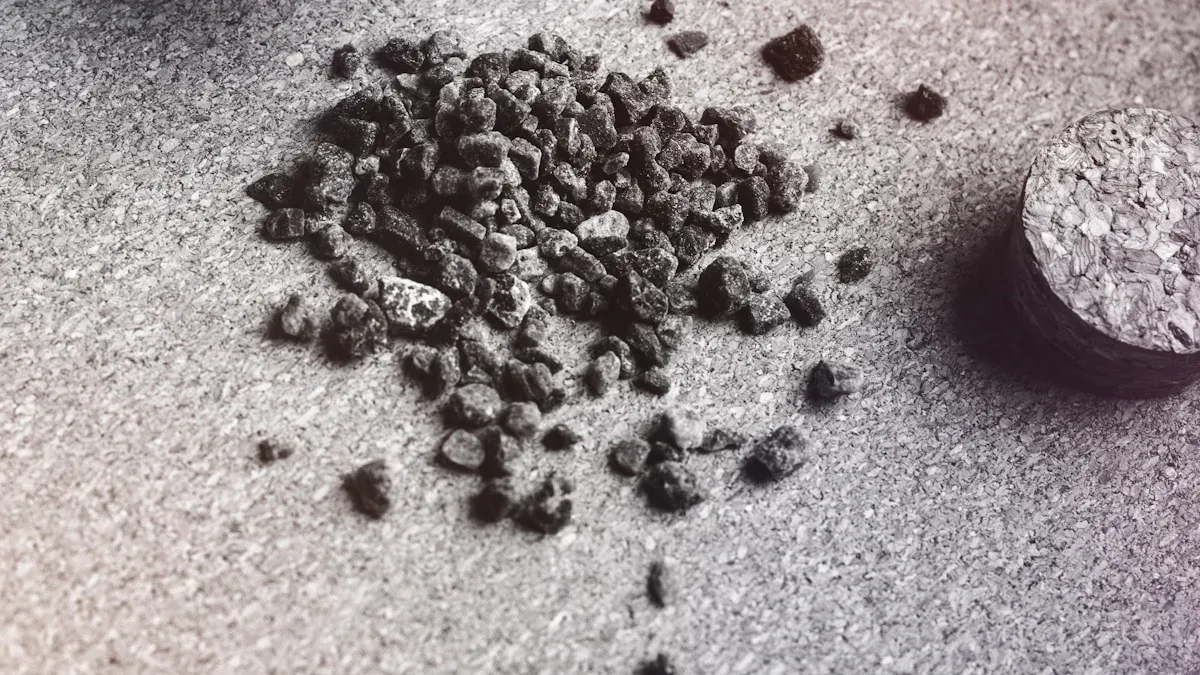
Granulierte Aktivkohle
Granulierte Aktivkohle ist gut für eine gleichmäßige So2-Entfernung. Die Stücke sind größer, von 0,2 bis 5 Millimeter. In der Regel sind sie in dicken Schichten verpackt. Das macht es ideal für Arbeiten, die lange dauern. Hier sind einige Gründe, warum es sich gut für so2 eignet:
Es wiegt etwa 470 bis 520 Gramm pro Liter.
Das Kohlenstoffbett ist oft etwa 400 Millimeter lang.
Seine speziellen Poren helfen ihm, so2 gut zu greifen.
Sowohl saure als auch basische Stellen auf der Oberfläche fangen so2 auf.
Es kann mehr als 99% So2 aufnehmen, insbesondere nach einer Behandlung mit Salpetersäure.
so2 haftet besser als NO, weil es bei einer höheren Temperatur siedet.
Tipp: Wenn Sie etwas Starkes für große Gasströme brauchen, wählen Sie körnige Aktivkohle.
Aktivkohle in Pulverform
Aktivkohle in Pulverform wirkt schnell bei der Entfernung von So2. Die Stücke sind viel kleiner, weniger als 0,18 Millimeter. Dadurch haben sie eine größere Oberfläche, an der das So2 haften kann. Das bedeutet, dass das So2 schneller entfernt wird. Das ist das Besondere an pulverförmiger Aktivkohle:
Kleine Stücke bieten mehr Oberfläche.
Es entfernt so2 schnell.
Sie eignet sich am besten für kurze Aufträge oder Notfälle.
Sie können es direkt ins Gas geben oder mit Flüssigkeiten mischen.
Wenn Sie so2 schnell senken müssen, verwenden Sie Aktivkohle in Pulverform. Es ist gut, wenn Sie keine großen Betten verwenden können oder eine schnelle Lösung brauchen.
Imprägnierte Aktivkohle
Imprägnierte Aktivkohle ist noch stärker. Sie beginnen mit normaler Aktivkohle und fügen spezielle Chemikalien oder Metalle hinzu. Dadurch kann sie mehr So2 abfangen oder mit schwierigen Gasen arbeiten.
Häufig verwendete Chemikalien sind:
Natriumhydroxid (NaOH)
Kaliumhydroxid (KOH)
Kaliumjodid (KI)
Natriumcarbonat (Na₂CO₃)
Ammoniumbicarbonat (NH₄HCO₃)
Sie können auch Metalloxide wie Kupferoxid (CuO), Zinkoxid (ZnO) und Nickel-Molybdän (Ni-Mo) verwenden. Durch die Zugabe von Kupfer zu Aktivkohle wird die Oberfläche um mindestens 15% vergrößert. Die So2-Haltekraft kann um mehr als 180% steigen. Kupfer trägt dazu bei, dass mehr winzige Poren entstehen, und wirkt als Hilfsmittel für chemische Reaktionen mit so2.
Hinweis: Wenn Aktivkohle vor der Zugabe von Kupferoxid mit Salpetersäure behandelt wird, kann sie noch besser So2 auffangen.
Alkalichemikalien wie KOH und Magnesiumhydroxid (Mg(OH)2) funktionieren ebenfalls gut. Sie reagieren stark mit so2 und eignen sich daher gut zur Imprägnierung. Die besten Ergebnisse erzielen Sie, wenn Sie Aktivkohle mit Kupferoxid verwenden. Es funktioniert besser als Zinkoxid, und das Mischen beider hilft nicht viel.
Typ | Partikelgröße | Fläche | Adsorptionsgeschwindigkeit | Bester Anwendungsfall |
|---|---|---|---|---|
Granulierte Aktivkohle | 0,2-5 mm | Unter | Langsamer | Langfristige, große Gasströme |
Aktivkohle in Pulverform | <0,18 mm | Höher | Schneller | Schnelle, kurzfristige Lösungen |
Imprägnierte Aktivkohle | Variiert | Erweitert | Hoch | Starke oder hohe SO2-Belastung |
Wenn Sie viel So2 verarbeiten müssen oder zusätzliche Leistung wünschen, ist imprägnierte Aktivkohle die beste Wahl.
K-IAC und andere fortgeschrittene Typen
Sie können SO2 besser mit moderner Aktivkohle wie K-IAC entfernen. K-IAC steht für Kalium-imprägnierte Aktivkohle. Dieser Typ enthält spezielle Chemikalien, die SO2 besser abfangen als normale Aktivkohle. Kaliumcarbonat (K2CO3) auf der Kohle reagiert mit SO2. Durch diese Reaktion entstehen starke Verbindungen, die das SO2 an der Kohle festhalten.
Vielleicht möchten Sie wissen, wie K-IAC im Vergleich zu anderen Typen abschneidet. Sehen Sie sich diese Tabelle an:
| Art von Kohlenstoff - | SO2-Adsorptionsfähigkeit - | Verbesserungen - | | Herkömmliche Aktivkohle - | Schlecht - | Begrenzt durch niedermolekulare, hochpolare Gase - | | Imprägnierte Aktivkohle (K-IAC) - | Verbessert - | Verbessert durch chemische Behandlungen und spezifische Reagenzien (z. B. K2CO3) - |
K-IAC leistet bessere Arbeit als normale Aktivkohle. Kalium hilft, SO2 abzufangen, so dass Sie höhere Adsorptionsraten erzielen. K-IAC funktioniert auch dann gut, wenn die SO2-Werte steigen oder fallen.
Andere fortschrittliche Typen verwenden andere Metalle oder Chemikalien. Einige enthalten Natrium, Magnesium oder Kupfer, um das SO2 abzufangen. Sie können auch Kohlenstoff mit gemischten Metalloxiden oder speziellen Beschichtungen finden. Durch diese Veränderungen wird die Kohle aktiver und bietet mehr Möglichkeiten für SO2, sich festzusetzen.
Tipp: Für die beste SO2-Entfernung sollten Sie Aktivkohle mit chemischer Imprägnierung wählen. Sie wirkt schneller und hält länger.
Sie können fortschrittliche Typen für schwierige Aufgaben verwenden. K-IAC ist gut für die Reinigung von Rauchgas, Luftfiltern und Kraftwerken geeignet. Es funktioniert auch gut an kalten Orten, wo SO2 schwer zu entfernen ist.
Hier sind einige gute Dinge über fortschrittliche Aktivkohle:
Höhere SO2-Adsorptionsraten
Funktioniert besser bei feuchter oder schmutziger Luft
Hält länger und ist leichter wiederverwendbar
Bleibt auch bei veränderten Bedingungen stabil
Wählen Sie die richtige Kohle für Ihre Bedürfnisse. Wenn Sie viele SO2-Emissionen haben oder strenge Vorschriften einhalten müssen, können Sie mit K-IAC und anderen fortschrittlichen Typen bessere Ergebnisse erzielen. Sie erhalten Ergebnisse, auf die Sie sich verlassen können, und halten die Emissionsvorschriften problemlos ein.
SO2-Entfernung Vorteile
Hoher Wirkungsgrad
Sie wollen etwas, das schnell und gut funktioniert. Entschwefelungsaktivkohle ist sehr gut im Entfernen von So2. Dieses Material hat viele winzige Löcher auf seiner Oberfläche. Diese Löcher fangen so2-Moleküle schnell ein. Es funktioniert auch, wenn es kalt ist oder wenn sich der So2-Gehalt ändert. Viele Unternehmen verwenden diese Methode, weil sie mehr als 99% So2 aus dem Gas entfernt.
Selbst bei feuchter oder schmutziger Luft erhalten Sie gleichmäßige Ergebnisse.
Der Kohlenstoff funktioniert sowohl bei hohen als auch bei niedrigen So2-Mengen.
You can use it in different systems, like filters or packed beds.
Note: High efficiency helps you follow strict rules and keeps your equipment safe.
Kosten-Wirksamkeit
Saving money is important for every business. Desulfurization activated carbon helps you spend less in many ways. You do not need special machines or chemicals. The process works at normal temperatures and pressures, so you save energy. You can use the same carbon for a long time before you need new material.
Here is a simple table to show how you save:
Kostenfaktor | How You Save |
|---|---|
Ausrüstung | No need for special machines |
Energie | Works at room temperature |
Wartung | Fewer shutdowns needed |
Replacement | Long-lasting material |
You can also avoid fines by meeting emission limits. This makes your business more reliable and helps you earn more.
Wiederverwendbarkeit
You do not have to throw away activated carbon after one use. You can use it again and again. After the carbon catches so2, you can clean it by heating or washing. This removes the so2 and makes the carbon ready to work again. Reusing carbon means less waste and lower costs for you.
You send less waste to landfills.
You spend less money on new carbon.
You help the environment by using fewer resources.
Tip: Set up a simple cleaning system to get the most from your activated carbon.
Desulfurization activated carbon gives you high efficiency, saves you money, and lets you reuse the material. You get a strong, flexible, and eco-friendly way to remove so2.
Environmental Safety
You want to keep people and the earth safe. Desulfurization activated carbon helps you do this. It does more than just take SO2 out of the air. It also protects nature in many ways. When you use activated carbon, you do not make harmful waste. Chemical scrubbers can make dirty water or other pollution. Activated carbon holds SO2 inside itself. You do not have to worry about bad runoff or extra chemicals getting out. Activated carbon works at normal temperatures and pressures. You do not need to burn more fuel or use strong chemicals. This lowers your carbon footprint. It also makes accidents less likely than with complex systems. Activated carbon is safe to use. You can move and store it without special tools. Workers do not need heavy safety gear. This makes your workplace safer and easier to run. Many studies show desulfurization activated carbon is safe for the environment. Researchers found SO2 helps the carbon catch even more SO2. If you use carbon with sulfur added, you get better results. This is called S-doping. It helps both physical and chemical adsorption. The carbon’s surface area can reach 347.26 m²/g. Most of this comes from tiny pores that trap SO2 well.
Here is a summary of important research results:
| Key Findings — | Description — | | Effectiveness — | Desulfurization activated carbon has strong SO2 adsorption. | | Mechanism — | SO2 makes the carbon better at catching more SO2. | | S-Doping — | Adding sulfur helps both physical and chemical adsorption. | | Surface Area — | The carbon can reach 347.26 m²/g, with many micropores for SO2. |
Using activated carbon helps you follow strict environmental rules. You can show others you care about clean air and safe work.
You also help stop acid rain and protect water, soil, and plants. Activated carbon does not add new toxins to nature. After using it, you can often clean and use it again. This means less waste and supports a circular economy. If you want a safe and green way to control SO2, activated carbon is a great choice. You get strong results, easy use, and a cleaner world for all.
Applications and Case Studies
Industrial Flue Gas
Factories use desulfurization activated carbon to clean flue gas. Flue gas comes from burning coal or oil. This gas has SO2 and NOx in it. Activated carbon can take out both gases at the same time. Some companies use special activated carbon or carbon fibers. These help trap more SO2. Sometimes, factories add ammonia to remove NOx better. Many kinds of activated carbon have been tested in real factories. Not all types are used in big factories yet.
Activated carbon takes out SO2 and NOx from flue gas.
Special carbon and fibers help catch more SO2.
Ammonia can help remove NOx.
Many types are tested, but not all are used in large factories.
Pick the best activated carbon for your factory. This helps you follow air rules and keeps the air cleaner.
Luftfiltration
Entschwefelung Aktivkohle is used in air filters. These filters clean both indoor and outdoor air. They work even when SO2 is very low. The table below shows how well activated carbon works in air filters:
Leistungsmetrik | Beschreibung |
|---|---|
Adsorptionsvermögen | Microporous activated carbons trap SO2 in air at less than 30 ppm. |
Irreversibility | At 2.5 ppm, SO2 sticks to the carbon and does not come off. |
Influence of Water | Water in the pores helps SO2 stick better, both ways. |
Activated carbon works best if the air has some water in it. Even with little SO2, the carbon holds the gas tightly. This makes it good for places like hospitals, schools, and offices.
Tip: Use air filters with microporous activated carbon to keep SO2 out of your indoor air.
Kraftwerke
Power plants use activated carbon to lower SO2. When they add activated carbon, SO2 drops a lot. Here are some real results from power plants:
After using activated carbon, SO2 dropped to 40 ppm.
SO2 removal was 75.3% on average.
Instant SO2 readings were between 23 ppm and 87 ppm.
Removal ranged from 46.2% to 85.8%.
Most plants cut SO2 by over 70%.
Running these systems costs about one-eighth of a wet scrubber or SCR.
The setup cost is less than one-tenth of a scrubber or SCR.
You save money and get good results. Power plants can meet tough rules without high costs. Aktivkohle is a simple and strong way to control SO2.
You can count on activated carbon to keep your plant clean and working well.
Low-Temperature Processes
Sometimes you need to take SO2 out of gas when it is cold. Many factories have this problem. Most normal ways work better when it is hot. Activated carbon is a strong choice for cold SO2 removal. You can use it in chemical plants, refineries, and waste sites.
Activated carbon works by grabbing SO2 on its surface. You do not need to heat the system. It works at room temperature or even colder. This saves energy and money. Your machines also stay safe from heat damage.
Activated carbon gives steady results in cold processes. Its tiny pores trap SO2 and gases like H2S. You can use beds filled with activated carbon. These beds hold the gas so SO2 sticks to the carbon. You can make your system fit what you need.
Scientists studied how activated carbon removes SO2 and H2S in cold places. They used special math to show how much gas the carbon can hold. The table below shows what they found:
| Study Focus — | Key Findings — | | Adsorption Characteristics — | Looked at how SO2 and H2S stick to carbon in a fixed bed. — | | Equations Used — | Used Langmuir and extended Langmuir equations to show how much gas sticks. — | | Dynamic Adsorption — | Studied how gas speed and temperature change how much gas sticks. — | | Design Insights — | Gave ideas to make beds better for removing SO2 and H2S together. — |
You can use these ideas to make better systems. The Langmuir equations help you guess how much SO2 the carbon will grab. You can change the gas speed and temperature for best results. Cold can slow things down, but activated carbon still works well.
You might want to remove more than one gas at once. Activated carbon lets you catch SO2 and H2S together. This makes your job easier and saves space. You do not need extra machines for each gas.
Here are some tips for using activated carbon in cold processes:
Pick carbon with lots of surface area and small holes.
Use a fixed bed for steady gas flow.
Watch the temperature and gas speed to keep it working well.
Change or clean the carbon when it gets full.
Tip: Try different carbon types and bed sizes to get the most SO2 out of your system.
Activated carbon is a safe and cheap way to control SO2 in cold places. You can trust it to keep your air clean and follow the rules. You also save energy and protect your machines. If you need to take out SO2 when it is cold, activated carbon is the best pick.
Using Desulfurization Activated Carbon
Tipps zur Auswahl
You need to pick the best activated carbon for SO2 removal. First, check the surface area. More surface area means more SO2 can stick. Make sure the carbon lasts a long time. Some types keep working even with lots of SO2. Choose carbon with special agents added. These agents help trap SO2 and other gases better. Advanced carbon can hold more sulfur than regular carbon. This means you do not have to change it as often.
Hier ist eine Tabelle, die Ihnen den Vergleich erleichtert:
Kriterien | Beschreibung |
|---|---|
Fläche | High surface area helps catch more SO2. |
Process Efficiency | Shorter activation time and higher yield boost performance. |
Functionalization | Added agents improve targeted SO2 removal. |
Sulfur Adsorption Capacity | |
Anti-degradation Formula | Keeps working well even with high SO2 for a long time. |
Tip: For the best results, use activated carbon with a high surface area and special agents.
System Design
You need a good setup to get the most from your carbon. Use beds or filters that let air or gas move evenly. The carbon should have lots of tiny pores. These pores help trap SO2 at any temperature. If you use carbon treated with potassium hydroxide at 750 °C, it can hold up to 374.2 mg/g of SO2 at low temperatures. Cold air helps the carbon catch SO2 better. The forces between the gas and carbon get stronger in the cold. SO2 sticks best in the smallest pores. Other gases like NO use bigger pores. If your gas has NO2, you can remove even more SO2.
Pick carbon with many ultramicropores for SO2.
Make sure your system lets gas flow evenly.
Choose carbon that works at the temperature you need.
Add NO2 if you want to catch more SO2.
Note: Cold temperatures can help your system trap more SO2.
Wartung
You need to take care of your system to keep it working well. Check the moisture in your carbon. It should be between 20% and 30%. Make sure there is enough oxygen in the system. Oxygen helps the carbon work better. Clean or regenerate the carbon when hydrogen sulfide is over 3000 ppmv. Regular checks help you find problems early and keep things running smoothly.
Maintenance Protocol | Anforderung |
|---|---|
Feuchtigkeitsgehalt | Keep between 20–30% |
Oxygen Levels | Make sure there is enough oxygen |
Periodic Regeneration | Clean carbon if H2S > 3000 ppmv |
Keep a maintenance schedule. This helps your system last longer and keeps SO2 removal strong.
Performance Optimization
You can get the best results from desulfurization activated carbon by making a few smart changes to your system. Performance optimization means you adjust how you use the carbon so it catches more SO2 and lasts longer. Here are some ways you can boost your system’s efficiency:
Control the Gas Flow Speed
Lowering the speed of gas through your carbon bed helps SO2 stick better. When gas moves slowly, SO2 molecules have more time to touch the carbon and get trapped. For example, if you reduce the filtration velocity from 0.45 meters per second to 0.125 meters per second, you can see a big drop in the breakthrough rate. This means your carbon holds SO2 longer before it needs to be replaced.Adjust SO2 Concentration
If you can lower the amount of SO2 entering your system, your carbon will work better. Studies show that when SO2 drops from 20 parts per million (ppm) to 5 ppm, the carbon holds onto SO2 much longer. You get more use out of each batch of carbon.Use Layered Carbon Materials
Dual-layer activated carbon cloth (ACC) can help you catch more SO2. This material has two layers that work together. The amount of SO2 it catches goes up over time, following a power function. You get better performance as the system runs.Keep the Carbon Clean
Dust and other particles can block the pores in your carbon. Clean your system often to keep the surface open for SO2 to stick.Watch Temperature and Humidity
SO2 sticks better to carbon at lower temperatures. Make sure your system does not get too hot. A little moisture in the air can also help SO2 stick, but too much water can block the pores.
Here is a quick table to help you remember these tips:
Optimization Step | Effect on SO2 Removal |
|---|---|
Lower gas speed | More SO2 sticks to carbon |
Reduce SO2 concentration | Carbon lasts longer |
Use dual-layer carbon | Higher SO2 capture |
Clean carbon regularly | Keeps pores open |
Control temperature | Improves adsorption |
Tip: Try changing one thing at a time and watch how your system improves. Small changes can make a big difference.
You can also track how much SO2 your carbon catches over time. This helps you know when to clean or replace it. By following these steps, you make sure your system works its best and keeps the air clean.
Trends and Innovations
Technology Advances
New technology is making desulfurization activated carbon work better. Scientists use nanotechnology to make carbon with more tiny pores. These small pores help catch more SO2. Some companies use computers to design carbon shapes and sizes. You can also find carbon made from coconut shells, bamboo, or food waste. These new sources are greener and work as well as coal-based carbon.
Here are some new advances you should know:
Nanoporous Carbon: Tiny pores give more space for SO2 to stick.
Metal-Impregnated Carbon: Adding metals like copper or potassium helps remove more SO2.
Smart Sensors: Some systems use sensors to watch SO2 levels and tell you when to change the carbon.
Tip: Ask your supplier about the newest carbon types. New technology can help you follow rules and save money.
Integration with Other Methods
You can get better results by using Aktivkohle with other ways to remove SO2. Many plants use both dry and wet systems together. For example, a wet scrubber can catch most SO2 first. Then, Aktivkohle grabs what is left. This two-step process helps you reach very low SO2 levels.
Some ways to use Aktivkohle with other methods are:
Hybrid Systems: Use wet scrubbers and Aktivkohle beds together.
Catalyst Blends: Mix Aktivkohle with catalysts to remove SO2 and NOx at once.
Multi-Pollutant Control: Pair carbon with filters to catch dust and other gases.
Methode | Nutzen Sie |
|---|---|
Wet Scrubber + Carbon | Removes more SO2 |
Carbon + Catalyst | Removes SO2 and NOx |
Carbon + Filters | Catches dust and gases |
Note: Using more than one method helps you meet strict air rules and keeps your system flexible.
Nachhaltigkeit
You help the planet when you pick sustainable Aktivkohle. Many companies now make carbon from things that grow back, like wood or coconut shells. Some even use recycled materials. This cuts down on waste and lowers your carbon footprint.
Sustainable actions also include:
Regeneration: You can clean and use Aktivkohle again and again.
Low-Energy Production: New ways to make carbon use less energy.
Safe Disposal: Used carbon can be recycled or thrown away safely.
🌱 Picking green carbon helps the earth and shows you care about the environment.
You can lead your field by using new technology, mixing smart methods, and choosing eco-friendly products. These trends help your business and protect the planet.
You can count on desulfurization activated carbon to remove SO2 well. This method works fast, saves money, and keeps things safer. Many companies use it because it does the job in real places. If you want cleaner air, talk to suppliers or look at your own systems. Make a move now to keep your business and the earth safe.