



You use amine carbón activo impregnado to take out bad gases from air. This special material helps catch co2 and holds onto toxic gases like ammonia. It works better than regular activated carbon because it has amine groups that pull in some gases. Impregnated Activated Carbon is a strong tool for cleaning air in many places.
Principales conclusiones
Amine impregnated activated carbon takes out bad gases like CO2 and ammonia from air.
The special amine groups on the carbon work like magnets. They help catch more gas than regular activated carbon.
You can use this material again. This saves money and helps the environment over time.
Amine impregnated activated carbon works in dry and wet air. This makes it useful for many jobs.
Picking the right amine type helps the material catch certain gases like NO2 and H2S.
You need to clean and fix the adsorbent often. This keeps it working well and helps it last longer.
New ideas like 3D printing and sensors make these filters better and easier to use.
Using amine impregnated activated carbon ayuda a limpiar el aire. It also helps fight climate change.
Definición
Amine Impregnated Activated Carbon
Amine impregnated activated carbon is a special filter. It starts as activated carbon with lots of tiny holes. These holes trap gases and small particles. Scientists put amine groups onto the carbon’s surface. The amine groups work like magnets for some gases. They are really good at grabbing carbon dioxide and ammonia. This material holds these gases better than regular activated carbon.
Many experts have worked to make this technology better. Some important patents show how people improved the way amine groups stick to carbon. They also show how to use this material for removing gases. Here are some well-known patents:
Patent Number | Title |
|---|---|
Amine enriched solid sorbents for carbon dioxide capture | |
US5462908A | Organic amine impregnated activated carbon |
US4810266A | Carbon dioxide removal using aminated carbon molecular sieves |
US3491031A | Reactivation of monoethanolamine impregnated activated carbon |
US5876488A | Regenerable solid amine sorbent |
Consejo: When you see “impregnated,” it means amine groups are added to the carbon, not just mixed in.
Structure and Composition
Amine impregnated carbón activado has a special structure. The base is activated carbon with many pores. These pores give it a big surface area. That means there are lots of places to catch gases. Amine groups stick to the surface and sometimes go inside the pores. This makes the material very good at trapping gases like CO2.
Scientists look at some key features when they study this material:
Performance Indicator | Descripción |
|---|---|
Shows how much carbon dioxide the material can hold. | |
Amine Efficiency | Tells you how well the amine groups work to catch CO2. |
Kinetic Parameters | Help you understand how fast the material can grab gases. |
Heat of Adsorption | Shows how much heat is made or used when gases stick to the material. |
Cyclic Stability | Tells you if the material can work over and over without breaking down. |
Time to Half Saturation | Measures how long it takes for the material to fill up halfway with gas. |
Number of Adsorption-Desorption Cycles | Counts how many times you can use the material before it wears out. |
Weight and Capacity Loss | Shows if the material loses its ability to catch gases after many uses. |
Amine impregnated activated carbon is more than just a simple filter. Its special structure and amine groups make it strong for cleaning air and taking out harmful gases.
Materials and Preparation
Base Materials
Oil Sands Coke
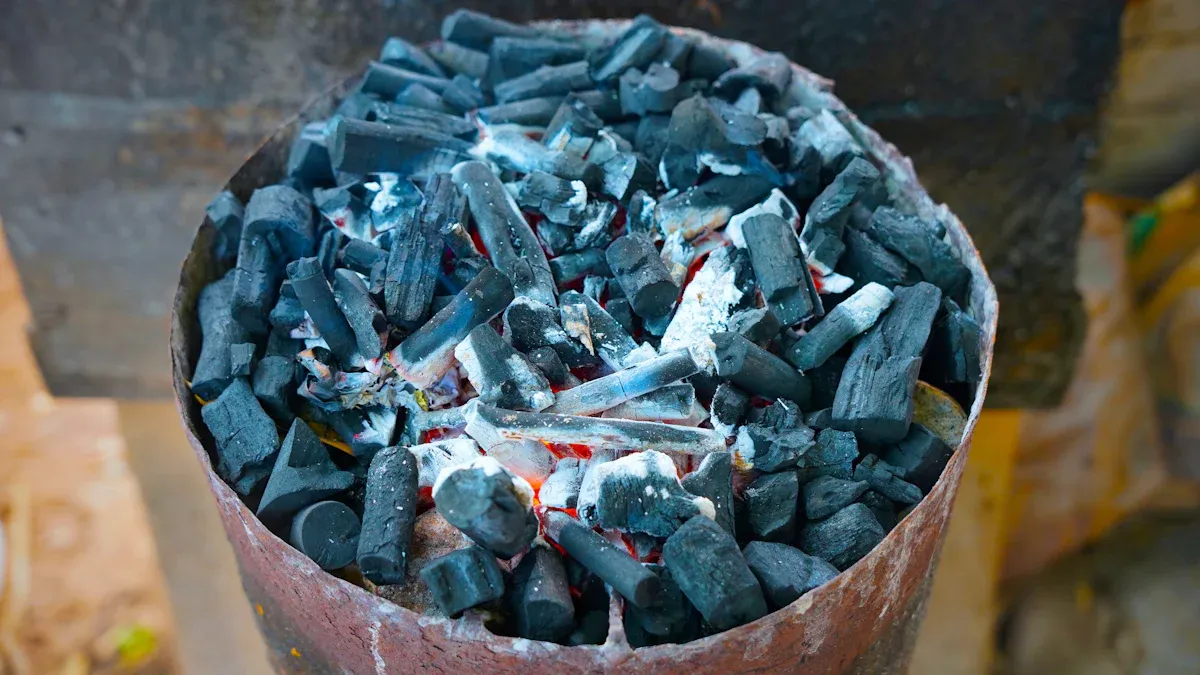
Oil sands coke can be used to make amine impregnated activated carbon. Oil sands coke comes from making oil. It is strong and has a lot of surface area. When you activate it, it can hold gases well. Studies say activated oil sands fluid coke (AFC) works better than some other carbons. AFC has more surface area and can store more charge than coconut shell activated carbon. This makes it a strong adsorbent for gas capture.
Oil sands coke gives you:
High surface area
Good adsorption capacity
Strong performance in gas capture
Other Carbon Sources
Other carbon sources can also make amine impregnated activated carbon. Some common ones are coal-based and coconut shell-based carbons. These materials come in different shapes and sizes. You can pick the one that works best for you.
Coal-based pellet activated carbon
Coal-based granular activated carbon
Coconut shell granular activated carbon
Petroleum coke is another choice. It sometimes has less surface area. But it can still work as well as commercial activated carbon. How you treat the surface is very important. Adding the right groups can make it better at adsorbing gases.
Amine Impregnation Process
There are several steps to add amine groups to activated carbon. This process helps make adsorbents that remove gases well.
Dry the activated carbon in a vacuum oven at 110℃ for 2 hours.
Move the dried carbon to a closed impregnation tank.
Mix soluble salts with water and set the pH to 3-5.
Pour the solution into the tank so it covers the carbon by 2cm.
Use ultrasonic waves to help the solution soak in for 2 hours.
Separate the solid and liquid using vacuum filtration.
Dry the filter cake in an oven at 60℃, then cure at 80℃, and remove water at 120℃.
Heat-treat the product at 300℃ under nitrogen to fix the active parts.
Check the product with X-ray tests to see the crystal forms.
Nota: Each step helps the amine groups stick to the carbon. This makes a strong adsorbent for catching gases.
Amine-Impregnated Resin
You can use amine-impregnated resin instead of other ways. Amine-impregnated resin can hold more gas than liquid amine absorption. Solid adsorbents like amine-modified zeolites can cost less for some uses. Using amine-impregnated resin for CO2 capture can save money. For example, the cost went down from $49,830 per ton in a small reactor to $7,690 per ton in a lab reactor. This means you get better results and spend less.
Método | Capacidad de adsorción | Cost (per ton CO2) |
|---|---|---|
Liquid Amine Absorption | Baja | Más alto |
Amine-Impregnated Resin | Más alto | Baja |
Amine-Modified Zeolites | Bien | Baja |
You can pick the method that fits your needs and budget. Amine-impregnated resin is a strong choice for removing gases well.
Mecanismo
Gas Adsorption
CO2 Capture
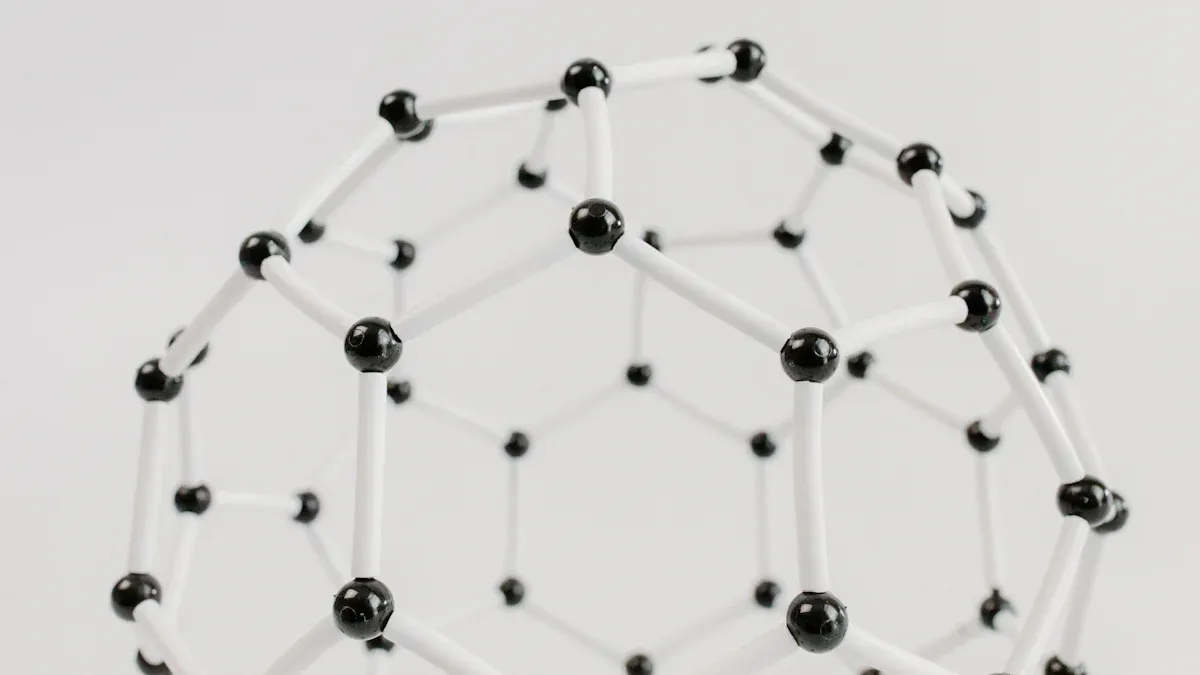
Amine impregnated activated carbon helps catch more co2 from air or gas. The amine groups on the carbon grab onto carbon dioxide molecules. This happens because the amine groups and Lewis acid sites move electrons around. When this takes place, the amine-modified material holds carbon dioxide tighter. These strong bonds mean more co2 gets trapped. This makes the material better at catching co2 in many places.
Ammonia and Toxic Gases
Amine-modified materials can also take out ammonia and other bad gases. The kind of amine you use changes how well it works. For example:
Ammonia helps acid-base reactions and removes gases like NO2.
Using aminated ligands in MOF-808 helps get rid of NO2 better.
Amino groups can make strong bonds with NOx gases, so removal is easier.
Tertiary amines, like triethyl amine, are best for H2S.
Picking the right amine helps the material catch more of certain toxic gases. This makes amine-modified materials good for cleaning air in many places.
Surface Area and Pore Size
En surface area and pore size of activated carbon matter a lot. Adding amines usually makes the surface area and pore volume smaller. This can lower how much gas the material can hold. But if the pores are bigger and there is more space, the amines spread out better. This helps gases like CO2 move fast and reach the amine groups. If the pores are too small, they can get blocked. This lowers how much co2 the material can catch.
Here is a table that shows how surface area and pore size affect amine-modified materials:
Descripción | Hallazgos |
|---|---|
Surface area and pore volume decrease after amine loading | This can reduce adsorption capacity. |
Larger pore volumes and diameters | Help amines spread out and improve co2 uptake. |
Smaller pore sizes | Can cause clogging and lower efficiency. |
Pore sizes after TETA loading | Most are between 0–60 nm, showing good functionalization. |
XAD and DA201D | Have good pore structure for fast CO2 diffusion. |
AB-8 | Has small pores, which limits amine loading and causes clogging. |
ADS-17 | Has large volume but small diameter, which is not ideal. |
Amine-Modified Materials
You can make activated carbon work better by picking the right amine-modified material. The type of amine you use changes how well it catches different gases. For example:
Ammonia is good for removing NO2.
Aminated ligands in MOF-808 help remove NO2.
Amino groups help make bonds with NOx gases.
Tertiary amines, like triethyl amine, are best for H2S.
Matching the right amine to the gas you want to remove helps the material work better. This makes amine-modified materials a smart pick for cleaning air in many ways.
Comparison
Carbón activo normal
Regular activated carbon is used to clean air and water. It has lots of tiny holes called pores. These pores trap gases and small bits. Regular activated carbon works for many jobs. But it does not catch carbon dioxide or toxic gases very well. Solid amine adsorbents do a better job with those gases. You can use regular activated carbon for simple filtering. But it might not remove all the bad gases.
Tipo de carbón activado | Superficie (m²/g) | |
|---|---|---|
Carbón activo normal | N/A | 1050 |
EDA-AC (0.4) | 37.8 | 814 |
TEPA-AC (0.4) | N/A | 695 |
Regular activated carbon has more surface area. But EDA-AC can hold more CO2 because it has special amine groups.
Performance Differences
There are big differences between regular activated carbon and solid amine adsorbents. Solid amine adsorbents have amine groups. These groups act like magnets for gases such as CO2 and ammonia. They help the adsorbent grab and hold more gas. Regular activated carbon only uses its pores and surface area. Solid amine adsorbents use both pores and chemical bonds from amine groups.
Regular activated carbon:
Traps gases with its pores.
Is best for basic filtering.
Does not bond well with CO2.
Solid amine adsorbents:
Use amine groups to attract CO2.
Remove toxic gases better.
Hold more of certain gases.
Solid amine adsorbents work better for removing CO2. They are good for cleaning air and capturing greenhouse gases.
Regeneración
You want your adsorbent to last and work many times. Regeneration means cleaning the adsorbent so it can catch gases again. There are different ways to regenerate solid amine adsorbents:
Physical impregnation loads lots of amines, but they can wash out after many uses.
Chemical grafting makes strong bonds, so amines stay attached and do not wash away easily.
Thermal Swing Adsorption (TSA) uses heat to clean the adsorbent. But it can make urea, which lowers CO2 capacity over time.
Pressure Swing Adsorption (PSA) changes pressure. It is gentler and works better for adsorbents that are less stable. But it needs more complex equipment.
TSA can lower CO2 capacity a lot, sometimes by over 70% after 50 cycles.
Physical impregnation can cause amine loss, which makes the adsorbent work less well.
You need to balance high amine loading with long-term stability for best results.
Tip: Chemical grafting helps your adsorbent last longer. But you may need to change the process to keep high adsorption capacity.
Think about how you will clean your adsorbent before you pick one. Solid amine adsorbents work well, but you need to manage their stability for long-term use.
Aplicaciones
CO2 Removal
Amine impregnated activated carbon can take out carbon dioxide from air and gas. You can use it in factories, power plants, and inside buildings. It helps lower greenhouse gases by catching more CO2 than regular filters. The amine groups on the carbon make this possible.
Studies show these materials work even better when there is water vapor. Air and exhaust often have some moisture. The water helps the amine groups grab more CO2. The filter also does not need much heat to let go of the CO2 when cleaned. This saves energy and makes things easier. Primary and secondary amines can catch twice as much CO2 in wet air. Tertiary amines also work well. That is why many industries use amine impregnated activated carbon for strong CO2 removal.
Ammonia and Amine Filtration
Sometimes you need to get rid of ammonia and amines from air or water. These gases can smell bad and be harmful to health. Amine impregnated activated carbon is a good choice for this. Different products use special mixes to target ammonia and amines. You can find filters for labs, rooms, and chemical plants.
Here is a table that lists some common products and what they do:
Product Range | Descripción | Aplicaciones |
|---|---|---|
Eurocarb AM Range | Special product for removing ammonia and small amines from gas. | Fume cupboard filters, room air filters, chemical processing. |
CSA Product Range | Has sulphuric acid, good for alkali gases and ammonia. | Air/gas stream uses. |
P8A Grade | High performance for alkali gases like NH3 and amines. | Used in the petrochemical industry. |
You can choose the best product for your needs. These filters help keep air clean and safe.
Toxic Gas Removal
You might need to remove other toxic gases at work or home. Amine impregnated activated carbon can help with gases like hydrogen sulfide and nitrogen oxides. The amine groups on the carbon react with these gases and trap them. This gives better protection than regular activated carbon.
Many industries use these filters to keep workers and the environment safe. You can use them in labs, factories, and hospitals. When you need to remove dangerous gases, you want a filter that works well for CO2 and other toxins. Amine impregnated activated carbon does both.
Tip: Always check what kind of amine and pore size your filter has. This helps you get the best CO2 removal and protection from toxic gases.
Direct Air Capture
Puede utilizar amine impregnated activated carbon in direct air capture. These systems pull carbon dioxide out of the air. This helps fight climate change. Amine-based solid sorbents work better than regular ones. The amine groups on the carbon grab CO2 and hold it tight. This is called chemisorption. It helps you catch more CO2 from the air.
Scientists have tested these materials in many ways. They found you can change the amine groups to work better. You can make the amine groups stronger or more stable. This helps the material last longer and catch more CO2. But after many uses, the material may hold less CO2. Most materials can hold about 2 millimoles of CO2 per gram at first. This number can drop after several uses.
You can see some important results in the table below:
Descripción | Principales resultados |
|---|---|
Amine-based solid sorbents for CO2 capture | Higher CO2 capacity through chemisorption than regular materials |
Amine property optimization | Chemical changes can improve CO2 binding strength and stability |
Performance limitations | Typical CO2 capacity is about 2 mmol/g, but this can decrease over cycles |
Temperature and moisture change how well these materials work. Tests show amine impregnated activated carbon works best at room temperature or colder. If you add some moisture, the material grabs more CO2. You do not need to dry the air before using the filter. Some samples, like those with TEPA, keep working well after many uses.
Here is another table that shows how temperature and moisture help:
Descripción | Principales resultados |
|---|---|
Best temperature for CO2 capture | 25°C and cold temperatures give the best results |
Impact of moisture | Humidity increases CO2 uptake |
Stability over cycles | TEPA samples stay effective after many uses |
Puede utilizar amine impregnated activated carbon in dry or humid places. This makes it good for real-world direct air capture. If you want to lower greenhouse gases, you can use these materials in big machines that clean the air. Scientists are working to make these materials even better. They want them to be stronger, cheaper, and easier to use.
Consejo: Pick a material for direct air capture that works well in your climate and lasts through many cycles.
Benefits and Limitations
Ventajas
Cuando utilice amine impregnated activated carbon, you get many good things. This material catches carbon dioxide and toxic gases much better than regular activated carbon. The amine groups on the surface pull in gases like CO2, ammonia, and hydrogen sulfide. You can use this material in lots of places, such as factories, labs, and for direct air capture.
High Selectivity: Amine groups help you pick which gases to remove. You can target certain gases and leave others behind.
Reutilización: You can clean and use the material again many times. This helps save money and resources.
Energy Efficiency: You do not need a lot of heat to let go of the gases. This saves energy when you clean the material.
Versatilidad: You can use amine impregnated activated carbon in both dry and wet air. It works well in different places.
Customizable: You can pick different amines or base carbons to fit your needs.
Consejo: If you want cleaner air or less greenhouse gas, this material is a strong and flexible choice.
Inconvenientes
There are also some problems with amine impregnated activated carbon, especially if you want to use a lot of it. Some issues can make the material work less well or cost more.
It is hard to spread amines evenly on the carbon. This can make the material less good at catching gases.
If you add too many amines, they can block the pores. This means less space for gases to get in and lowers how well it works.
Amine groups can wash away or break down when used, especially in wet or hot places. This makes the material less stable over time.
Making a lot of the material at once is tough. What works in a small lab may not work in a big factory.
Amines and making the material can cost a lot of money and energy. This makes it expensive to use on a large scale.
Some amines might leak out when you use or throw away the material. This can hurt the environment.
How amines and gases react is tricky. It can be hard to know or control how well the material will work.
You need to think about these problems and the good things before you choose this material for your project.
Impacto medioambiental
Utilizando amine impregnated activated carbon can help the environment by catching greenhouse gases like CO2. This helps slow climate change and keeps the air cleaner. The material also takes out toxic gases, which helps people and animals stay safe.
But you should think about the whole life of the material. Making and using amine impregnated activated carbon can use a lot of energy and chemicals. If amines leak out, they can hurt water and soil. You need to handle and recycle the material carefully to stop pollution.
Environmental Factor | Positive Impact | Possible Concern |
|---|---|---|
CO2 and toxic gas removal | Reduces greenhouse gases | Amine leakage risk |
Reutilización | Less waste | Energy use for regeneration |
Production | Cleaner air | Chemical and energy consumption |
Nota: If you take care of the material, you can get the good parts and lower the risks. Always follow safety and disposal rules to help the environment.
Tendencias futuras
Research Directions
You will see many new ideas in the world of amine impregnated activated carbon. Scientists want to make this material work better and last longer. They test new ways to add amine groups to the carbon. Some teams use different types of amines to see which ones catch more CO2 or toxic gases. Others try to make the amine groups stick better so they do not wash away.
You might notice that researchers also look for new base materials. They test things like biochar, waste plastics, or even nutshells. These new sources can lower costs and help the environment. You can expect more studies on how to make the pores in the carbon just the right size. This helps the gases move faster and reach the amine groups.
Here are some research directions you may see soon:
Greener Production: Scientists want to use less energy and fewer chemicals.
Better Stability: New methods help amine groups stay on the carbon longer.
Smart Pore Design: You get better gas capture with the right pore size.
Hybrid Materials: Some teams mix carbon with other materials for new features.
Nota: If you follow these trends, you will see safer, cheaper, and more powerful filters in the future.
Innovaciones
You will find many new inventions in this field. Some companies use 3D printing to make custom shapes for filters. This lets you fit the material into any space. Others add sensors to the filters. These sensors tell you when the filter is full and needs to be changed.
You may also see new ways to clean and reuse the material. Some filters use light or electricity to release the trapped gases. This saves energy and makes the process faster. You can even find filters that work in both dry and wet air, so you do not need to control the humidity.
Here is a table that shows some cool innovations:
Innovation | What It Does | Por qué es importante |
|---|---|---|
3D Printed Filters | Custom shapes for any use | Better fit and less waste |
Built-in Sensors | Show when to change the filter | Easier maintenance |
Light/Electric Regeneration | Clean filters with less energy | Lower costs and faster cycles |
Dual-Mode Filters | Work in dry and wet air | More flexible for real use |
If you use these new filters, you can clean air better and save money. You will also help protect the planet with smarter technology.
You use amine impregnated activated carbon to catch bad gases like CO2 and ammonia. This material is special because it works well, lasts long, and does not cost too much.
Característica | Descripción |
|---|---|
Better Adsorption | |
Good Stability | Loses only 1.93% each cycle |
Uses Less Energy | Needs less power than old ways |
Amine impregnated activated carbon helps clean air and keeps the environment safe.
Scientists are working to make these materials stronger and cheaper.