



Comparing Two Effective Desiccants
Explore the differences between fiber and silica gel desiccants.
Caractéristiques | ||
|---|---|---|
Capacité d'humidité | Jusqu'à 100% de poids | 30-40% de poids |
Matériau | Natural fibers and compounds | Synthetic material |
Respect de l'environnement | Biodegradable, renewable | Non biodégradable |
Regenerability | Oven-reactivatable | Oven-reactivatable |
Sécurité | No loose parts, safe for food use | Risk of bead spillage |
Coût | Higher upfront cost, long-term savings | Affordable, widely available |
You want your products to stay dry and safe. Fiber desiccant absorbs more moisture. It uses natural ingredients. It is better for the environment. This makes it a good choice for people who care about nature. Silica gel desiccant is still used a lot. It works well in packaging for many products. Fiber desiccant is often better for the planet. It also works well for packaging. You should think about which one fits your needs best—fiber or silica gel.
Principaux enseignements
Fiber desiccants take in more water than silica gel. This makes them good for places with a lot of moisture.
Gel de silice does not cost much and is easy to find. It works well for daily use in boxes and storage.
Pick déshydratants à base de fibres if you care about the environment. They come from natural things and break down easily.
Silica gel is best for normal wetness and can be used again after drying. But it might not work well when it is very wet or dry.
Think about what your products need. Fiber desiccants are safer for food and medicine because they are solid.
Look at the price and how long it will last. Fiber desiccants may cost more at first but can save money later.
Always check how wet your storage area is. This helps you pick the best desiccant for your needs.
Follow safety rules when using desiccants, especially for food and medicine. This keeps your products safe.
Desiccant Basics
What Is a Desiccant
You might see small packets in new shoes or food. These packets have a desiccant inside. A desiccant keeps things dry by taking water out of the air. There are different kinds of desiccants, but they all protect products from water vapor. The main job of a desiccant is to soak up moisture. This helps stop mold, rust, or food going bad.
Desiccants work in two main ways. Some have tiny holes that grab water and hold it. Others use a chemical reaction to trap water. Both ways help lower humidity and keep things safe.
Why Moisture Control Matters
Moisture can cause lots of problems when storing or shipping things. If you do not control humidity, your products can get ruined. Here are some problems that happen without good moisture control:
Electronics can rust or stop working if they get wet.
Clothes can get moldy, change color, or shrink from too much water.
Around 5% of goods lose money because of water damage during shipping.
Too much water can spoil food, break electronics, and hurt building materials.
This is why stopping moisture is so important. The right desiccant helps you avoid these problems.
Types of Desiccants
You have a few choices when picking a desiccant for storage. Each type has its own good points and best uses. The table below shows some common types used in factories and homes:
Type de dessiccateur | Properties and Uses |
|---|---|
Soaks up a lot of water, good for big jobs, lasts a long time, cannot be used again. | |
Good for the earth, cheap, works for food and medicine, does not hold as much water as others. | |
Picks certain things well, works great in dry places, used in factories, costs more money. | |
Gel de silice | Takes in about 40% of its weight in water, works in low or medium humidity, can be used again after drying. |
You might also see déshydratants à base de fibres. They soak up a lot of water and hold it well. These work best in places with lots of humidity. When you look at these choices, think about what your product needs and where you will keep or send it.
Silica Gel Desiccants

Silica Gel Features
Silica gel desiccants are easy to spot. They use tiny beads made from synthetic material. These beads have lots of surface area. This helps them catch water vapor fast. You can look at fiber desiccants and compare them. Each type works better in different places. The table below shows how silica gel and fiber desiccants are different:
Fonctionnalité | Gel de silice | Déshydratants à base de fibres |
|---|---|---|
Capacité d'humidité | 30-40% de poids | Jusqu'à 100% de poids |
Matériau | Synthétique | Natural fibers and compounds |
Respect de l'environnement | Non biodégradable | Biodegradable, renewable |
Regenerability | Oven-reactivatable | Oven-reactivatable |
Sécurité | Risk of bead spillage | No loose parts, safe for food use |
Coût | Affordable, widely available | Higher upfront cost, long-term savings |
Silica gel is cheap and works well. You see it in many packages. It is easy to use. Fiber desiccants soak up more water. They use natural stuff. Silica gel is still a top choice for most packaging.
Comment fonctionne le gel de silice
Silica gel uses adsorption to work. Water sticks to the outside of the beads. The beads have lots of tiny holes. These holes let water stay on the surface. Water does not go deep inside the bead. Silica gel holds water only on its outside.
Silica gel grabs water on its surface.
The beads have many small spaces for water.
Silica gel has a big surface area to trap water.
When silica gel gets full, it stops working until you dry it.
You can heat silica gel in an oven. This makes it dry again. Then you can use it more times.
Silica Gel Benefits
Silica gel has many good points for packaging and storage. It keeps food dry and electronics safe. It works for spices, powders, and medicine. Silica gel is safe for food. You can use it in food packages.
Gel de silice stops food from getting wet.
It helps keep things fresh and good.
Silica gel keeps medicine dry and working.
You can use silica gel packs again, so they save money.
Silica gel works for electronics and medicine too.
You find silica gel in small packets in boxes and bags. These packets help stop water damage and make products last longer.
Silica Gel Drawbacks
When you use silica gel desiccants, you should know their limits. Silica gel works in many places, but it does not fit every need. You might see some problems when you use silica gel for moisture control.
Gel de silice does not work well in very hot or cold places. High heat makes silica gel less strong. If you keep things in hot spots, silica gel may not protect them.
Gel de silice works best in normal humidity. If there is a lot of moisture, you might need another desiccant. Silica gel can fill up and stop soaking up water.
Silica gel loses power after being in the air. If you leave silica gel out, it can get full fast. When it is full, silica gel might let water back out, especially when it is hot.
Silica gel needs you to handle it with care. If you forget to change or dry it, your things may not stay dry.
Silica gel works best in regular temperatures and humidity. In tough places, you might want to try something else.
Tip: Always look at silica gel packets to see if they are full. Change or dry them to keep your things safe.
When you compare silica gel to fiber desiccants, you see fiber desiccants work better in high humidity and changing temperatures. Silica gel works well in normal places, but fiber desiccants may protect better in hard conditions.
Silica Gel Applications
Silica gel desiccants help keep many products safe. You find silica gel in lots of industries because it keeps things dry.
Pharmaceutical companies use silica gel to protect drugs and medical tools. You see silica gel in pill bottles and packages for medical items.
Food companies use silica gel to keep food fresh. Silica gel helps snacks, spices, and dried foods stay good during shipping and storage.
Electronics need silica gel to keep parts safe from water. You find silica gel in boxes for cameras, phones, and other devices.
Shipping companies use silica gel to keep products safe while moving. Silica gel helps stop damage during shipping.
Food packaging uses silica gel to keep food from spoiling. You see silica gel packets in bags of snacks and dried fruit.
Pharmaceutical packaging uses silica gel for tablets and vaccines. Silica gel keeps medicine dry and helps it last longer.
Electronics makers put silica gel in packages to protect devices during shipping and storage.
Silica gel works for many products. You see it in food, medicine, and electronics. When you compare silica gel to fiber desiccants, you see fiber desiccants also protect these things, but they may work better in places with lots of moisture or temperature changes.
If you want an easy and cheap way to control moisture, silica gel works well most of the time. For harder places, you might want fiber desiccants for more protection.
Déshydratants à base de fibres
Fiber Desiccant Features
Fiber desiccants are used in many places. They have special features that make them useful. These desiccants use plant fibers and other green materials. Their solid shape keeps them safe for food and medicine. You do not need to worry about spills or loose beads. Fiber desiccants work well when the air is very wet. They soak up water fast and keep it inside. You can use fiber desiccants where you need strong moisture control.
Some things make fiber desiccants different:
Made from plant fibers and biodegradable stuff
Solid design makes them easy to handle
Can soak up lots of water
Good for food, medicine, and electronics
Work well when the air is very wet
When you look at fiber desiccants and silica gel, you see fiber desiccants use natural materials. They are safer for sensitive products.
Fonctionnement des dessiccateurs à fibres
Fiber desiccants use a special way to keep things dry. The fibers inside each packet pull water from the air. This is called adsorption. The fibers grab water and hold it tight. You do not see water leaking out. Fiber desiccants can soak up as much water as they weigh. This makes them better than many old types.
You put fiber desiccants in packages or storage boxes. The fibers start working right away. They take water from the air and keep it inside. This helps stop mold, rust, and spoilage. Fiber desiccants keep working even if the air gets wetter. You do not have to worry about sudden changes in moisture.
Fiber Desiccant Benefits
Fiber desiccants give you many good things for keeping products safe. They work better and are kinder to the planet than other desiccants. The table below shows what makes fiber desiccants special:
Benefit Type | Description |
|---|---|
Absorption de l'humidité | Fiber desiccants can soak up as much water as they weigh, which is more than most other types. |
Safety Profile | Their solid shape stops choking, so they are safer for food and medicine. |
Durabilité | Made from natural, biodegradable stuff, so they help the environment. |
You help the planet when you pick fiber desiccants. The materials break down after use. You do not add more trash to landfills. Fiber desiccants also keep your products safe. Their solid shape stops spills and choking. You can use fiber desiccants for food, medicine, and electronics without worry.
Fiber desiccants work well when the air is very wet or changes a lot. You get strong protection for your products. You also help the planet and keep things safe. When you look at fiber desiccants and silica gel, you see fiber desiccants soak up more water and are better for the earth.
Tip: If you want great moisture control and care about nature, fiber desiccants give you strong protection and help the planet.
Fiber Desiccant Drawbacks
Fiber desiccants keep things dry and help the planet. But there are some problems you should know about. These problems can change your choice, especially if you look at other moisture solutions.
Switching to fiber desiccants costs more at first. The starting price is higher than older options. Small businesses may not want to pay extra.
Fiber desiccants use more energy than some machines. This can make your bills go up over time.
Setting up fiber desiccants can be hard. You need trained workers to install and fix them. If your team is not ready, you might have delays.
The fiber desiccant market is split up. Quality is not always the same. You must check before you buy. This makes buying harder than with silica gel.
Rules can slow down fiber desiccant use. You may wait longer for approval in some jobs.
Note: Think about these problems and the good things fiber desiccants give you. If you want strong moisture control and care about the earth, the cost may be worth it later.
Fiber Desiccant Applications
Fiber desiccants work in many jobs. They soak up water and break down after use. This helps protect important products. You see fiber desiccants where water can cause big trouble. The table below shows how different jobs use fiber desiccants:
L'industrie | Benefits of Fiber Desiccants |
|---|---|
Textile Industry | Keeps fabrics safe from mold, color loss, and bad smells. |
Leather Industry | Stops leather from getting weak and keeps it soft. |
Industrie automobile | Keeps car parts safe from rust and protects electronics. |
Cosmetics and Personal Care | Keeps products safe and good by stopping water problems. |
Art and Antiques Industry | Protects art and antiques from water damage in storage and shows. |
You can use fiber desiccants in fabric warehouses to keep things fresh. Leather stays soft and strong with fiber desiccants. In cars, fiber desiccants help stop rust and protect electronics. Cosmetic items keep their shape and safety because fiber desiccants block water problems. Museums use fiber desiccants to keep art and antiques safe from wet air.
Fiber desiccants use plant fibers and other green materials. This makes them safe for nature and gentle for products. You get good moisture control and help cut down on waste. Fiber desiccants are better than silica gel or other man-made choices. They soak up more water, are safer to use, and help the planet.
Tip: If you want to keep important things safe and care about nature, fiber desiccants are a strong and green choice for many jobs.
Fiber vs Silica Gel Comparison
Absorption Rate
Fiber Desiccant Efficiency
You want your things to stay dry. Fiber desiccants soak up a lot of water. They can hold as much water as they weigh. This makes them great for damp places. If the air gets wetter, they still work. They do not let water go back into the box. You can count on fiber desiccants to keep things dry, even if the weather changes fast.
Silica Gel Efficiency
Le gel de silice retient l'eau on the outside of its beads. It can hold about one-third of its weight in water. Silica gel works best when the air is not too wet. In very damp places, it fills up quickly and stops working. Heat can help you dry out the beads to use again. But too much heat makes them work less well. Silica gel is good for most uses, but fiber desiccants work better when you need more protection.
Impact sur l'environnement
Durabilité
You might wonder what happens to desiccants after use. Fiber desiccants are made from fibers that break down in nature. They do not add to trash piles. Some fiber desiccants can even be used again. Silica gel does not break down in the ground. It is hard to recycle. If you want to help the earth, fiber desiccants are a better choice.
Type de dessiccateur | Biodegradability | Recyclability |
|---|---|---|
Déshydratants à base de fibres | Made from biodegradable fibers | Offers recyclable options |
Silica Gel Desiccants | Non-degradable | Limited renewability |
Sécurité
Safety is important for food, medicine, and other items. Fiber desiccants are solid and do not spill. You do not have to worry about loose beads. This makes them safer for food and medicine. Silica gel comes in tiny beads. If a packet breaks, beads can spill out. You should keep silica gel away from kids and pets. Both are safe if you use them right, but fiber desiccants are safer for sensitive things.
Cost and Value
Price
You may want to know how much each type costs. Silica gel is easy to find and costs less at first. You can buy silica gel packets in many sizes. Here are some prices for silica gel packets:
5 Gram Indicating Silica Gel Packet: 20+/$0.89, 50+/$0.67, 250+/$0.42, 1000+/$0.32, 2500+/$0.28
10 Gram Indicating Silica Gel Packet: 10+/$1.69, 30+/$1.19, 100+/$0.83, 300+/$0.64, 1500+/$0.49
14 Gram Indicating Silica Gel Packet: 10+/$1.99, 25+/$1.39, 100+/$0.99, 300+/$0.79, 600+/$0.65
28 Gram Indicating Silica Gel Packet: 4+/$3.19, 10+/$2.39, 50+/$1.79, 500+/$1.25, 1000+/$1.05
You can also buy silica gel in big cans:
Description | Price |
|---|---|
5 lb Can of White 0.3-1mm Non-Indicating Silica Gel | $34.00 |
5 lb Can of White 0.075-0.6mm Granular Non-Indicating Silica Gel | $33.45 |
5 lb Can of White 1-3mm Non-Indicating Silica Gel | $36.20 |
Long-Term Value
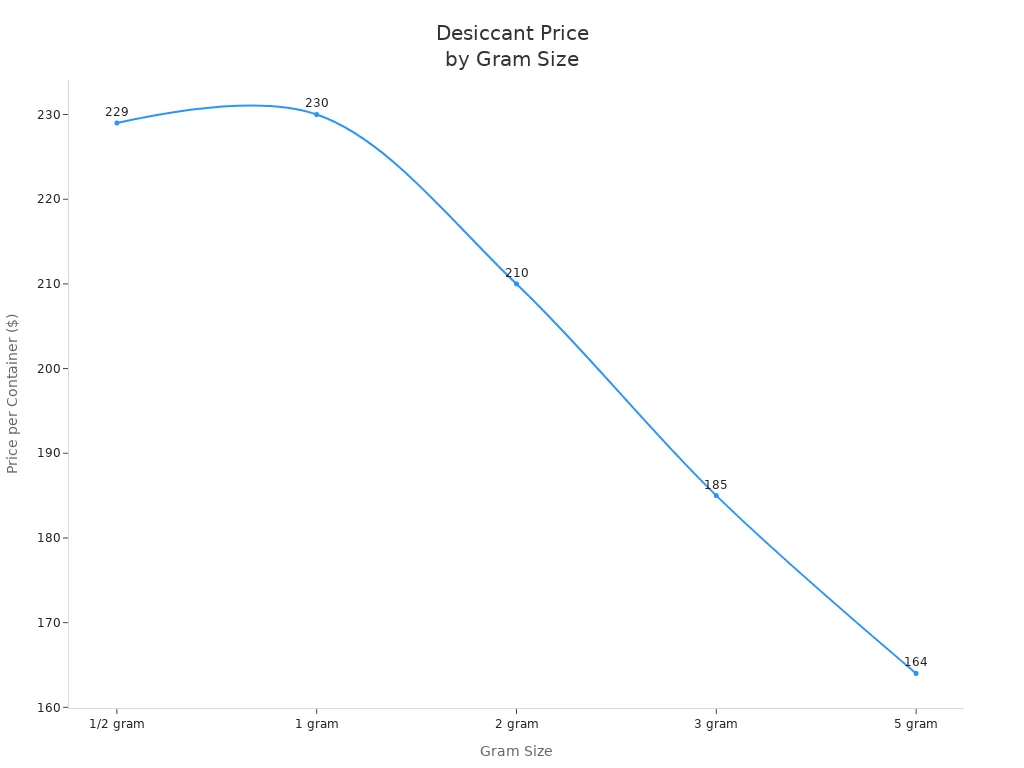
Fiber desiccants may cost more at first. But they last longer and help the earth. Fiber desiccants work well in damp places for a long time. You do not have to change them as much. Silica gel costs less at first, but you may need more packets or have to change them often in wet places. Over time, fiber desiccants can save you money and make less waste.
Tip: Think about both the price and how often you need to change your desiccant. The best choice gives you good value and keeps things safe.
Suitability
Alimentation et médecine
You want food and medicine to stay safe from water. Fiber desiccants and silica gel both help protect these items. Silica gel is used a lot because it follows strict safety rules. The FDA says silica gel is okay for food and medicine packages. This means you can trust silica gel to keep things dry and safe. It does not add bad chemicals. Fiber desiccants also keep food and medicine safe. Their solid shape makes them good for packaging. You do not have to worry about spills or beads falling out.
Here is a table that shows how desiccants work for food and medicine:
Type de dessiccateur | Regulatory Approval | Safety Data |
|---|---|---|
Gel de silice | FDA compliant | Tested to make sure no bad chemicals get into food. |
Argile | N/A | Cheap, but how much water it holds can change. |
Sièges moléculaires | N/A | Has tiny holes for picking up water, but no special safety info. |
Fiber desiccants use natural stuff. You can use them for food and medicine packages. Silica gel is good for these jobs, especially if you need FDA approval.
Tip: If you need FDA rules, silica gel is safe. If you want something natural, fiber desiccants also protect food and medicine.
Électronique
Electronics need to stay dry to work well. You want to keep phones and computers safe from water. Silica gel works well for electronics. Silica gel uses silicon dioxide to make a surface with tiny holes. This lets silica gel soak up lots of water. You can put silica gel packets in boxes for phones and cameras. Silica gel helps stop rust and keeps parts working.
Fiber desiccants also keep electronics safe. Their solid shape keeps water away from important parts. You do not see spills or beads falling out. Fiber desiccants work well in places with lots of humidity or changing weather. You can use fiber desiccants for electronics that need extra care.
Note: Silica gel is trusted for electronics. Fiber desiccants give strong protection, especially in hard places.
Usage industriel
You want products to stay safe when shipping or storing them. Fiber desiccants and silica gel both work in factories and warehouses. Silica gel is easy to use and costs less at first. You see silica gel in many packages. It works for most jobs.
Fiber desiccants give strong moisture control. You can use them for clothes, leather, and car parts. Fiber desiccants help stop mold, rust, and spoilage. Their natural materials make them good for companies that care about the earth.
Silica gel works for shipping, storage, and packaging.
Fiber desiccants protect clothes, leather, and electronics.
You can pick fiber desiccants for green factories.
Tip: Think about your product and where you keep it. Silica gel is easy for many jobs. Fiber desiccants give strong protection and help the earth.
Choosing the Right Desiccant
Assess Your Needs
You want your products to stay safe from water. First, think about what each product needs. Some things spoil quickly if they get wet. Others can handle a little water. Check moisture at different times during production. Use tools like microwave sensors to see how much water is there. Make sure your tools are safe for food. Pick sensors that work well in tough places. Good moisture testing helps you keep quality high and stop spoilage.
Here is an easy way to check your moisture control needs:
Measure water at each step of making your product.
Choose the best way to test, like microwave sensors.
Make sure your tools are safe for food or medicine.
Use sensors that last in wet or rough places.
Check that your results are always right.
Think about how much water your products can take.
Testing for moisture helps you keep things fresh, safe, and ready for customers.
Key Factors
Sensitivity
You need to know how much water your products can handle. Medicine and electronics can break with just a little water. Food needs extra care. If you work with medicine, pick a desiccant that is safe and follows rules. For electronics, choose a desiccant that keeps water low. Fiber desiccants work well for things that need strong absorption. Silica gel is good for steady moisture control. Other desiccants may fit special needs, so compare before you choose.
Stockage
Think about where you keep your products. The weather and humidity in your storage area matter. Silica gel works best in places with medium humidity. Fiber desiccants work better in high humidity and changing weather. If you store things in hot or damp places, fiber desiccants give strong protection. For normal storage, silica gel may be enough. Other desiccants help with big storage or special packaging. Always match your desiccant to your storage place.
Règlements
You must follow safety and quality rules. Food and medicine need desiccants that meet FDA or USP standards. Always check that your desiccant is safe and approved for your product. Use and change desiccants the right way. Put them where air can move around. Check packets often for damage or dirt. Use gloves and keep desiccants in closed containers. Write down when you change or dry them. Throw away used desiccants the right way and keep proof you followed the rules.
Conseils de sélection
You want to pick the best desiccant for your needs. Here are some tips to help you choose:
Check how much water your products can take. Food needs FDA-approved desiccants. Electronics need low humidity.
Look at the humidity in your area. Fiber desiccants work better in high humidity. Silica gel fits medium humidity.
Match the desiccant to your packaging and storage. Use small packets for single items. Use bigger bags for lots of products.
Make sure your desiccant meets industry rules. Food and medicine need special approval.
Think about cost and how often you need to change the desiccant. Some types can be used again.
Know how long your desiccant lasts. Replace it before it stops working.
Application | Recommended Desiccant | Special Considerations |
|---|---|---|
Produits pharmaceutiques | Molecular sieves | Precise moisture control, strict rules |
Électronique | Gel de silice | Prevents damage, inert and tasteless |
Food Packaging | Gel de silice | FDA compliant, keeps food fresh |
Textiles | Fiber desiccant | High absorption, eco-friendly |
Bulk Storage | Other desiccants | Choose based on climate and product |
Tip: Always match your desiccant to your product, environment, and rules. This helps you keep products safe and saves money.
You have many choices for moisture control. Fiber desiccants soak up lots of water and help the planet. Silica gel works well for steady conditions. Other desiccants fit special jobs. Compare each type and pick the one that fits your needs best.
Real-World Use Cases
Silica Gel in Practice
You see silica gel packets in lots of products. These small beads help stop moisture damage. Silica gel works in many industries. Here are some ways people use silica gel:
Electronics Protection: Silica gel is in device boxes. It helps keep electronics safe from water. Over five years, electronics with silica gel break 30% less.
Pharmaceutical Preservation: Drug makers put silica gel in pill packs and bottles. This keeps medicine dry and makes it last up to 20% longer.
Food Packaging & Preservation: Silica gel in food packs lowers spoilage by 15–25%. Snacks stay fresh, even when it is humid.
Leather & Textile Storage: Fancy brands use silica gel for leather and clothes. These items last longer and stay nice.
Art & Cultural Heritage Conservation: Museums use silica gel to protect old things. Silica gel cuts damage risk by up to 40%.
Silica gel works well in many places. You can trust it to control moisture every day.
Fiber Desiccant in Practice
Fiber desiccants also do well in real life. Scientists and companies test fiber desiccants in many jobs. The table below shows some important studies:
L'étude | Résultats |
|---|---|
Rafique et al. (2016) | Desiccant cooling systems handle loads separately, making them work better. |
Motaghian et al. (2021) | Desiccant wheels with different materials show new ways to control moisture. |
Wu et al. (2019) | Wood pulp fiber paper works well and may be better than old materials. |
You see fiber desiccants in textile warehouses and car part storage. They are also used for art protection. These desiccants use natural fibers. This makes them good for companies that care about the planet. You get strong moisture control and help nature too.
Tip: Fiber desiccants work best in wet or changing weather. You can use them for sensitive things and green businesses.
Lessons Learned
You learn a lot when you look at silica gel and fiber desiccants. Companies test both to find what works best. The table below shows key differences:
Type de dessiccateur | Adsorption Capacity (%) | Performance in High Moisture Environments | Impact sur l'environnement |
|---|---|---|---|
Gel de silice | 33% | Not great above 10°C | Bigger impact on the planet |
Zeolite | 5–20% | Works well in all temperatures | Better for the environment |
Aerospace and defense companies like zeolite desiccants for better moisture control. Wind energy companies think zeolite is better than silica gel. Tests show zeolite lowers moisture in oils, helping machines last longer.
You need good moisture control for sensitive things.
Changing desiccant types can make products safer and greener.
Fiber desiccants soak up lots of water and help the planet.
Silica gel is good for most jobs, but other choices may work better for special needs.
Note: You should pick your desiccant based on your product, where you use it, and your green goals. This helps keep products safe and supports a cleaner future.
Fiber desiccants soak up more water than others. They are better for the environment. Silica gel costs less and works for many things. Fiber desiccants are safer for food and medicine packaging. Silica gel is good for normal storage. If you want strong moisture control and care about nature, pick fiber desiccants. Silica gel is fine for daily use. Think about what your product needs and ask suppliers for advice. Always look at how well it works and if it helps the planet before you choose.