



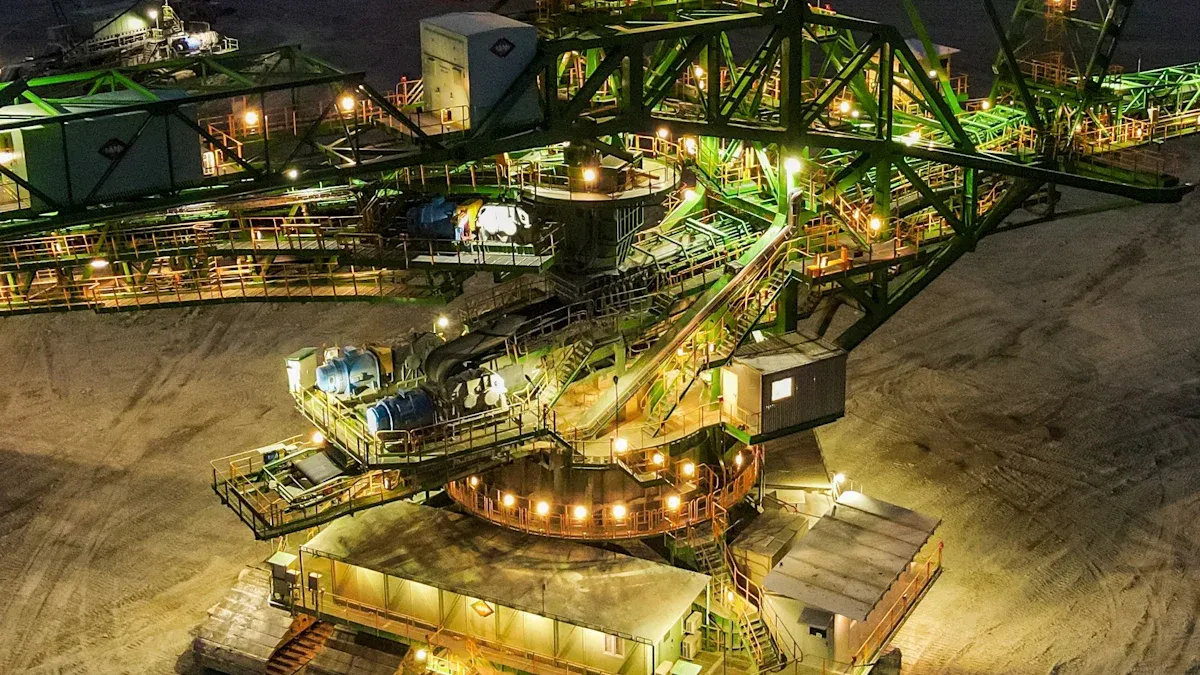
You use gold recovery activated carbon to catch gold in mining solutions. This material acts like a sponge. It pulls in gold particles and keeps them safe. You need good Activated Carbon For Gold Recovery. It helps you get more gold and spend less money.
Good carbon grabs gold faster and holds more.
Bad carbon makes you lose more gold and pay more.
Picking the right carbon helps you work better and make more money.
Key Takeaways
Activated carbon works like a sponge. It grabs gold from mining liquids. Choosing good activated carbon helps get more gold. It also saves money. Coconut shell-based activated carbon is usually the best. It has a big surface and is very strong. Knowing how adsorption works helps get more gold from cyanide liquids. There are different ways to use activated carbon. Methods like carbon-in-leach and carbon-in-pulp change how much gold you get. Taking care of activated carbon makes it last longer. It also helps it work better. Picking the right size of activated carbon helps get more gold. It also makes the system work well. Working with a good supplier gives you steady quality. You also get help for your gold recovery needs.
Activated Carbon for Gold Recovery Process
Activated carbon for gold recovery helps you get gold from mining solutions. You use it in the gold cyanidation process. This process uses cyanide to dissolve gold from ore. Activated carbon acts like a magnet for gold. It pulls gold ions out of the solution and holds them on its surface. This step is important because it lets you collect gold easily and with less waste.
Gold Adsorption Mechanism
Activated carbon grabs gold from cyanide solutions. When you mix activated carbon with the solution after cyanide leaching, gold ions stick to the carbon’s surface. This step is important in the gold cyanidation process. It helps you get gold that would stay in the liquid.
Cyanide Solution Interaction
You start with cyanide leaching. This breaks down gold in the ore and makes a gold-cyanide complex. The solution now has gold ions. Activated carbon for gold recovery is used here. It meets the cyanide solution and attracts gold ions. The carbon’s big surface area and special pores help it do this job well.
Tip: The kind of activated carbon you pick changes how much gold you get. Coconut shell-based activated carbon often works best. It has a high surface area and strong adsorption power.
AuCN Compound Absorption
The gold in the solution forms a compound called AuCN. Activated carbon takes in this compound and traps gold on its surface. You can then separate the carbon from the solution. After that, you process it to get the gold out. This step is called elution. You get a gold-rich solution ready for more refining.
Many things affect how well activated carbon for gold recovery works:
Raw material: Coconut shell activated carbon usually works better.
Activation treatment: How you treat the carbon changes its pores and helps adsorption.
Impurity ions: Other ions in the solution can fight with gold and lower adsorption.
pH level: The best adsorption happens when the solution’s pH is between 2.5 and 5.0.
Gold Recovery Methods
You can use activated carbon for gold recovery in different ways. The three main ways are carbon-in-leach, carbon-in-pulp, and carbon-in-column. Each way uses activated carbon to catch gold from cyanide solutions, but the steps are different.
Carbon-in-Leach
In the carbon-in-leach way, you add activated carbon to the ore slurry before leaching. Gold dissolves into the solution. Activated carbon grabs it at the same time. Doing both steps together helps you get more gold, especially when the ore has things that might take gold from the solution.
Carbon-in-Pulp
With carbon-in-pulp, you first leach the ore with cyanide. After leaching, you mix activated carbon into the pulp. The carbon grabs gold from the solution. This way works well, but sometimes doing the steps one after another can lower recovery if things are not perfect.
Carbon-in-Column
The carbon-in-column way uses columns filled with activated carbon. You pour the gold-cyanide solution through these columns after leaching. Activated carbon grabs gold as the solution moves through. How well this way works depends on the column design and how you use it.
Here’s a table to help you compare the three main ways:
Method | Description | Efficiency Impact |
|---|---|---|
Carbon-in-Leach | Add activated carbon before leaching. Gold dissolves and adsorbs at the same time. | Helps you get more gold, especially with preg-robbing ores. |
Carbon-in-Pulp | Leach ore first, then add activated carbon to the pulp. | May lower recovery in some cases because of the step-by-step process. |
Carbon-in-Column | Pour gold-cyanide solution through columns of activated carbon. | How well it works depends on column design and use. |
Note: You should pick the way that fits your ore type and recovery goals. Each way uses activated carbon for gold recovery, but the setup and results can change.
Activated carbon for gold recovery is very important in the gold cyanidation process. You need it to get gold from cyanide solutions and improve your results. By learning how activated carbon works and picking the right way, you can get more gold and lose less.
Key Properties of Activated Carbon
Adsorptive Capacity
You need activated carbon that can hold a lot of gold. This means it can grab and keep more gold from your solution. If the carbon has strong gold holding power, you will get more gold and waste less. How much gold the carbon can hold depends on how it is made and how you use it.
Here is a table that shows how much gold activated carbon can hold in different situations:
Contact Time (Hours) | K-Value without Excess CN (mg/g) | K-Value with CN (mg/g) |
|---|---|---|
2.0 | 30.8 | 24.4 |
7.5 | 30.8 | 24.5 |
54.0 | 30.3 | 24.4 |
You can see that activated carbon can hold up to 30 mg of gold for each gram. This high number means you can get more than 98% of the gold from your solution in just a few hours. If you pick carbon that is good at grabbing gold, you will get better results and more gold.
High adsorptive capacity helps you get gold easily.
Fast adsorption rates let you collect gold quickly.
Good carbon does not wear out fast and lasts longer.
Tip: Always check how much gold the carbon can hold before you buy it. This helps you choose the best one for your gold recovery.
Attrition and Fines
Attrition means the carbon breaks into tiny pieces called fines. You want activated carbon that does not make too many fines. Fines can block your machines and make you lose gold. Different brands of activated carbon make different amounts of fines. Here is a table that compares some popular brands:
Vendor | Fines in DI Water (14 mesh) | Fines in D.I./Silica Sand (14 mesh) | Attrition Rate in DI Water (lbs/ton/day) | Attrition Rate in D.I./Silica Sand (lbs/ton/day) |
|---|---|---|---|---|
GD Resources | 1.26% | 1.87% | 74 | N/A |
Calgon | 0.13% | 0.16% | 74 | 129 |
Norit | N/A | N/A | 40 | 74 |
Westates | N/A | N/A | 74 | N/A |
If you use carbon that does not break down much, you will have fewer problems and less waste. Always pick activated carbon that stays strong and does not make a lot of fines.
Mechanical Strength
Mechanical strength shows how well activated carbon can handle tough jobs. You need carbon that stays whole when you mix, pump, or reuse it. Strong carbon lasts longer and keeps working well. It also keeps its shape and size, so you get steady gold recovery.
Here are some important points about mechanical strength:
High strength keeps the carbon from breaking and making fines.
Strong carbon can be used many times and still work.
Good mechanical strength means you get steady results and less trouble.
A table below shows why mechanical strength is important:
Aspect | Explanation |
|---|---|
Operational Stability | High strength keeps carbon whole and stops contamination. |
Regeneration Efficiency | Strong carbon can be used again and again, saving money. |
Consistent Adsorption Performance | Keeps shape and size for steady gold recovery. |
System Efficiency | Stops blockages and keeps everything working smoothly. |
Gold Recovery in Mining | Handles tough mining work and keeps working for a long time. |
When you choose activated carbon with high mechanical strength, you get better results and save money. You also avoid problems like blockages and losing gold.
Particle Size
You need to pay close attention to particle size when you choose activated carbon for gold recovery. Particle size affects how well the carbon works in your process. If you pick the right size, you get better gold recovery and smoother operations.
Activated carbon comes in different particle sizes. You measure these sizes using mesh numbers. Mesh size tells you how big or small the carbon particles are. Larger mesh numbers mean smaller particles. Smaller mesh numbers mean bigger particles.
The size of activated carbon particles changes how fast gold sticks to the carbon. Small particles have more surface area. This means they can grab gold faster. Large particles move more easily in tanks and columns. They do not block equipment as much. You need to find a balance between fast gold adsorption and easy handling.
Here is a table that shows common mesh sizes and their particle size ranges for activated carbon used in gold recovery:
Mesh Size | Particle Size (mm) |
|---|---|
6-12 | 1.68 – 3.36 |
8-16 | 1.19 – 2.38 |
6-16 | 1.19 – 3.36 |
You often see mesh sizes like 6-12, 8-16, or 6-16 in gold recovery plants. These sizes give you a good mix of fast gold adsorption and strong mechanical strength. If you use very small activated carbon, you might get more fines. Fines are tiny pieces that can block filters and make you lose gold. If you use very large activated carbon, you might not get gold as quickly because there is less surface area.
You should match the particle size of activated carbon to your equipment and process. In carbon-in-pulp and carbon-in-leach systems, medium-sized particles work best. They move well in tanks and do not break down easily. In carbon-in-column systems, you might use smaller particles. These give you faster gold recovery because the solution flows past more surface area.
Tip: Always check the mesh size before you buy activated carbon. The right size helps you get more gold and keeps your system running smoothly.
You can improve your gold recovery by picking the best particle size for your needs. Activated carbon with the right size will help you get more gold, reduce waste, and keep your process efficient.
Types of Activated Carbon for Gold Recovery
You can pick from different types of activated carbon for gold recovery. Each type has special features that help you get more gold. Choosing the right one makes your job easier and faster.
Coconut Shell-Based Carbon
Coconut shell-based activated carbon is used a lot for gold recovery. This carbon comes from coconut shells. It is strong and very pure.
You can get mesh sizes like 6-12 and 8-16. These sizes give a good mix of surface area and flow. Gold sticks to the carbon quickly.
A high iodine value (950-1200 mg/g) means the carbon grabs more gold.
The carbon is very hard, so it does not break easily when mixed or pumped.
Low ash content keeps your gold clean and stops contamination.
It has more fixed carbon than coal or wood. This helps remove more impurities.
The hardness lets you use the carbon longer without losing strength.
Coconut shell carbon works better than other types. Its small pores help clean water and gas well.
Tip: If you want strong carbon that lasts long and grabs gold fast, coconut shell-based carbon is a good pick.
Granular Activated Carbon
Granular activated carbon (GAC) is also a top choice for gold recovery. GAC has a strong power to grab gold and lots of tiny holes. It can handle rough use and you can use it again after cleaning.
Here is a table that shows how different types of activated carbon work:
Type of Activated Carbon | Effectiveness in Gold Recovery | Key Characteristics |
|---|---|---|
Granular Activated Carbon (GAC) | Highly effective | Strong adsorption, good pore structure, mechanical strength, can be regenerated |
Powdered Activated Carbon (PAC) | Less effective | Fine particles, high loss rate, not usually reused |
Pelletized Activated Carbon (EAC) | Least effective | Made for gas purification, not ideal for gold recovery |
GAC works best because it stays strong in gold recovery systems. Powdered and pelletized types do not work as well. They break down faster and do not grab as much gold.
Mesh Size Options
Mesh size tells you how big or small the carbon pieces are. You need to pick the right mesh size for your gold recovery system. The size changes how fast gold sticks to the carbon and how well the solution moves.
Application | |
|---|---|
Drinking Water Filtration | 12×40 |
Wastewater Treatment | 8×30 or 12×40 |
Air and Vapor Filtration | Pelletized (4mm) |
Emergency Spill Treatment | PAC (<80 mesh) |
Aquariums | 8×30 or 12×40 |
Industrial Chemical Processes | Mesh varies |
Smaller mesh sizes grab gold faster because they have more surface area. Bigger mesh sizes are better when you need more time for gold to stick. Fine mesh sizes can slow down the flow and make pressure go up. Coarse mesh sizes let the solution move fast, which is good for systems that run all the time.
Coarse mesh carbon gives you more time and better flow.
Fine carbon is good for fast reactions but short contact time.
You should match the mesh size to your machines and process.
Note: Always check mesh size before you buy activated carbon. The right size helps you get more gold and keeps your system working well.
Importance in Gold Recovery
Efficiency and Yield
You want to get the most gold from your ore. Activated carbon helps you do this job better. If you use high-quality activated carbon, you can get up to 90% of the gold. This is even more likely if the carbon is treated with special chemicals like thioglycolic acid. That means you get more gold each time and waste less.
Good activated carbon grabs gold fast.
It pulls gold out of cyanide solutions with little loss.
The carbon’s quick gold grabbing and high holding power give you more gold.
Using activated carbon with the right features helps you get the most gold. You will see better results and make more money when you pick the best carbon for gold recovery.
Maintenance and Longevity
You need to take care of your activated carbon to keep it working well. Good care helps your carbon last longer and saves you money. Here are some steps you should follow:
Heat the carbon slowly before you start elution.
Rinse the carbon after acid washing and before hot caustic cleaning.
Keep temperature changes under 50°C so the carbon does not break.
Use acid washing with 3–5% HCl to clean off minerals.
Rinse with caustic to get rid of organics.
Store unused carbon in clean water.
Check how well the carbon works every 10–15 cycles and change it if it drops below 85%.
Keep carbon in sealed, clean containers.
When you use activated carbon again, you spend less money because you do not have to buy new carbon all the time. You also keep your gold recovery system working well. If you let the carbon break down, you can lose both carbon and gold. This makes your results worse and costs go up.
Environmental Impact
You help the environment when you use activated carbon for gold recovery. This way makes less pollution than old gold recovery methods. Activated carbon can be used many times, so you make less waste. You also cut down on cutting trees and water pollution.
Activated carbon lowers harm to the environment.
You can use it again and again.
Less waste means a cleaner process.
But you must handle all chemicals and waste with care. If you do not, you can hurt local water and soil. Noise, dust, and smoke from gold recovery can also bother plants and animals nearby. Always store and throw away chemicals the right way to keep the environment safe during gold recovery.
Tip: If you pick activated carbon and follow safe rules, you help your business and the planet.
Choosing Activated Carbon and Supplier
If you want to get the most gold, you need to pick the right activated carbon and a good supplier. This choice changes how much gold you get, how often you buy new carbon, and how well your plant works.
Quality Indicators
You should look at some important things before you buy activated carbon. These things tell you if the carbon will work well for gold recovery. The table below shows different types and examples of quality indicators:
Indicator Type | Examples |
|---|---|
Physical Performance | Shape, appearance, specific surface area, pore volume, specific gravity, mesh number, particle size, wear resistance, floating rate |
Chemical Performance | PH value, ash content, moisture, ignition point, uncarbonized matter, sulfide, chloride, cyanide, sulfate, acid-soluble matter, alcohol-soluble matter, iron content, zinc content, lead content, arsenic content, calcium and magnesium content, heavy metal content, phosphate |
Adsorption Performance | Methylene blue adsorption value, iodine adsorption value, phenol adsorption value, carbon tetrachloride adsorption value, caramel adsorption value, quinine sulfate adsorption value, saturated sulfur capacity, penetration sulfur capacity, water capacity, ethyl chloride vapor protection time, ABS value |
Check these things to make sure the carbon is right for you. A high iodine value means it grabs gold well. Low ash means there are fewer bad things in the carbon. If the carbon is strong, it will last longer.
Testing and Evaluation
You need to test activated carbon before using it in your plant. Testing helps you know if the carbon will do a good job. You can use tests like ASTM D3860 for adsorption and ASTM D2854 for density. Look for an iodine number over 1,000 mg/g. This means the carbon has a lot of surface area and can grab gold well. Ash should be less than 5%. Hardness should be more than 95% so you get fewer fines.
Ask your supplier for Certificates of Analysis for each batch. Good suppliers test their carbon in special labs. Some even show you test results right away. You can also ask for checks before the carbon is shipped to you.
Tip: Always test a small amount first before buying a lot. This helps you find problems early and saves money.
Supplier Selection
Picking the right supplier is just as important as picking the right carbon. A good supplier gives you the same quality every time, helps you with problems, and answers your questions fast. The table below shows what you should look for in a supplier:
Criteria | Description |
|---|---|
Thickness | Affects strength and debris production during use. |
Iodine Value | Shows adsorption capacity; balance needed for strength. |
Ash Content | Low ash means high purity and better adsorption. |
Moisture Content | Less moisture means better adsorption. |
Strength | High strength means longer service life. |
Bulk Density | Denser carbon has better strength and adsorption. |
Attrition | Low attrition means less gold loss. |
R Value | Shows speed of gold adsorption per unit weight. |
K Value | Shows how much gold the carbon can hold. |
Particle Uniformity | Rounded particles with fewer edges are better. |
Cleanliness | Less dust saves time and water. |
Bubbling | Strong bubbling means better adsorption. |
Equipment Test | Lab tests can check gold absorption. |
Production Process | Coconut shell carbon from a slep furnace has higher strength. |
Low Platelets | Fewer platelets mean less gold loss. |
Polished Product | Regular shape improves performance. |
You should also see if the supplier has a good reputation. Good suppliers follow the rules and give you support. They test every batch and share the results with you. This helps you get the best carbon and avoid problems.
Note: A trusted supplier helps your gold recovery plant work better and with fewer problems.
You use gold recovery activated carbon to catch gold from the gold cyanide complex. Good carbon helps you get more gold in mining. It also gives you better results and less waste. If you pick a supplier you can trust, you keep your money safe and get better gold recovery.
Good activated carbon works well and does not lose much gold.
A good supplier gives you the same quality and helps you with problems.
Performance Factor | |
|---|---|
ISO 17025, ASTM D4607 | Can hold a lot of gold |
Iodine value ≥1,000 mg/g | Very strong and tough |
Mesh size 6×12 | Made from strong material |
You should think about what your process needs and how well the carbon works before you choose.