



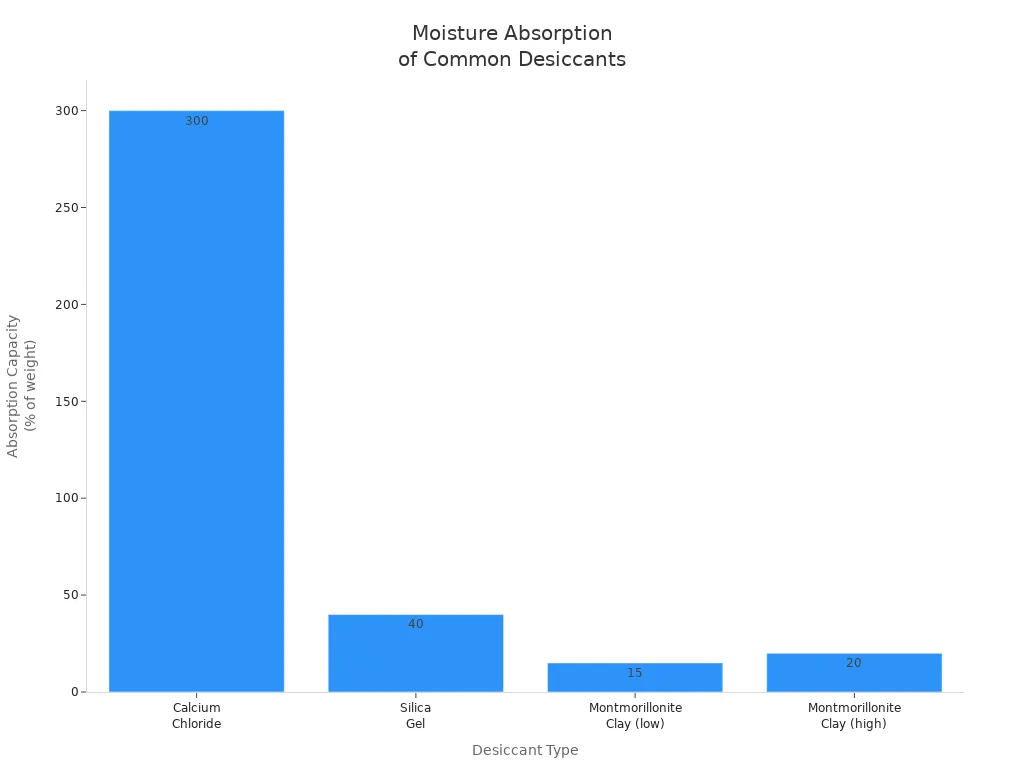
Вы можете спросить, сколько осушитель может впитывать влагу. Силикагель может удерживать около 40% собственного веса. Хлорид кальция может удерживать до 300% своего веса. Глина может удерживать около 15-20% своего веса. В таблице ниже показано, сколько может вместить каждый влагопоглотитель:
Влагопоглотитель | Поглощающая способность |
|---|---|
Хлорид кальция | До 300% своего веса |
Силикагель | ~40% от его веса |
Монмориллонитовая глина | ~15-20% от своего веса |
Вам нужно знать, сколько влагопоглотителя нужно использовать. Влагопоглотитель защищает ваши вещи от влаги. Если использовать слишком мало, может появиться плесень или ржавчина. Оптимальное количество зависит от типа и места использования. Продолжайте читать, чтобы узнать, сколько влагопоглотителя вам нужно и как выбрать правильное количество.
Основные выводы
Силикагель может впитать около 40% от своего веса в воде. Это делает его подходящим для мест со средней влажностью.
Хлорид кальция очень прочен и может впитывать до 300% своего веса. Лучше всего он работает в местах с повышенной влажностью.
Глиняные влагопоглотители могут удерживать 15-30% своего веса в воде. Лучше всего они подходят для прохладных мест с низкой влажностью.
Выбирая подходящий влагопоглотитель, учитывайте потребность вашего продукта в сухости и влажность воздуха в помещении, где вы храните его.
Часто проверяйте влагопоглотители. Следите за изменением цвета или повреждением, чтобы знать, когда их нужно менять.
Используйте тесты на влажность, чтобы определить, сколько влагопоглотителя вам нужно. Подумайте о размере вашего контейнера и о том, насколько влажен воздух.
Положите влагопоглотители рядом с местами, которые намокают в упаковке. Это поможет им лучше работать.
Всегда используйте упаковку, которая не протекает. Это сохранит ваши вещи в безопасности и поможет влагопоглотителям хорошо работать.
Поглощающая способность влагопоглотителя
Выбирая влагопоглотитель, вы должны знать, сколько влаги он может впитать. Каждый вид лучше всего работает в определенных местах. Вы можете использовать анализ влажности, чтобы определить, насколько хорошо они работают, и выбрать подходящий для ваших нужд.
Поглощение силикагеля
Силикагель - очень распространенный влагопоглотитель.. Он вмещает до 40% собственного веса влагой. Это делает его хорошим выбором для хранения и упаковки вещей. Силикагель хорошо работает, когда в воздухе есть некоторая влажность. Он продолжает работать, даже если воздух не очень влажный.
Вот таблица, в которой показано, как силикагель сравнивается с другими влагопоглотителями в лабораторных условиях:
Тип влагопоглотителя → | Силикагель | Клей | Молекулярное сито | Оксид кальция | Сульфат кальция |
|---|---|---|---|---|---|
Макс. адсорбционная способность по весу (77°F, 90% RH) | 40% | 25-31% | 25% | 32% | 10% |
Адсорбционная способность при 77°F, 30% RH | умеренный | умеренный | умеренный | высокий | низкий |
Адсорбционная способность при 77°F, 10% RH | низкий | умеренный | высокий | высокий | низкий |
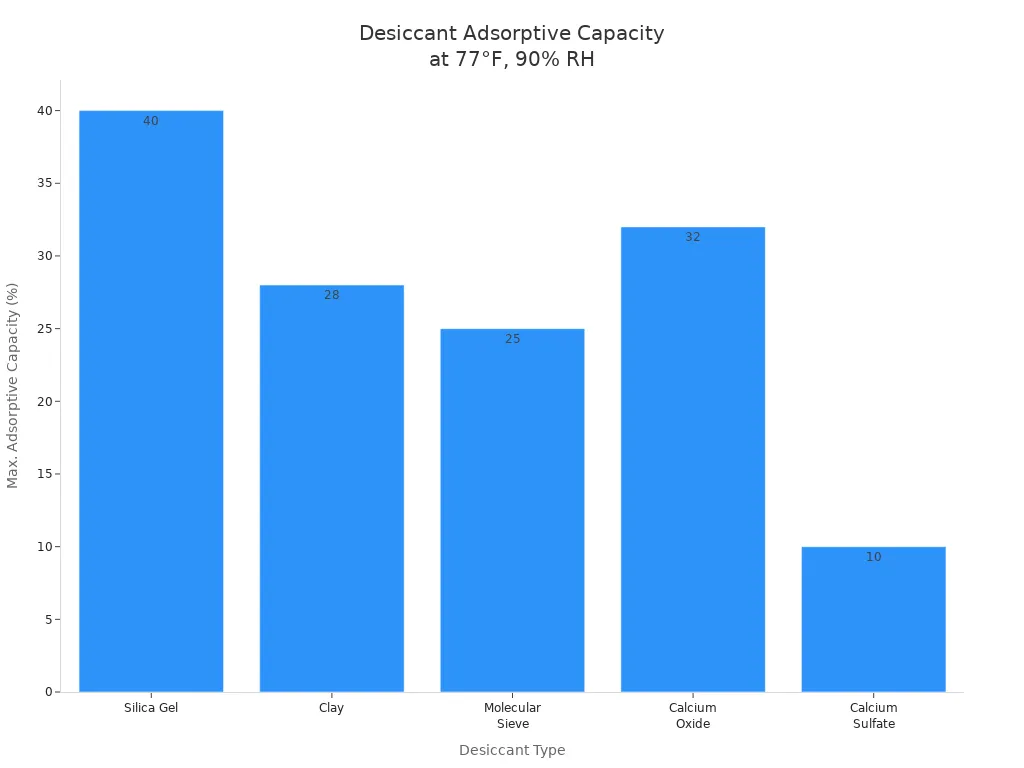
Видно, что силикагель сохнет лучше, чем глина и сульфат кальция. Молекулярные сита лучше всего работают, когда воздух очень сухой. Силикагель хорошо работает при различных уровнях влажности.
Площадь поверхности и эффективность
Силикагель имеет большую площадь поверхности. Это помогает ему быстро улавливать водяной пар. Вы можете использовать его для анализа влажности в электронике, продуктах питания и упаковках лекарств. Силикагель безопасен и не вступает в реакцию с большинством предметов. После высыхания его можно использовать снова.
Поглощение хлорида кальция
Хлорид кальция - сильный влагопоглотитель. Он впитывает гораздо больше влаги, чем в силикагеле. Его можно использовать в местах с повышенной влажностью, например, в морских контейнерах и на складах. Хлорид кальция может поглощать до 600% своего веса при влажности 85%. При влажности 50% он по-прежнему поглощает 150% своего веса.
Характеристика | Хлорид кальция | Силикагель |
|---|---|---|
Мощность поглощения | Очень высокая - поглощает 150% своего веса при влажности 50%, увеличиваясь до 600% при влажности 85%. | Умеренный - поглощает около 25% своего веса при влажности 50%, достигая 36% при влажности 85%. |
Хлорид кальция впитывает влагу с помощью химического процесса. В процессе работы он превращается в жидкий рассол. Поэтому он отлично подходит для очень влажных помещений. Силикагель использует физическую адсорбцию, поэтому он не так хорошо работает при очень высокой влажности.
Высокая влажность
Хлорид кальция следует использовать, если вам нужно защитить вещи в сырых помещениях. Он продолжает впитывать влагу, даже если воздух очень влажный. Вы можете использовать его для анализа влажности при транспортировке и хранении.
Глина и другие влагопоглотители
Глиняные влагопоглотители, такие как монтмориллонитовая глина, могут впитывать до 30% от их веса влагой. Лучше всего они работают, когда воздух не слишком влажный и температура прохладная. Глину можно использовать для изготовления порошков, сухих макаронных изделий и продуктов холодного хранения.
Тип влагопоглотителя | Поглощающая способность | Эффективные сценарии |
|---|---|---|
Глина (монтмориллонит) | До 30% своего веса во влаге | Порошки (протеин, специи), сухие макароны, продукты холодного копчения |
Молекулярное сито | Чрезвычайно быстрая адсорбция | Вяленое мясо, шоколад, сухофрукты, горячие или длинные экспортные маршруты |
Глиняные влагопоглотители хорошо работают, когда воздух не слишком влажный и прохладный.
Их можно использовать для сохранения свежести продуктов и перевозки холодных вещей.
Они не так хорошо работают при высокой температуре и влажности.
Глиняные влагопоглотители изготавливаются из кремнезема и оксидов. Перед использованием следует проверить их сорт. Они теряют влагу при сильном нагревании и могут превратиться в пыль, если их измельчить. Молекулярные сита лучше всего работают в очень сухом воздухе и могут быстро впитывать влагу. Их можно использовать для вещей, требующих быстрой сушки.
Совет: Всегда выбирайте влагопоглотитель, который подходит для вашего продукта и места его использования. Используйте анализ влажности, чтобы определить, какой вид обеспечивает наилучшую защиту.
Факторы, влияющие на производительность осушителя
Вам нужно подумать о том. окружающей среды при использовании влагопоглотителя. То, насколько хорошо он работает, зависит от влажности, температуры и того, как вы упаковываете вещи. Если вы хотите получить хорошие результаты, узнайте об этих факторах, прежде чем выбирать влагопоглотитель для анализа влажности.
Влияние влажности
Влажность означает наличие водяного пара в воздухе. Когда воздух влажный, влагопоглотитель должен впитывают больше влаги. Он может быстрее заполниться и потребовать замены. Во влажном воздухе силикагель работает лучше, чем глина. Силикагель быстро захватывает влагу и удерживает больше воды. Он дольше сохраняет ваши вещи во влажном воздухе. Глина не впитывает так много влаги и не работает так быстро во влажном воздухе. Всегда проверяйте влажность воздуха в вашем хранилище. Если вы живете там, где влажно, вам может понадобиться более сильный влагопоглотитель или использовать его в большем количестве.
Совет: Влажный воздух заставляет влагопоглотители заполняться быстрее. Планируйте дополнительную защиту в сырых местах.
Температурные эффекты
От температуры зависит эффективность работы влагопоглотителя. Силикагель не так хорошо впитывает влагу когда он горячий. При повышении температуры он задерживает меньше воды. Хлорид кальция лучше работает в теплых и влажных помещениях. Он продолжает впитывать влагу, даже когда становится жарко. Если вы храните вещи в жарком месте, выбирайте влагопоглотитель, способный переносить жару. Возможно, вам придется использовать больше влагопоглотителя или часто проверять его.
Тип влагопоглотителя | Лучше всего работает в | Теряет эффективность в |
|---|---|---|
Силикагель | Прохладно, умеренная влажность | Высокие температуры |
Хлорид кальция | Тепло, высокая влажность | Низкая влажность |
Клей | Прохладно, низкая влажность | Сильная жара и влажность |
Контейнеры и упаковка
От того, как вы упакуете свои вещи, зависит, насколько хорошо влагопоглотитель их защитит. Герметичная или влагостойкая упаковка препятствует попаданию воды внутрь. Это поможет влагопоглотителю прослужить дольше. Положите влагопоглотители рядом с местами, которые легко намокают. Разложите их так, чтобы все было защищено. Материал контейнера тоже имеет значение. Некоторые контейнеры быстрее пропускают воду, поэтому вам потребуется больше влагопоглотителя. Если вы будете следовать рекомендациям и правилам, вы снизите риск повреждения. Хорошие влагопоглотители стоят денег, но они спасают вашу продукцию и сохраняют вашу репутацию.
Выберите подходящий влагопоглотитель для вашего контейнера и продукта.
Используйте герметичную упаковку, чтобы предотвратить загрязнение.
Положите влагопоглотители рядом с влажными местами.
Следуйте руководствам и стандартам для достижения наилучших результатов.
🛡️ Грамотная упаковка и правильное размещение помогут влагопоглотителю прослужить дольше и лучше защитить ваши вещи.
Чтобы сохранить вещи сухими, подумайте о влажности, температуре и упаковке. От этого зависит, сколько влаги сможет впитать влагопоглотитель и как долго он будет работать. Всегда используйте анализ влажности для проверки вашего помещения и выбора лучшего влагопоглотителя для ваших нужд.
Сколько влагопоглотителя вам нужно?
Расчет количества влагопоглотителя
Вы должны знать сколько влагопоглотителя использовать для вашей посылки. Есть несколько способов определить нужную сумму. Вот несколько простых методов:
Расчет на основе веса: Используйте вес ваших предметов или контейнера. Это поможет вам определить, сколько влаги необходимо впитать.
Расчет на основе объема: Измерьте пространство внутри контейнера. Для больших пространств требуется больше влагопоглотителя.
Графики сорбции влаги: Эти диаграммы показывают, сколько влаги может впитать каждый влагопоглотитель при различных уровнях влажности.
Расчет площади поверхности: Если воздух внутри помещения перемещается незначительно, используйте площадь поверхности, чтобы решить, сколько его нужно использовать.
Вы также можете воспользоваться формулами. Например, формула влагопоглотителя для контейнеров InterDry выглядит следующим образом:
W = (K * A * R * M) / 14
W означает вес влагопоглотителя, который вам необходим. K - постоянная, A - площадь, R - относительная влажность, а M - коэффициент влажности. Вы можете использовать эту формулу для анализа влажности при транспортировке и хранении.
Пошаговое руководство
Выполните следующие действия, чтобы узнать, сколько влагопоглотителя вам нужно:
Измерьте размер контейнера. Запишите объем в кубических метрах или футах.
Проверьте влажность воздуха в вашем помещении или хранилище.
Выберите тип влагопоглотителя подходящий для вашего продукта и места, где вы будете его использовать.
Используйте график или формулу, чтобы рассчитать необходимое количество влагопоглотителя.
Посмотрите на примеры из реальной жизни, чтобы помочь себе определиться:
Тип контейнера | Рекомендуемое количество влагопоглотителя |
|---|---|
20-футовый контейнер для перевозки грузов | |
40-футовый транспортный контейнер | От 8 до 12 кг (от 17,6 до 26,4 фунтов) |
Контейнер 40 футов (кофейные зерна, 67,7 м³) | 101,55 кг (с учетом коэффициента 1,5 кг/м³) |
💡 Совет: Всегда округляйте свой ответ, чтобы убедиться, что у вас достаточно защиты.
Распространенные ошибки
Вы сможете избежать проблем, если будете следить за этими ошибками:
Недооценка влажности: Некоторые люди используют средние показатели влажности и забывают об изменениях погоды или места. Это может означать недостаточный контроль влажности.
Выбор неправильного размера влагопоглотителя: Если вы используете слишком мало или слишком много, ваши вещи могут быть повреждены.
Негерметичная упаковка: если контейнер плохо запечатан, влага может попасть внутрь и заставить влагопоглотитель работать не так хорошо.
Использование некачественных влагопоглотителей: Плохие материалы могут не впитывать влагу так, как должны.
🚫 Примечание: Всегда проверяйте упаковку и используйте хорошие влагопоглотители. Дважды проверьте свои расчеты, прежде чем упаковывать вещи.
Анализ влажности поможет вам правильно выбрать влагопоглотитель и его количество. Это позволит сохранить ваши продукты сухими и безопасными.
Диаграмма расчета осушителя
Краткая справочная таблица
Таблица расчета влагопоглотителя поможет вам выбрать нужное количество. Эта таблица позволит вам быстро сделать выбор и избежать ошибок. В таблице ниже показано, сколько единиц вам нужно для разных целей и размеров контейнеров. Одна единица равна примерно 28 граммам.
Тип приложения | |
|---|---|
Общее использование | 1,2 единицы |
Силикагель | Использование на основе измерения внутреннего объема |
Молекулярное сито | Использование на основе измерения внутреннего объема |
Клей | Использование на основе измерения внутреннего объема |
Если ваш контейнер имеет объем 10 кубических футов, вам понадобится 12 единиц для общего использования. Для силикагеля, молекулярного сита или глины измерьте внутреннее пространство и подберите влагопоглотитель в соответствии с ним.
💡 Совет: Всегда округляйте единицы измерения. Это позволит сохранить ваши вещи сухими.
Руководство по размерам контейнеров
При использовании таблицы следует учитывать несколько моментов. Они помогут вам выбрать правильное количество и тип контейнера:
Размер контейнера. Большим контейнерам требуется больше влагопоглотителя.
Тип груза. Электроника и продукты питания нуждаются в дополнительной защите.
Материал упаковки. Если вода легко проникает внутрь, используйте больше влагопоглотителя.
Время транспортировки. Более длительные поездки означают, что внутрь может попасть больше влаги.
Климат во время транспортировки. При сильных изменениях температуры или влажности требуется дополнительный влагопоглотитель.
В этом вам поможет простая формула:
W (вес влагопоглотителя): Это количество в граммах, которое вам необходимо.
K (переменная окружающей среды): Измените этот параметр, если условия тяжелые.
A (Объем): Измерьте объем вашего контейнера в кубических метрах.
R (Ожидаемая относительная влажность): Определите влажность внутри помещения.
M (месяцы): Подсчитайте, на какой срок вам нужна защита.
Выполните следующие действия, чтобы использовать диаграмму для своих нужд:
Измерьте объем контейнера.
Проверьте тип груза и упаковки.
Подумайте, как долго и где вы будете отправлять или хранить товар.
Используйте диаграмму и формулу, чтобы найти нужное количество.
При высокой влажности или длительных поездках добавьте дополнительные блоки.
📝 Примечание: Таблица расчета влагопоглотителя поможет вам защитить ваши продукты. Вы можете предотвратить повреждение изделий влагой, выполнив следующие простые действия.
Выбор правильного влагопоглотителя
Подбор приложений
Вы должны выбрать правильный влагопоглотитель для своего продукта. Каждый товар нуждается в разном уровне контроля влажности. Электроника, продукты питания, лекарства - все они нуждаются в особом уходе. Вот некоторые шаги, которые помогут вам в выборе:
Узнайте, чувствителен ли ваш товар к влаге. Электроника и лекарства обычно нуждаются в большей защите, чем продукты питания.
Проверьте, насколько влажно в вашем регионе. Если там очень влажно, вам нужен влагопоглотитель, способный впитывать больше воды.
Подумайте, как вы упаковываете и храните свои вещи. Для некоторых предметов нужны небольшие пакеты. Другие требуют больших объемов.
Убедитесь, что вы соблюдаете правила безопасности для своего продукта. Продукты питания и лекарства имеют строгие стандарты безопасности.
Посмотрите на цену и узнайте, сможете ли вы использовать влагопоглотитель снова. Некоторые типы можно высушить и использовать повторно.
Узнайте, как долго будет работать влагопоглотитель. Некоторые виды работают дольше, чем другие.
📝 Совет: Всегда выбирайте влагопоглотитель, который подходит для вашего продукта и способа его хранения.
Экологические соображения
Вам следует подумать о том, где вы будете использовать влагопоглотитель. Температура и влажность могут изменить эффективность его работы. Силикагель работает лучше всего в местах, где не слишком влажно или сухо. Молекулярные сита лучше подходят для очень сухого воздуха. Если вы храните вещи в жарких или влажных помещениях, используйте влагопоглотитель, способный выдержать такие условия. Вам также следует подумать о том, как выбрасывать использованные влагопоглотители. Природные типы, такие как глина и активированный уголь разлагаются в природе и могут быть использованы снова. Например, активированный уголь можно положить в почву, чтобы помочь растениям. Силикагель можно нагревать и использовать снова, что экономит ресурсы и делает меньше отходов.
Глина и древесный уголь являются натуральными и разлагаются в окружающей среде.
Чтобы использовать силикагель снова, его можно нагреть.
Использование влагопоглотителей снова помогает Земле и делает меньше мусора.
Выбирайте многоразовые или натуральные влагопоглотители - это полезно для планеты.
Стоимость и доступность
Вы должны обратить внимание на цену и на то, насколько легко достать каждый влагопоглотитель. Силикагель и глина популярны, потому что они хорошо работают и стоят недорого. Хлорид кальция стоит дороже потому что для его производства требуется специальное оборудование. Это может сделать его более дорогим для вас. Силикагель легко купить, и он работает во многих местах. Бентонитовая глина - хороший выбор, потому что ее можно использовать снова, и она не вступает в реакцию с большинством вещей. Если вы хотите сэкономить, выбирайте влагопоглотитель, который легко найти и который соответствует вашему бюджету.
Тип влагопоглотителя | Стоимость | Доступность | Специальные возможности |
|---|---|---|---|
Силикагель | Низкий-средний | Широко доступны | Многоразовый, стабильный |
Хлорид кальция | Средний и высокий | Реже | Высокая абсорбция, дороговизна |
Бентонитовая глина | Низкий | Широко доступны | Биоразлагаемый, многоразовый |
💡 Примечание: Выбирайте влагопоглотитель, который легко купить и который соответствует вашему бюджету. Использование того, который вы можете использовать снова, поможет вам сэкономить деньги.
Советы по эффективному использованию осушителей
Размещение и распространение
Вы получите лучшие результаты, если поместите влагопоглотители в продуманные места. Водяной пар часто скапливается в определенных местах. Сосредоточьтесь на этих местах, чтобы решить проблему влажности.
Положите влагопоглотители вблизи дверей, вентиляционных отверстий и углов. Это места, куда может проникать или скапливаться водяной пар.
Подвесьте влагопоглотители к потолку. Это поможет воздуху двигаться вокруг них. Это позволит им впитывать влагу со всех сторон.
Рассыпьте влагопоглотители по всему контейнеру. Это поможет защитить все, что находится внутри.
Добавить дополнительные пакеты в углах. В углах часто скапливается влага.
Если правильно разместить и распределить влагопоглотители, можно предотвратить повреждение от влаги. Вы сохраните свои вещи в безопасности, если закроете все места, где может появиться сырость.
Мониторинг и замена
Вам следует часто проверять влагопоглотители, чтобы убедиться, что они еще работают. По некоторым типам легко определить, когда их нужно менять. Используйте эту таблицу, чтобы узнать, когда их нужно заменить:
Индикатор | Описание |
|---|---|
Изменение цвета | Силикагель меняет цвет, например, с оранжевого на зеленый, когда в нем много влаги. |
Физическая деградация | Если бусины ломаются или крошатся, они не работают так хорошо. |
Повышенная относительная влажность | Проверьте влажность с помощью гигрометра. Если она повышается, возможно, влагопоглотитель переполнен. |
Неприятный запах | Затхлый запах может означать, что плесень растет из-за того, что влагопоглотитель перестал работать. |
Загрязнение | Если пакеты загрязняются или соприкасаются с химическими веществами, замените их. |
График замены с учетом времени | Регулярно меняйте влагопоглотители в зависимости от условий окружающей среды и используемого типа. |
Пакеты с изменяющимся цветом облегчают проверку. Если вы увидите любой из этих знаки, замените влагопоглотитель немедленно, чтобы сохранить ваши вещи в целости и сохранности.
Избегание распространенных проблем
При использовании влагопоглотителей существует определенный риск. Следуя этим советам, вы можете оставаться в безопасности:
Храните небольшие пакеты вдали от детей и домашних животных. Они могут подавиться ими.
Никогда не ешьте пакеты с влагопоглотителем. Большинство из них не ядовиты, но проглотив их, вы можете повредить желудок. В этом случае обратитесь за помощью к врачу.
Будьте осторожны с мучнистыми видами. Пыль может забивать нос и горло. Используйте их там, где воздух хорошо циркулирует, и при необходимости надевайте маску.
🛡️ Всегда храните влагопоглотители в надежном месте и часто проверяйте их. Хорошие привычки помогут вам избежать несчастных случаев и сохранить ваши вещи сухими.
Вы узнали, сколько влаги может впитать каждый влагопоглотитель. Это важно для обеспечения сохранности ваших продуктов. В таблице ниже показано, как тип и количество влагопоглотителя меняют защиту.:
Тип влагопоглотителя | Сумма | Поглощающая способность | Последствия для защиты продукции |
|---|---|---|---|
Пакет 100 г | 100g | ~30% | Приближается к полной через 2 года |
пакетик 10 г | 10g | ~30% | Приближается к полной через 2 года |
Молекулярное сито | Н/Д | Поддерживает низкую влажность воздуха | Лучше всего подходит для предметов, которые впитывают воду |
Силикагель | Н/Д | Более высокая относительная влажность при заполнении | Не так хорошо подходит для чувствительных предметов |
Правильный выбор влагопоглотителя и его использование в нужном количестве обеспечивают сохранность ваших вещей. Вы предотвратите повреждение от влаги и сэкономите деньги, не используя слишком много. Если вы хотите узнать больше, вы можете ознакомиться с руководствами о влагопоглощающих материалах, осушении и сушке.