



كيف تُستخدم قشور جوز الهند في إنتاج الفحم المنشط؟
Activated charcoal made from coconut shells is the filtration media of choice across water treatment, gold recovery, air purification, and food processing. The material earns its value from physical properties that coal and wood carbons cannot reproduce: more than 85 percent of its pore volume sits in the micropore range below 2 nanometers, its hardness reaches 95 to 99 percent on the abrasion scale, and its ash content stays under 5 percent, often under 3 percent for premium grades. What makes coconut shell carbon different from its coal and wood counterparts starts with the raw material itself. Coconut shells have a naturally dense, lignin-rich cellular structure that, when processed through controlled carbonization and activation, yields a carbon skeleton with more micropores per gram than any other common feedstock. The annual global market for coconut shell activated carbon reached 1.072 billion USD in 2025, with projections of 1.477 billion by 2031, driven by tightening drinking water regulations and growing demand for high-purity filtration in industrial processes.
Activated charcoal production uses coconut shells through a sequence of four main stages: raw material collection and pretreatment, carbonization at 400 to 700 degrees Celsius in a low-oxygen environment to produce charcoal, activation with high-temperature steam at 850 to 950 degrees Celsius to develop the microporous structure, and post-activation processing including acid washing, drying, crushing, and sizing into finished mesh grades for specific filtration applications. The entire conversion turns agricultural waste into a material with 900 to 1,500 square meters of internal surface area per gram, roughly the area of a football field in a single teaspoon of carbon.
Each stage controls a different quality parameter. Raw material selection determines the density and fiber integrity of the starting carbon skeleton. Carbonization temperature and residence time set the fixed carbon content and initial pore openings in the charcoal intermediate. Activation temperature, steam flow rate, and duration carve the micropore network that gives coconut carbon its adsorption capacity, measured as iodine number typically ranging from 900 to 1,300 milligrams per gram for filtration grades. Post-activation acid washing strips out residual ash and mineral content, while crushing and screening sort the carbon into standardized particle size ranges matched to specific filtration equipment. A detailed breakdown of how coconut shell carbon production equipment integrates these stages into continuous processing lines shows the complexity behind what looks like a simple black granular product.
Sourcing and Pretreatment: Where the Raw Material Comes From
Coconut shell activated carbon draws its raw material from mature coconut shells sourced primarily from coconut processing facilities in tropical regions: Indonesia, the Philippines, Sri Lanka, India, and Thailand together account for the bulk of global supply. These shells arrive as agricultural byproducts from coconut oil, coconut water, and desiccated coconut production. Before entering the activation process, the shells go through washing, drying, and crushing to remove residual coconut flesh, reduce moisture content from 30 to 40 percent down to below 15 percent, and achieve uniform particle sizes between 5 and 20 millimeters for consistent carbonization.
The quality of the finished activated carbon begins with the quality of the raw shells. Mature coconut shells with well-developed fiber structure produce higher-density charcoal and better pore development after activation than young or damaged shells. Shells that have been exposed to saltwater during beachside processing can contain elevated chloride levels that carry through to the finished product, causing corrosion in downstream metal equipment and contaminating certain filtration applications. This is why serious producers source directly from inland coconut processing operations and screen incoming shells for moisture, fiber density, and salt content before accepting shipments.
Pretreatment follows a three-step sequence on the production floor. First, high-pressure water streams rinse away dirt, residual coconut flesh, and loose fibers from the shell surfaces. Second, the cleaned shells pass through a rotary dryer where heated air at 120 to 150 degrees Celsius brings the moisture content from the 30 to 40 percent typical of fresh shells to approximately 8 to 15 percent. Shells that go into the carbonization furnace too wet waste energy boiling off water and produce inconsistent charcoal. Third, the dried shells go through a hammer mill or roller crusher that reduces them to uniform chips of 5 to 20 millimeters across. Uniform chip size matters because the carbonization furnace applies heat from the outside. Irregularly sized pieces carbonize at different rates, leaving some under-carbonized and others over-burned. The crusher typically uses high-manganese steel hammer heads to handle the extreme hardness of coconut shell material without excessive blade wear. Throughout pretreatment, recovered shell dust and fines get captured by dust collection systems and can be recycled as supplementary fuel for the drying kiln, reducing external energy consumption. Sourcing specifications for premium coconut shell carbon emphasize that raw shells from Indonesia, the Philippines, and Sri Lanka consistently deliver the fiber density that produces carbon with micropore fractions above 85 percent and BET surface areas exceeding 950 square meters per gram.
Carbonization: How Coconut Shells Become Charcoal
Carbonization converts pretreated coconut shell chips into charcoal by heating them to 400 to 700 degrees Celsius in an oxygen-limited environment. This drives off volatile organic compounds including water vapor, carbon monoxide, methane, and tars, leaving behind a carbon-rich solid with roughly 70 to 80 percent fixed carbon content. The process creates the initial pore openings in the carbon structure that activation will later expand, and it reduces the weight of the raw shells by about 65 to 75 percent, with charcoal yield typically running 25 to 35 percent of the original dry shell weight.
The carbonization furnace is the primary piece of equipment for this stage, and its design matters for both product quality and operating economics. Modern carbonization furnaces are typically horizontal rotary kilns or vertical retort furnaces lined with refractory material to retain heat and withstand continuous operation at 600 degrees Celsius and above. Crushed coconut shells feed into the furnace at a controlled rate and tumble through the heated chamber over a residence time of 30 minutes to several hours, depending on the furnace length, rotation speed, and target carbonization degree. Temperature sensors along the furnace body feed data to a PLC control system that adjusts burner output to maintain the target temperature profile. The furnace operates under slight negative pressure to prevent oxygen from entering and burning the charcoal product. Volatile gases released during pyrolysis get drawn off through a secondary combustion chamber where they are burned at high temperature to generate heat that supplements the furnace’s primary fuel input. This gas recycling system can cut external fuel consumption by up to 80 percent compared to systems that simply flare the pyrolysis gases, making it the single largest contributor to production cost savings in a well-designed carbonization line.
What happens inside the coconut shell during carbonization determines how good the final activated carbon can be. The lignin, cellulose, and hemicellulose that make up the coconut shell decompose at different temperature ranges: hemicellulose breaks down between 200 and 300 degrees Celsius, cellulose between 300 and 400 degrees Celsius, and lignin across a broader range from 200 to 500 degrees Celsius. This progressive decomposition leaves behind a carbon skeleton with initial pore openings, but the pores at this stage are still mostly blocked by tar residues and partially decomposed organic matter. Carbonization temperature and heating rate control how many pores open up and how much tar residue stays behind. Too low a temperature or too fast a heating rate leaves excessive tar that clogs pores and hinders later activation. Too high a temperature causes the carbon structure to shrink and collapse, reducing the surface area available for activation. Producers targeting high-iodine finished carbon typically carbonize in the 500 to 600 degrees Celsius range with gradual heating rates to maximize the carbon skeleton quality while burning off enough tar to expose pore entrances for the activation stage that follows.
Activation: The Steam Process That Creates the Pore Network
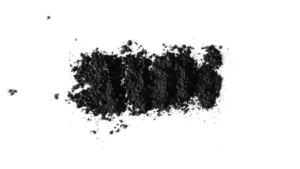
Activation is the defining stage that turns charcoal into activated carbon with commercial adsorption capacity. Coconut shell charcoal goes into an activation furnace at 850 to 950 degrees Celsius, where high-temperature steam flows through the carbon bed. The steam reacts with the carbon surface in a partial oxidation reaction that selectively erodes carbon atoms from the pore walls, carving open the micropore network that distinguishes coconut shell carbon from all other types. This process increases the internal surface area from roughly 200 to 400 square meters per gram in the charcoal intermediate to 900 to 1,500 square meters per gram in the finished product.
The chemistry behind activation is straightforward but the engineering is difficult. Steam reacts with carbon at high temperature to produce carbon monoxide and hydrogen gas in an endothermic reaction that absorbs heat from the furnace. The reaction preferentially attacks carbon atoms at defect sites and pore edges where chemical bonds are weaker, so it digs into existing pores and widens them rather than eating uniformly into the carbon surface. This selectivity is why the pore architecture of the charcoal intermediate controls the pore architecture of the finished activated carbon. Coconut shell charcoal starts with narrow, dense pores because of the natural fiber structure of the shell, so activation produces a carbon that is overwhelmingly microporous with pores in the 0.5 to 2 nanometer range. Coal charcoal starts with wider, less regular pores inherited from its geological structure and produces a carbon with a mix of micropores and mesopores after activation. The difference shows up in research data on activation parameters: coconut shell carbon activated at 900 degrees Celsius for 8 hours achieved a specific surface area of 1,723 square meters per gram and an iodine adsorption value of 1,628 milligrams per gram, well above typical commercial specifications of 900 to 1,300 milligrams per gram.
The activation furnace runs as a continuous rotary kiln or a multi-hearth vertical furnace, with the rotary design being the industry standard for coconut shell carbon because it delivers more uniform steam contact and more consistent pore development across all particles. Charcoal feeds in at one end and spends 2 to 12 hours passing through the heated zone while steam injects through multiple ports along the furnace body. Temperature, steam flow rate, and residence time together determine the degree of activation and the final iodine number. More activation time and higher steam flow increase both iodine number and product burn-off, running the yield down from about 40 to 50 percent of charcoal weight at low activation to 25 to 35 percent at high activation producing iodine numbers above 1,100. Operators balance these variables against the target product specification and the cost of charcoal feedstock to hit the activation degree that maximizes profit for each production batch. The activated carbon exits the furnace at near-activation temperature and must be cooled immediately in a sealed, water-jacketed screw cooler or rotary drum cooler that excludes oxygen. Cooling in air at these temperatures would reignite the carbon and destroy the pore structure built up during activation.
Post-Activation Processing: Washing, Drying, Crushing, and Sizing
Post-activation processing takes the hot activated carbon from the furnace and turns it into a packaged, specification-grade product ready for shipment. The sequence runs through four steps: acid washing to strip out residual ash and mineral content, water rinsing to return the carbon to neutral pH, drying to bring moisture below packaging specification, and crushing with multi-deck screening to separate the carbon into standard mesh fractions for granular activated carbon or to mill it into powdered activated carbon below 200 mesh for batch contact applications.
Acid washing addresses the ash problem directly. Coconut shell carbon starts with relatively low ash content of 3 to 5 percent compared to 8 to 15 percent for coal carbon, but even 3 percent ash can cause problems in gold recovery circuits where inorganic impurities interfere with cyanide leaching, and in food-grade applications where metal leaching into the product stream is unacceptable. The acid wash uses hydrochloric acid or sulfuric acid at controlled concentration and temperature to dissolve mineral ash out of the carbon pores without attacking the carbon structure itself. After acid washing, the carbon goes through a multi-stage water rinse that brings the pH of the rinse water to neutral, removing residual acid and dissolved ash. Water consumption at this stage is significant, and producers increasingly use counter-current rinse systems that reuse water from later rinse stages for the initial wash, reducing total water use by 30 to 50 percent.
The drying and sizing sequence completes the production line. Washed carbon enters a dryer operating at 120 to 150 degrees Celsius to bring moisture content below 5 percent for granular products and below 3 percent for powdered products where moisture clumps particles together and blocks powder handling equipment. Dried carbon then goes into crushers or grinding mills. For granular activated carbon, a multi-roll crusher breaks the carbon into fragments while minimizing dust generation, followed by a multi-deck vibrating screen that separates fragments into standard mesh cuts: 4×8 mesh for large industrial adsorbers, 8×16 mesh for intermediate contactors, 12×40 mesh for standard water treatment contactors, and 30×60 mesh for point-of-use filter cartridges. Undersize fines and oversize fragments from each screen deck recycle back to the crusher for reprocessing. For powdered activated carbon, the carbon feeds into a fine grinding mill that reduces it to 200 to 325 mesh, with an air classifier separating on-spec powder from oversized particles returned to the mill. The final product loads into 25-kilogram bags, 500-kilogram bulk bags, or bulk tankers through automated weighing and packing systems with dust-tight enclosures that protect both product quality and operator safety. Each finished batch carries a certificate of analysis recording iodine number, mesh distribution, moisture, ash, and hardness against the customer’s specification.
Yield, Quality Control, and What Determines Final Product Value
The overall material yield from raw coconut shells to finished activated carbon runs 9 to 15 percent by weight, meaning roughly 7 to 11 kilograms of raw shells produce 1 kilogram of finished carbon. Carbonization accounts for the largest weight loss at 65 to 75 percent, and activation accounts for another 50 to 75 percent loss on the charcoal weight. The iodine number, which ranges from 900 to 1,300 milligrams per gram for filtration grades, is the most widely quoted quality parameter and the primary driver of product pricing, with each 50-point increase above 1,000 typically adding 3 to 5 percent to the per-tonne selling price.
Yield and quality exist in tension at every stage. Running carbonization at higher temperature and longer residence time increases fixed carbon content but reduces charcoal yield because more volatile matter burns off. Running activation at higher temperature and longer residence time increases iodine number but reduces activated carbon yield through greater burn-off. The producer’s economics turn on finding the activation degree that maximizes revenue per tonne of charcoal input, which is not necessarily the highest iodine number. A batch producing 1,100 iodine number at 30 percent yield on charcoal might generate more revenue per tonne of charcoal consumed than a batch producing 1,300 iodine number at 20 percent yield, depending on the price premium that the market pays for higher iodine numbers.
Quality control runs throughout the production line, not just at final inspection. Incoming shell moisture and fiber density get checked at the receiving dock. Charcoal fixed carbon and volatile matter get measured at the carbonization furnace discharge to verify that the carbonization step hit target before the batch enters activation. During activation, operators sample the carbon at intervals and run an iodine number quick test that returns a result in under an hour, allowing them to stop the activation run when the target iodine number is reached rather than relying solely on fixed time and temperature settings. Finished product testing covers iodine number per ASTM D4607, mesh distribution per ASTM D2862, moisture per ASTM D2867, ash per ASTM D2866, and hardness or abrasion number per ASTM D3802. These five tests together confirm that the carbon meets both the adsorption capacity and the physical durability requirements for its intended application.
The value of understanding how coconut shells become activated carbon goes beyond satisfying technical curiosity. Buyers who know what carbonization temperature and activation parameters produce a given iodine number can evaluate supplier quality claims more critically. A supplier offering 1,200 iodine carbon at a price below the charcoal cost needed to produce it is either running unsustainable economics or delivering a product that will not test to specification. A supplier whose certificate of analysis shows iodine number and mesh distribution but omits abrasion number may be shipping carbon that produces excessive fines when backwashed. Understanding the production sequence gives buyers the vocabulary to ask the right questions and the knowledge to interpret the answers. The complete production equipment line from shell crushing through finished packing integrates every stage into a continuous process where quality at each step determines what the next step can achieve, ultimately turning an agricultural waste product into a filtration material with more surface area per gram than any other commonly available carbon.