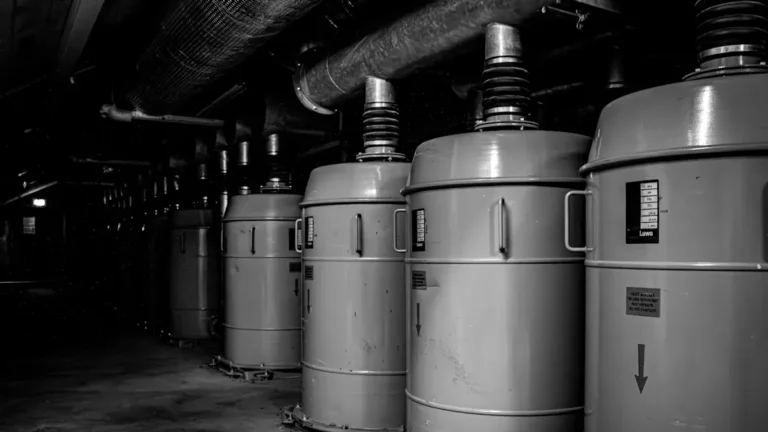
Activated Carbon for Petrochemical Industry
Buy Activated Carbon for Petrochemical
Herausforderungen für die Industrie
Complex Hydrocarbon Mixtures
- Petrochemical streams contain diverse hydrocarbons and impurities
- Separation requires highly selective adsorption performance
- Conventional materials lack efficiency in complex systems
Sulfur and Contaminant Removal
- Sulfur compounds affect product quality and catalyst performance
- Strict regulations demand ultra-low sulfur content
- Trace impurities can poison downstream catalysts quickly
High Temperature and Pressure
- Many refining processes operate under extreme conditions
- Adsorbent materials must withstand thermal and pressure stress
- Performance degradation may occur during long-term operation
Environmental Emission Control
- Volatile organic compounds must be strictly controlled
- Emission regulations are becoming increasingly stringent
- Inefficient treatment leads to environmental compliance risks
Cost and Operational Efficiency
- Frequent adsorbent replacement increases operational expenses
- Balancing performance and cost is a continuous challenge
- Process downtime affects overall production efficiency
verwandte Arten von Aktivkohle
- Jodwert: 600-1200
- Maschenweite: 1×4/4×8/8×16/8×30/12×40/20×40/20×50/30×60/40×70 (weitere Größen auf Anfrage)
- Scheinbare Dichte: 400-700
- Jodwert: 500-1300
- Maschenweite:0,9-1mm/1,5-2mm/3-4mm/6mm/8mm(Weitere Größen auf Anfrage)
- Scheinbare Dichte: 450-600
- Jodwert: 500-1300
- Maschenweite: 150/200/300/350 (weitere Maschenweiten auf Anfrage)
- Scheinbare Dichte: 450 - 550
- Jodwert: 400-800
- Maschenweite: 100×100×100mm/100×100×50mm (kundenspezifische Zelldichte auf Anfrage)
- Scheinbare Dichte: 350-450
- Bohrungsdurchmesser:1,5-8mm
- Jodwert: 700-1200 mg/g
- Oberfläche: 700-1200 m²/g
- Scheinbare Dichte: 320-550 kg/m³
- Jodwert: 700-1200 mg/g
- Oberfläche: 700-1200 m²/g
- Scheinbare Dichte: 320-550 kg/m³
- Jodwert: 700-1200 mg/g
- Oberfläche: 700-1200 m²/g
- Scheinbare Dichte: 300-650 kg/m³
- Jodwert: 700-1200 mg/g
- Oberfläche: 700-1200 m²/g
- Scheinbare Dichte: 320-550 kg/m³
- Aktivierungsverfahren: Dampf-/Gasaktivierung bei hohen Temperaturen
- Porenstruktur: Mikroporös-dominiert, gleichmäßige Porenverteilung
- Umweltfreundliches Profil: Chemikalienfrei, niedriger Aschegehalt
- Primäre Anwendungen: Gasphasenadsorption, Trinkwasseraufbereitung
- Aktivierungsverfahren: Chemische Aktivierung (z. B. H₃PO₄/ZnCl₂) bei moderaten Temperaturen
- Porenstruktur: Mesoporös-reich, größere Oberfläche
- Prozess-Effizienz: Kürzere Aktivierungszeit, 30-50% höhere Ausbeute
- Nachbehandlung: Saures Waschen erforderlich, um Rückstände zu entfernen
- Funktionalisierung: Beladen mit Wirkstoffen (z. B. I₂/Ag/KOH)
- Gezielte Adsorption: Verbesserte Abscheidung bestimmter Schadstoffe (z. B. Hg⁰/H₂S/saure Gase)
- Individuelle Anpassung: Chemisch optimiert für Zielkontaminanten
- Hauptanwendungen: Industrielle Gasbehandlung, CBRN-Schutz
Warum Sie unsere Aktivkohle brauchen

High Adsorption Capacity:
Optimized pore distribution ensures efficient removal of hydrocarbons, sulfur compounds, and trace impurities.

Advanced Impregnation Technology:
Special formulations enhance adsorption and catalytic removal of sulfur and hazardous compounds.

Excellent Thermal and Chemical Stability:
Maintains reliable performance under high temperature, pressure, and chemically aggressive environments.

Verlängerte Nutzungsdauer:
High durability reduces replacement frequency and minimizes operational downtime.

Versatile Application Performance:
Suitable for both gas and liquid phase purification across multiple petrochemical processes.
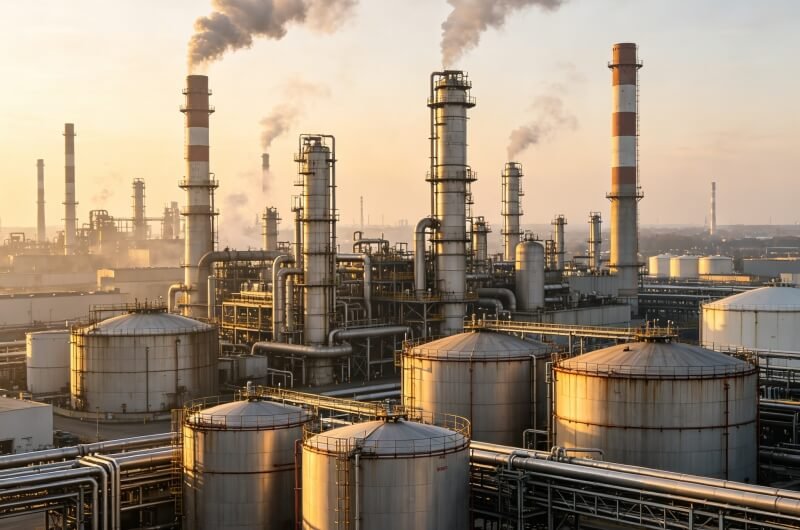
Verfahren und Technologie
1.Refinery Off-Gas Treatment and Emission Control
Überblick über die Lösung
Activated carbon is widely used to treat refinery off-gases by removing VOCs, sulfur compounds, and odorous substances, improving air quality, ensuring environmental compliance, reducing atmospheric pollution, and enhancing industrial emission control efficiency.
Die wichtigsten Vorteile
- Efficient removal of VOCs and sulfur-containing emissions from off-gas streams.
- Improves air quality and supports compliance with environmental standards
- Stable activated carbon performance under continuous and large-scale gas processing conditions, ensuring efficient adsorption and reliable industrial gas purification system operation.
2. Lube Oil and Base Oil Decolorization
Überblick über die Lösung
Used in refining processes, activated carbon effectively removes color bodies and impurities from lubricating oils and base oils, improving product appearance, enhancing stability, ensuring consistent quality, and meeting strict industrial performance standards.
Die wichtigsten Vorteile
- Strong adsorption of pigments and oxidation by-products in oil streams
- Enhances clarity and visual quality of final oil products.
- Maintains chemical stability using activated carbon without affecting base oil composition, ensuring efficient impurity removal and preserving product quality in refining processes.
3. Petrochemical Feedstock Purification
Überblick über die Lösung
Applied in petrochemical processing, activated carbon effectively purifies raw feedstocks by removing sulfur, nitrogen compounds, and trace contaminants, protecting catalysts, enhancing process efficiency, ensuring product quality, and improving downstream operational performance.
Die wichtigsten Vorteile
- Protects catalysts from poisoning by removing harmful trace impurities.
- Improves consistency and quality of feedstock materials.
- Enhances efficiency and stability of downstream reactions using activated carbon to remove impurities and optimize catalytic performance in industrial chemical processes.
4. Fuel Purification for Gasoline and Diesel
Überblick über die Lösung
Activated carbon is widely used in fuel purification to remove impurities, sulfur compounds, and odor-causing substances, ensuring compliance with fuel quality standards, improving combustion efficiency, and reducing harmful emissions in industrial applications.
Die wichtigsten Vorteile
- Reduces sulfur content and improves fuel environmental performance.
- Removes odor and trace contaminants from fuel products.
- Enhances fuel stability and combustion efficiency using activated carbon to remove impurities and improve fuel quality in industrial energy applications.
Verwandter Blog