



Acide citrique charbon actif imprégné présente une surface modifiée. Cette surface spéciale lui permet d'être plus efficace. Il peut adsorber davantage de polluants que le charbon actif classique. L'acide citrique améliore la capacité de la surface à éliminer les métaux et les composés organiques. Le charbon actif imprégné d'acide citrique peut cibler plus facilement les substances nocives. Vous pouvez l'utiliser pour obtenir une eau et un air plus purs. C'est ce qui le distingue des autres types de charbon actif imprégné.
Principaux enseignements
Imprégné d'acide citrique charbon actif possède une surface particulière. Cela lui permet d'éliminer plus efficacement les substances nocives présentes dans l'eau et dans l'air.
Ce charbon actif permet de capter et d'éliminer les métaux lourds tels que le cuivre et le plomb. Il élimine également les composés organiques, ce qui en fait un excellent produit de nettoyage.
L'ajout d'acide citrique augmente le nombre de sites actifs sur le charbon. Cela permet au charbon de retenir davantage de polluants.
On peut utiliser des matériaux tels que des coques de noix de coco et des déchets alimentaires pour fabriquer ce charbon. Cela contribue à la protection de l'environnement, car on utilise ainsi moins de matériaux nocifs.
Le charbon actif imprégné d'acide citrique peut être utilisé de nombreuses façons. Il est efficace pour le traitement de l'eau, la purification de l'air et dans les usines.
Vous pouvez nettoyer et utiliser Encore ce papier. Cela permet de faire des économies et de réduire les déchets.
L'utilisation de ce type de charbon actif permet un nettoyage plus efficace. Elle contribue également à rendre l'environnement plus sain.
Testez toujours le charbon actif pour voir s'il répond à vos besoins. Il se peut qu'il ne soit pas efficace contre tous les polluants.
Présentation du charbon actif imprégné d'acide citrique
Définition et concept fondamental
Imprégné d'acide citrique charbon actif Il s'agit d'un type particulier de charbon actif. Il subit un traitement qui modifie sa surface. Au cours de ce processus, de l'acide citrique est ajouté à la surface. Cela améliore les performances du matériau pour la purification de l'eau et de l'air. La surface présente désormais davantage de sites de fixation pour piéger les substances indésirables. De ce fait, il peut éliminer plus facilement les métaux et les matières organiques.
Lorsque l'on utilise de l'acide citrique, des zones plus actives se forment sur le charbon. Ces zones aident le charbon à capter et à retenir les polluants. La surface attire les ions cuivre et d'autres particules nocives. Vous pouvez utiliser ce charbon actif dans de nombreux endroits qui nécessitent un nettoyage en profondeur.
Caractéristiques principales
Le charbon actif imprégné d'acide citrique se distingue par ses propriétés particulières. Sa surface comporte davantage de groupes fonctionnels provenant de l'acide citrique. Ces groupes permettent au charbon de capter et de retenir davantage de polluants.
Voici quelques points importants à retenir :
Adsorption améliorée: La surface modifiée permet au charbon d'absorber plus efficacement l'eau et d'autres substances. Elle est particulièrement efficace pour éliminer les métaux ou les composés organiques.
Amélioration de l'absorption d'eau et de la sorptivité: Les tests montrent que ce charbon absorbe davantage d'eau et présente une capacité d'absorption supérieure à celle du charbon actif classique. Vous pouvez le constater dans le tableau ci-dessous :
Série
Absorption d'eau
Sorptivité
Référence
Le plus bas
Le plus bas
Acide citrique + Lait de citron vert
Le plus élevé
Plus élevé que les autres
Acide citrique + Eau de verre
Comme d'autres
Varie en fonction du rapport eau/ciment
Semaine de travail plus longue
Meilleure absorption
Faible sorptivité
Élimination ciblée des polluants: Ce charbon actif permet d'éliminer certains polluants, tels que les ions de cuivre et les matières organiques. La modification de sa surface lui permet de cibler plus efficacement ces substances.
Aménagement durable: Il arrive parfois que des déchets soient utilisés dans le processus. Cela rend ce carbone plus respectueux de l'environnement.
Applications polyvalentes: Vous pouvez utiliser ce carbone pour traitement de l'eau, pour la purification de l'air et dans les usines. Les propriétés de sa surface le rendent utile à bien des égards.
Conseil : pour un nettoyage plus efficace, optez pour du charbon actif dont la surface a été modifiée à l'acide citrique. Les groupes fonctionnels supplémentaires sont très utiles.
Procédé de modification de surface
Étapes du traitement à l'acide citrique
Concentration et application
On commence par faire tremper le charbon actif dans une solution d’acide citrique. La plupart des gens utilisent pour cela une concentration d’acide citrique de 0,3 M. Cette concentration modifie considérablement la surface du charbon. À ce niveau de concentration, la surface spécifique du charbon diminue d'environ 341 à 381 m²/g. Les pores les plus petits rétrécissent, tandis que les pores plus grands s'élargissent. Ce changement permet au charbon de mieux piéger certains polluants.
Les La surface de BET diminue d'environ 141 TP3T après le traitement.
Le volume des pores du BJH diminue également, mais le carbone peut désormais retenir des molécules plus grosses.
La nouvelle surface offre davantage de zones actives permettant de retenir les polluants.
Materials Used
You need activated carbon and citric acid for this process. You can use either granular or powdered activated carbon. Citric acid is the main chemical for changing the surface. Sometimes, other chemicals are added to help, but citric acid is most important. You soak the carbon in the citric acid, then heat it to help the change happen. After that, you wash and dry the carbon to finish the process.
Sustainable Sources
Citric acid impregnated activated carbon can be made from waste. Many companies use old food, like expired soda, white rice, or damaged buckwheat. These waste items have organic carbon, which works well for this process. You treat these materials with chemicals like potassium carbonate or orthophosphoric acid to make them better at adsorbing. This way, you recycle waste and help the environment.
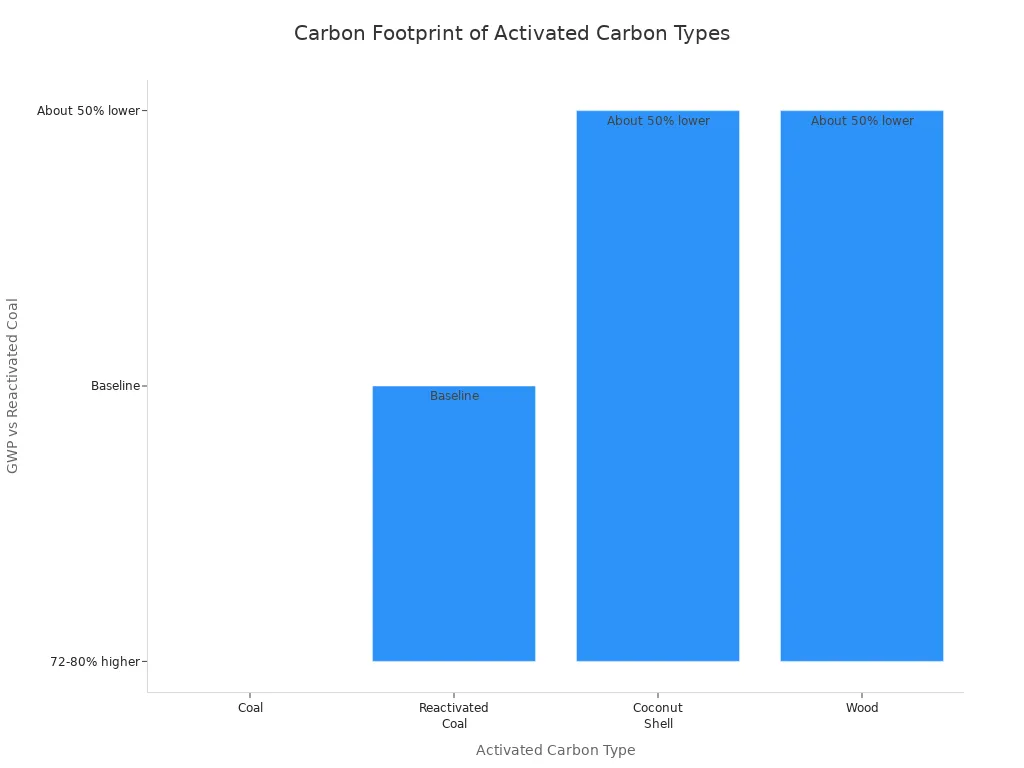
Choosing sustainable sources helps the planet. The table below shows how different sources affect the environment:
Type de charbon actif | Impact sur l'environnement | Carbon Footprint Comparison |
|---|---|---|
Charbon | Highest in 10 out of 12 categories | 72-80% higher GWP than reactivated coal |
Reactivated Coal | Lowest in 3 categories | 72-80% lower GWP when biogenic emissions included |
Coquille de noix de coco | Lower than coal | About 50% lower GWP than reactivated coal |
Bois | Lower than coal | About 50% lower GWP than reactivated coal |
Biomass sources are easier to find and better for the earth.
Activated carbon from biomass has less impact on the environment.
Using renewable resources saves money and helps nature.
Tip: To lower your carbon footprint, choose activated carbon made from coconut shells or wood. These sources work well for citric acid surface modification and help keep the planet clean.
How Citric Acid Impregnated Activated Carbon Works
Mécanisme d'adsorption
Chemical Property Changes
When you treat charbon actif with citric acid, the surface changes a lot. The surface gets new chemical groups called carboxyl groups. These groups help the carbon pull in and hold pollutants. Adsorption happens mostly by chemisorption, which means strong chemical bonds form. More than one layer of molecules can stick to the surface. This process is fast and uses strong forces between molecules. The pseudo second-order kinetic model shows the adsorption is quick and strong.
Enhanced Pollutant Removal
Citric acid modification gives activated carbon a higher adsorption capacity. It can remove more pollutants, especially metals like copper, from water or air. The new surface lets the carbon grab copper ions much better. The carbon can hold up to 14.92 mg Cu/g, which is 140% more than before. Carboxyl groups make the bond with copper ions stronger. Even though the surface area drops by 34%, the carbon still holds more pollutants. The process is a little slower, but it removes metals and organic matter better.
Role of Citric Acid
Citric acid is very important in this process. It adds special groups to the activated carbon’s surface. These groups help the carbon catch heavy metals and organic compounds. You can see this when removing metals like chromium, copper, nickel, and zinc. At low pH, citric acid helps remove up to 100% of chromium and zinc, 98% of nickel, and 88% of copper. Lead removal also gets better, reaching 95% after 11 days. If you set the pH to 3, you can remove 100% of lead in just one day. Nickel and zinc removals are fast too, with 70% and 80% gone in two hours.
Citric acid helps you target certain pollutants.
The change makes charbon actif better for cleaning water and air.
You get better results for heavy metals and organic matter.
Note: Using citric acid to change the surface gives you a strong way to clean up pollutants. This process helps your activated carbon work harder and adsorb more.
Comparison with Regular Activated Carbon
Surface Chemistry Differences
Citric acid impregnated activated carbon has a changed surface. Regular activated carbon does not have these changes. Scientists use tests like FT-IR and TPD to check the surface. The citric acid version has more oxygen groups. These groups help the surface react with acids and bases. There are more spots for reactions to happen. This helps the carbon grab metals and pollutants better. Regular activated carbon has fewer special groups. Its surface is more neutral and less active. Lab tests show these differences clearly.
Efficacité de l'adsorption
Citric acid impregnated activated carbon cleans better. The new surface groups hold metals and organic matter tightly. You get stronger bonds with copper and lead ions. Regular activated carbon can clean, but not as much. The citric acid surface boosts adsorption power. You can remove more pollutants with less carbon. This means water and air get cleaner faster.
Tip: Use citric acid impregnated activated carbon for tough jobs. It works better for heavy metals and strong organic compounds.
Application Performance
Activated carbon is used in water filters and air purifiers. Factories also use it. Citric acid impregnated activated carbon gives better results. The surface targets certain pollutants. Copper ions are removed from water quickly. Organic matter is also cleaned better. Regular activated carbon is good for basic cleaning. It cannot match the citric acid version for tough tasks. The special surface saves time and protects health and the environment.
Citric acid impregnated activated carbon: Best for targeted cleaning and high efficiency.
Regular activated carbon: Good for general cleaning and wide use.
Note: Pick the right activated carbon for your needs. The surface makes a big difference.
Main Applications
Traitement de l'eau
Citric acid impregnated activated carbon is used to clean water. It helps take out metals and organic matter from water. The special surface grabs copper ions better than regular carbon. Many water plants use this carbon to remove heavy metals. It works well when you need to get rid of copper ions. This carbon also helps make sugar solutions clear. You can use it to clean drinking water or water for food making. The process makes water safer and clearer for people to use.
Tip: Try citric acid impregnated activated carbon if you want cleaner water. It helps remove more copper and gives better results.
Purification de l'air
This carbon is also good for cleaning air. You can put it in air filters to catch bad gases and tiny particles. The special surface helps trap metals and organic stuff from the air. It works well for grabbing copper ions in air cleaning systems. Many factories use this carbon to keep air safe for workers. You can also find it in home air purifiers. The carbon helps remove smells and harmful chemicals from the air. Using this carbon helps protect your health.
Homes and factories get cleaner air with this carbon.
It helps take out metals and organic matter from the air.
Industrial and Environmental Uses
Many industries use citric acid impregnated activated carbon. The food industry uses it to clean food and water used in making products. This carbon helps companies follow safety rules. Factories use it to remove copper ions when working with metals. The food industry also uses it to make sugar solutions look better. Food products can taste and look better with this carbon.
Copper Ion Removal
Many factories need to remove copper ions from water. This carbon is very good at grabbing copper ions. It helps keep wastewater safe for the environment. Factories use it to follow rules about heavy metals. You get better copper removal where strict cleaning is needed.
Domaine d'application | Benefit of Citric Acid Carbon | Copper Adsorption Efficiency |
|---|---|---|
Water Treatment Plants | Cleaner water | Haut |
Metal Processing | Safer waste | Très élevé |
Industrie alimentaire | Safe food production | Haut |
Organic Matter Adsorption
This carbon also helps remove organic matter. The food industry needs clean water to make safe products. Using this carbon gives better cleaning results. It traps organic compounds and keeps food safe. Factories see strong results in cleaning water and air. The carbon helps meet health rules and makes products better.
Note: You can use citric acid impregnated activated carbon in many ways. It gives better cleaning, copper removal, and organic matter removal in water, air, and food factories.
Avantages et éléments à prendre en compte
Avantages
There are many good things about using citric acid impregnated activated carbon. The special surface helps you clean water and air better. You can remove heavy metals like copper, lead, and zinc. It also helps get rid of organic matter easily. This makes cleaning stronger and more dependable.
Better Adsorption: The extra functional groups help trap more bad stuff.
Eco-Friendly Choice: Using carbon from waste or plants helps the earth.
Versatile Uses: You can use this carbon in filters, purifiers, and factories.
Cost Savings: You might need less carbon, so you save money.
💡 Conseil : Try citric acid impregnated activated carbon for better cleaning. It often works better than regular carbon.
Limites
There are some things to watch out for. Citric acid impregnated activated carbon does not work for everything. Sometimes, the surface area gets smaller after treatment. This can change how much it can hold.
Reduced Surface Area: The surface can shrink and hold fewer small things.
Slower Adsorption for Some Pollutants: It may work slower for some metals or organic stuff.
Higher Cost for Special Treatment: Making this carbon can cost more money.
Not for All Pollutants: Some chemicals do not stick well to the new surface.
Limitation | Ce que cela signifie pour vous |
|---|---|
Smaller surface area | May hold fewer small molecules |
Slower for some pollutants | Takes longer to clean |
Higher production cost | May cost more to buy |
Not universal | May not work for all chemicals |
⚠️ Remarque : Always test the carbon with your water or air problem. This helps you know if it will work for you.
Regeneration and Safety
You can use citric acid impregnated activated carbon again. You clean it by washing or heating. This is called regeneration. Regeneration saves money and cuts down on waste.
Easy to Regenerate: You can wash or heat the carbon to reuse it.
Safe to Handle: The carbon is safe if you follow safety rules. Wear gloves and a mask when handling a lot.
Proper Disposal: If the carbon is full of metals, throw it away safely. Follow local rules for hazardous waste.
🛡️ Safety Tip: Always wear protective gear when you touch used activated carbon. Used carbon can hold dangerous stuff.
Citric acid impregnated activated carbon cleans well and helps the planet. Just remember its limits and always follow safety steps.
Future Trends in Activated Carbon
Innovations in Surface Modification
There are many new ideas for activated carbon. Scientists are working on better ways to change its surface. These changes help remove more pollutants from water and air. One big trend is using safe chemicals like citric acid. This makes the product safer and good for the environment.
Researchers are testing plant acids and enzymes now. These can add more special groups to the carbon. You might see activated carbon with extra carboxyl or amino groups soon. These groups help target things like dyes, pesticides, or viruses. Some labs use nanotechnology to make the surface more active. This lets the carbon clean faster and hold more pollutants.
Here are some cool new things you might see:
Bio-based Modifiers: Fruit acids, plant extracts, or food waste can change the carbon surface.
Multi-functional Carbon: Some activated carbon can remove metals, organic matter, and germs at once.
Smart Carbon: Some new carbons change their surface if you change pH or temperature. You can control what the carbon removes.
💡 Conseil : Look for new products that use green chemistry. These help you clean better and protect the earth.
Impact sur l'environnement
You help the environment when you pick the right activated carbon. The future is about making carbon from renewable sources. You can choose carbon made from coconut shells, wood, or recycled food waste. These choices lower the carbon footprint and save resources.
Factories now use less energy to make activated carbon. Some factories clean and reuse old carbon. This cuts down on waste and pollution. Using carbon from plants or recycled stuff helps lower greenhouse gases.
Here is a table that shows how different sources affect the environment:
Carbon Source | Renewable? | Carbon Footprint | Waste Reduction |
|---|---|---|---|
Charbon | Non | Haut | Faible |
Coquille de noix de coco | Oui | Faible | Haut |
Bois | Oui | Faible | Haut |
Food Waste | Oui | Très faible | Très élevé |
🌱 Remarque : Picking activated carbon from renewable sources helps fight climate change. It also supports a cleaner world.
More companies will use eco-friendly ways to make and use activated carbon. These changes help you get better cleaning and protect the earth for the future.
Citric acid impregnated activated carbon is different because of its special surface. This surface helps take out more metals and organic matter from water and air. You can use it for cleaning water and air in many places. Picking this carbon helps protect nature and saves resources. The citric acid change makes activated carbon stronger and better for the earth. People will use it more as they find new ways to fight pollution.