



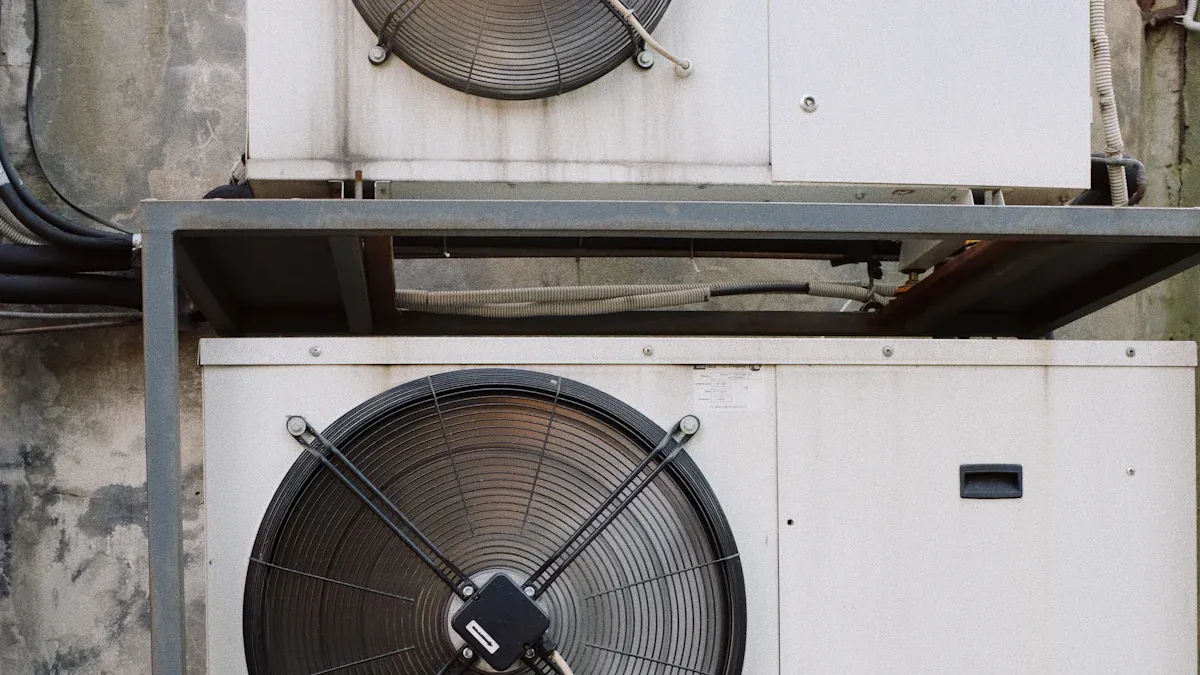
You use a dessecante air dryer to take water out of compressed air before it goes to your equipment. This dryer has two towers with desiccant beads inside. One tower dries the air. The other tower gets ready to dry air next. Dry air is important because water can hurt your compressed air system and make products worse. With this technology, you can reach dew points as low as -40°F or even -100°F. This means you get very dry air, which is good for cold or sensitive places.
Principais conclusões
Desiccant air dryers take water out of compressed air. They use two towers to do this. This setup gives dry air all the time.
Dry air keeps machines safe from rust and harm. It helps machines last longer. It also lowers repair costs.
Desiccant dryers can make air with a low dew point. This stops products from going bad or getting dirty. This is important in food and medicine factories.
You must take care of dryers often. Change filters and check valves to keep dryers working well.
Picking the right desiccant material is important. Materials like gel de sílica or molecular sieves work for different jobs and water levels.
Desiccant dryers are needed in many places. They help in factories, car shops, and electronics to keep products good.
Filters before and after drying make air cleaner. They take out bad bits and dirt.
Knowing what your air system needs is important. It helps you pick the best dryer size and type to control water in the air.
Desiccant Air Dryer Principle
Two-Tower System
A desiccant air dryer uses two towers. This design lets air keep moving while it dries. One tower takes out water from the air. The other tower gets ready for its turn. When the beads in one tower get full of water, the control unit switches the towers. This keeps your air dry and steady.
Function | |
|---|---|
Active Tower | Takes water out of compressed air |
Regenerating Tower | Gets beads ready to dry air again |
Control Unit | Switches towers when beads are full |
Active Drying Tower
Compressed air goes into the tower that is drying. The air moves through beads that grab water. These beads hold the water vapor. The dry air leaves the tower and goes to your machines. This gives you clean, dry air for your work.
Regeneration Tower
While one tower dries air, the other tower gets cleaned. Heat or purge air removes water from the beads. This step makes the beads ready to work again. The control unit changes the towers when needed. You always have one tower ready to dry air.
Processo de adsorção
The adsorption process helps take water out of the air. The beads pull in and hold water vapor. This is called adsorbing water vapor. The beads trap the water, so you get dry air.
The air moves through beads inside the dryer.
Water vapor sticks to the beads.
Dry air comes out and goes to your system.
You can pick different beads for your dryer. Silica gel, activated alumina, and molecular sieves all work to grab water vapor. Each type has good and bad points.
Desiccant Material | Vantagens | Desvantagens |
|---|---|---|
Gel de sílica | Holds lots of water, Safe, Can be reused with heat | Can break and make dust, Not as good under high pressure |
Alumina ativada | Holds lots of water, Strong, Works well under high pressure | Can make dust when pressure changes, Needs bigger tanks |
Peneiras moleculares | Holds lots of water, Picks certain things, Stays strong in heat | Costs more, Needs careful picking |
Many factories use two-tower dryers because they dry air all the time. Pressure swing dryers use this system to keep air dry.
Dew Point Reduction
A low dew point keeps your tools and products safe. Desiccant air dryers can lower the dew point to -40°F or even -100°F. Refrigerated dryers only go down to about 39°F. As they get older, their dew point can go up to the 40s or 50s. Desiccant dryers give you much drier air.
Tip: A lower dew point means less water in your air. This helps stop rust, breakdowns, and dirty products.
You see big help in places like food packing, car painting, and CNC work. High dew points can cause water problems, like rust and bad products. Using a desiccant air dryer keeps your system safe and your products good.
Why Dry Air Matters

Equipment Protection
You want your machines to last a long time. Dry air helps you protect your tools and equipment. When you use a desiccant air dryer, you keep water out of your compressed air system. Moisture can cause rust and damage inside your machines. If you let water stay, you may see clogs, broken parts, and higher costs for repairs. Dry air keeps everything running smoothly.
Here is how dry air helps your equipment:
Benefício | Descrição |
|---|---|
Increase Equipment Lifespan | Dry air stops rust and corrosion inside your machines. |
Decrease Operating Costs | You avoid clogs and tool problems, so you save money and time. |
Prevent Clogs | Dry air keeps dust and dampness away from moving parts. |
Reduce Flash Rust | You stop quick rust from forming on surfaces. |
Protect your pot | Dry air keeps filters and important parts safe. |
Save Money | You spend less on repairs and get more work done. |
A desiccant dryer gives you clean and dry air. You get better reliability and lower energy costs. You also find these dryers easy to install and maintain.
Preventing Corrosion
Corrosion can ruin your machines and pipes. Water in air contains hydrogen and oxygen, which cause metal to rust faster. If you use a desiccant dryer, you remove moisture from your compressed air system. Dry air stops corrosion before it starts. You keep your machines safe and avoid expensive repairs.
You can use cyclone separators, aftercoolers, and desiccant air dryers to remove moisture. Dry air is the best way to protect your system from rust and damage. You see less downtime and fewer problems with your equipment.
Moisture in air makes corrosion worse.
Dry air removes water vapor and keeps metal safe.
Desiccant dryers help you keep your system working longer.
Tip: Always use dry air to keep your machines and pipes free from rust.
Product Quality
You want your products to be safe and high quality. Dry air helps you reach this goal. If you use moist air, you risk contamination and spoilage. In food and drug factories, moisture can cause recalls and waste. In electronics, water can damage parts and lead to failed tests.
Dry air from a desiccant dryer keeps your products clean and safe. You avoid problems like rust, spoilage, and defects. You also meet industry standards and keep your customers happy.
Moisture can spoil food and drugs, causing waste and recalls.
Dry air keeps products safe and helps you follow rules.
Electronics need dry air to avoid damage and costly repairs.
Desiccant dryers help you make better products every day.
Note: Dry air is important for every step in your factory. You protect your machines, your products, and your reputation.
Desiccant Dryer Operation
Pre-Filtration
You need to clean the air before it enters the dryer. Pre-filtration helps protect the desiccant beads. It also makes the dryer work better. Special filters catch dust, dirt, and oil. These filters stop bad particles from reaching the desiccant.
Removing Particulates
Clean air is important for your system. High-efficiency filters trap dust and tiny bits. If these bits reach the desiccant, they block its surface. This lowers how well the dryer works. Clean air keeps the drying process strong. You get dry air every time.
Objetivo | |
|---|---|
Coalescing oil removal | Protects the desiccant media from oil damage. |
Dual-stage oil removing filtration | Increases service life of desiccant media. |
High-efficiency particulate filter | Ensures clean air downstream of the dryer. |
Oil Separation
Oil can harm the desiccant beads inside dryers. Coalescing filters and dual-stage filters catch oil before it gets in. These filters keep oil away from the beads. This helps the dryer last longer and gives better dry air. If oil covers the beads, drying slows down. You lose efficiency.
Pre-filters grab dust, oil, and other bad stuff before it reaches the desiccant bed.
Clean air keeps the adsorbent surface open for moisture.
Pre-filtration helps your dryer last longer and work better.
Moisture Adsorption
After cleaning, air goes into the dryer. The desiccant beads grab water from the air. You get dry compressed air that protects your tools and products. The beads hold water vapor on their surface. This step is the main part of the drying process.
Dry air is needed for many jobs. The dryer gives you dry air that keeps your tools safe. It also helps your products stay high quality. Using a desiccant dryer removes moisture. You get reliable dry air every time.
Regeneration Cycle
Desiccant beads fill up with water over time. You need to clean them so they keep working. The regeneration cycle makes sure the dryer works all the time. You switch towers so one dries air while the other gets cleaned.
Desorption Process
You clean the beads during regeneration. The dryer uses heat or purge air to pull water off. This gets the beads ready to grab more water. If you skip this step, the dryer cannot give you dry air.
A short regeneration cycle uses more energy because you clean the beads more often.
A long cycle can make the beads too wet, so they stop working well.
You need to find the right balance for good efficiency and low energy use.
Methods of Regeneration
There are different ways to clean the beads. The most common methods are dry process air and latent heat of condensation.
Descrição | |
|---|---|
Dry Process Air (Purge Air) | You use some dry air from the dryer and let it expand. This air pulls water off the beads. Usually, you set this at 15% of the dryer’s capacity. |
Latent Heat of Condensation | You use heat made during drying to help clean the beads. This heat keeps the purge air warm and helps remove water during regeneration. |
Pick the best method for your dryer based on your needs. Both ways help you get dry air and keep your system safe.
Tip: Always check your dryer’s regeneration cycle. The right settings help you save energy and keep your desiccant working longer.
Post-Filtration
You need to make sure the air stays clean after it leaves the dryer. Post-filtration helps you do this. Special filters catch tiny particles, aerosols, and even smells that can slip through the drying process. These filters remove things like volatile organic compounds (VOCs) and odors from the exhaust air. You protect your equipment and your workspace by using post-filtration.
Clean air is important for your health and for meeting legal standards. If you release dirty air, you risk breaking rules and harming the environment. Post-filtration makes sure the air you send out is safe and meets air quality laws.
Tip: Always check your post-filters. Clean filters help you keep your air pure and your system running well.
You can use different types of post-filters. Some catch dust and fine particles. Others remove chemicals and smells. You choose the right filter based on your needs.
Benefits of Post-Filtration:
Keeps air free from harmful particles
Removes unwanted smells and chemicals
Helps you follow air quality rules
Protects your workspace and the environment
Continuous Cycle
Desiccant air dryers work in a nonstop cycle. You always get dry air because the system switches between towers. One tower dries the air while the other gets cleaned. The control unit makes sure the change happens at the right time.
You do not need to stop your machines to get dry air. The dryer keeps working, so your tools and products stay safe. This cycle repeats over and over. You get reliable dry air for every job.
Here is how the continuous cycle works:
Air enters the active tower and gets dried.
The control unit watches the beads and switches towers when needed.
The second tower goes through regeneration to clean the beads.
The process repeats so you always have dry air.
Note: A continuous cycle means less downtime and better protection for your equipment.
You save time and money because you do not need to wait for the dryer to reset. Your system stays strong, and your products stay high quality.
Tipos de dessecantes
When you pick a desiccant air dryer, you should know about the different desiccant materials. Each kind works in its own way to take water out of air. Picking the right one helps your system work better.
Gel de sílica
Gel de sílica is a very common desiccant. You find it in small packets in shoe boxes. It also works well in air dryers. Silica gel grabs water because it has a big surface area. This lets it hold lots of moisture, even if the air is not very wet.
Safe and not toxic
Easy to reuse with heat
Works in many humidity levels
You can use silica gel in packaging and air systems. It is stable and does not break down fast. If you need dry air for regular jobs, silica gel is a good pick.
Adsorption Capacity (at 90% RH) | Regeneration Temperature | |
|---|---|---|
Gel de sílica | 25% to 30% at 30°C | 80°C to 120°C |
Tip: Silica gel is best if you want a simple and steady way to keep air dry.
Alumina ativada
Activated alumina is another popular desiccant. It looks like tiny white beads. These beads have lots of small holes that grab water. You use activated alumina when you need to dry air at high temperatures.
Strong and lasts long
Good for drying hot air
Removes water fast
You see activated alumina in big dryers and gas systems. It works well where there is lots of moisture. You can reuse it by heating it up.
Tipo de dessecante | Adsorption Capacity (at 100% RH) | Regeneration Temperature |
|---|---|---|
Alumina ativada | 250°F to 500°F |
Note: Activated alumina is great for hard jobs where you need to take out lots of water.
Peneiras moleculares
Molecular sieves are special desiccants with tiny, even pores. These pores trap water molecules, even if the air is very dry. You use molecular sieves when you need very low dew points.
Works fast and is exact
Good for very dry air
Best for sensitive products
You find molecular sieves in electronics and medicine air systems. They help you get super dry air. You can reuse them at high heat, so they last a long time.
Tipo de dessecante | Capacidade de adsorção | Regeneration Temperature |
|---|---|---|
Peneira molecular | 400°C to 600°C |
Tip: Pick molecular sieves if you need the driest air for your work.
Each desiccant type has its own good points. Match the desiccant to your dryer needs for the best results.
Critérios de seleção
You need to pick the right desiccant for your air dryer. The best choice depends on what you want to protect and where you use it. Each desiccant works better in different places. You should think about your job, how wet the air is, and safety rules.
First, decide what you want to keep dry. If you work with food, you need a safe desiccant. It should be approved by the FDA. Silica gel is a good choice for food. It keeps things fresh and does not hurt people. You find silica gel in snacks and vitamins.
Electronics need special care. Water can damage small parts and make devices stop working. You should use molecular sieves for electronics. These keep the air very dry and protect your devices.
Medicine needs careful moisture control. You want your pills and powders to stay strong and safe. Molecular sieves and activated alumina help control moisture in medicine. These desiccants keep your products working well.
If you work in very wet places, you need a desiccant that grabs water fast. Calcium chloride is good for this job. You use it in warehouses and storage rooms with lots of dampness.
For places with some humidity, silica gel and clay work well. They are good for many uses and protect lots of products. You see them in packages, shipping boxes, and storage.
Low-humidity places need extra care. Molecular sieves give the best protection for sensitive things. You use them in labs, electronics factories, and places where even a little water is bad.
Tip: Always check safety rules for your work. Some desiccants work well but may not be safe for food or medicine.
Here is a table to help you pick the right desiccant:
Desiccant Material | Application Requirements |
|---|---|
Gel de sílica | Protecting electronics and consumer goods |
Peneiras moleculares | Industrial drying processes requiring low moisture levels |
Alumina ativada | Air drying and gas purification |
Cloreto de cálcio | Large-scale moisture control applications |
Think about cost, how often you change the desiccant, and if you can reuse it. Some desiccants last longer and save money. Others work fast but need to be replaced more.
Food: Use FDA-approved silica gel to keep things fresh.
Electronics: Pick molecular sieves for very dry air.
Medicine: Choose desiccants that control moisture well.
Very wet places: Use calcium chloride for strong water grabbing.
Some humidity: Try silica gel or clay for general use.
Low humidity: Use molecular sieves for sensitive items.
You make the best choice by matching your needs to the right desiccant. This helps keep your products safe, your machines working, and your air dry.
Applications of Desiccant Dryers
Utilização industrial
Desiccant dryers are used in many industries. These machines help keep air dry and clean. Factories use them to protect tools and products. Moisture can cause problems in many places. You find these dryers in manufacturing, automotive, food and beverage, and pharmaceuticals.
Manufacturing
Automóvel
Alimentação e bebidas
Produtos farmacêuticos
In manufacturing, dry air is needed for painting and welding. It also helps machines work better. Automotive plants use dryers to keep air tools working. They also stop rust from forming on car parts. Using these dryers helps equipment last longer. Products stay high quality too.
Alimentação e bebidas
You want food and drinks to be safe. Desiccant dryers help you do this. These machines keep air dry during processing and packaging. Dry air stops bacteria and mold from growing. This helps prevent spoilage and keeps products fresh.
Dry air from dryers helps stop contamination.
Removing moisture keeps food and drinks safe.
Dryers protect packaging and stop bacteria or mold.
Using desiccant dryers helps you follow safety rules. Your food tastes good and stays fresh. You lower the risk of recalls and waste. Dry air helps you deliver safe products every time.
Tip: Dry air is the best way to keep food and drinks safe and fresh.
Produtos farmacêuticos
Medicine factories need pure air. Desiccant dryers help meet strict air quality rules. These machines remove water and oil from compressed air. This keeps pills, powders, and liquids safe from contamination.
Descrição das provas | Fonte |
|---|---|
Compressed air must be clean, dry, and oil-free for direct contact with pharmaceutical products, necessitating desiccant air dryers to meet these standards. | |
ISO 8573-1:2010 outlines purity classes for compressed air, which are critical for pharmaceutical applications. | |
Compressed gas entering classified areas must meet cleanroom classification limits, emphasizing the need for desiccant air dryers to ensure appropriate purity. | |
For Good Laboratory Practice (GLP) environments, achieving ISO 8573-1:2010 class of 2, 1, or 0 for contaminants is essential, which desiccant air dryers help facilitate. |
You must follow these rules to make safe medicine. Desiccant dryers help reach the right purity levels. They protect products and customers. Using dry air lowers the risk of contamination. You also meet important industry standards.
Note: Desiccant dryers are very important for clean air in medicine production.
Eletrónica
You use electronics all the time. These devices need dry air to work well. If there is water in the air, it can hurt electronics. Water vapor can make metal parts rust. It can cause short circuits. Sometimes, it can even break important parts. You want to keep your factory or workshop safe from these problems.
Desiccant air dryers help by making air very dry. They use beads to pull water out of compressed air. The air can get a dew point as low as -40°F. This dry air protects circuit boards and chips. It also keeps sensors safe from damage. Your products last longer and you spend less on repairs.
Making electronics needs careful control of moisture. You must keep water away from your machines and products. Dry air helps keep everything clean and safe. It also stops contamination that can ruin your work. If you let water stay, you risk rust and broken products. Customers want high quality, so you need good drying methods.
Desiccant air dryers help electronics in many ways:
They stop rust on metal parts and solder.
They keep water from causing short circuits.
They keep dust and dirt away from products.
They protect electronic parts during building and testing.
Benefício | How It Helps Electronics Manufacturing |
|---|---|
Ultra-low dew point | Keeps chips and boards safe |
Moisture removal | Stops rust and electrical problems |
Clean air supply | Prevents dirt and mistakes |
Reliable performance | Helps machines and products last longer |
You use desiccant dryers in places like PCB lines and chip factories. You also use them in testing labs. These dryers help you follow strict rules. They lower the chance of recalls and unhappy customers.
Tip: Always check for water in your air system. Dry air keeps electronics safe and helps your business.
You see good results every day. Machines work well. Products pass tests. You save money on fixing things. Desiccant air dryers help you make great electronics for your customers.
Choosing Desiccant Air Dryers
Picking the right desiccant dryer helps your system work well. You need to match the dryer to your air needs and your workspace. This part explains how to choose the size, keep it working, and what to think about.
Sizing & Capacity
É necessário pick the right size for your desiccant dryer. If your dryer is too small, wet air can reach your machines. If it is too big, you waste power and money. First, look at how much air your system uses each day. Check the pressure your work needs. Think about how much water vapor your job makes. Some jobs make more moisture than others. Figure out how much moisture goes into the air. Use steps to find the right dryer size. This helps your air system stay safe and work well.
Fator | Descrição |
|---|---|
Know how much air and pressure you need each day. | |
Moisture Load | Check how much moisture your work adds to the air. |
Capacity Calculation | Use steps to pick the right size for safety and work. |
Tip: Always check your air flow and moisture before you buy a desiccant dryer.
Necessidades de manutenção
You want your desiccant dryer to last a long time. Doing regular checks keeps it working well. Change pre-filters every 6 to 12 months. Look at and test drain valves often. Change after-filters every 6 to 12 months. Clean and check control valves once a year. Check purge settings sometimes. Look at and change purge exhaust mufflers every 6 to 12 months. These steps help stop problems and keep your air dry.
Tarefa de manutenção | Recommended Interval |
|---|---|
Change pre-filters | Every 6 to 12 months |
Inspect and test automatic drain valves | Often |
Change after-filters | Every 6 to 12 months |
Clean and inspect control valves | Once a year |
Check purge settings | Sometimes |
Inspect and replace purge exhaust mufflers | Every 6 to 12 months |
Note: Make a plan for dryer care. Clean filters and working valves help you get the driest air.
Key Factors
When you pick a desiccant dryer, think about a few things. The dryer type changes air quality and how well your system works. The right size gives you clean, dry air all the time. Think about how dry you need the air and how warm your workspace is. Desiccant dryers can make air very dry, even down to -40°F or -100°F. These dryers are best for jobs that need super dry air, like ISO Quality Classes 1, 2, and 3.
You can save power by picking the best dryer. Cutting extra purge air helps your system work better. Smart controls, like dew point checks, help you spend less. Match the dryer to your job and your budget.
Pick the right dryer to save energy.
Cut purge air to help your system.
Use smart controls to save money.
Choose the dryer that fits your air needs.
Size the dryer for steady dry air.
Check how dry and warm your workspace is.
Use desiccant dryers for very dry air in special jobs.
Tip: Look at your job and air needs before you buy. The right dryer keeps your machines and products safe.
You have learned how desiccant air dryers work. They use two towers and beads to take water out of compressed air. Dry air helps keep your machines safe. It also makes your products better and saves money on repairs.
Look at what your air system needs before you pick a dryer.
Think about the right size, type, and how often you will do maintenance.
Tip: Ask a compressed air expert for help choosing a dryer or making a plan for maintenance.