



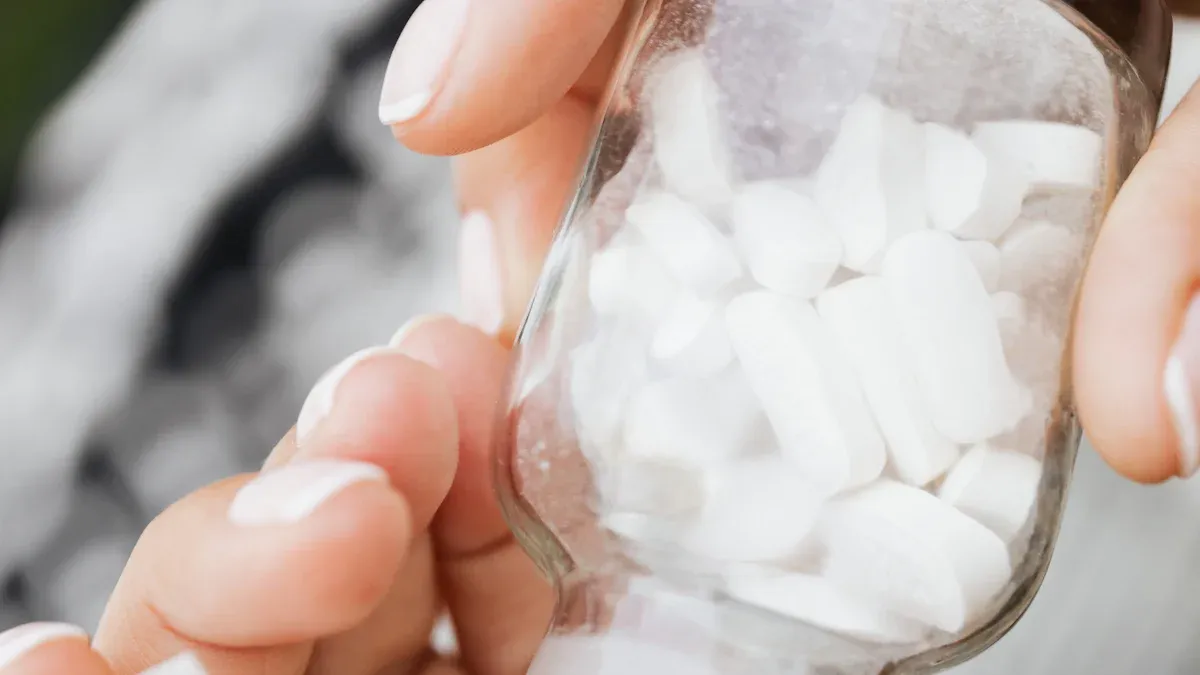
You might wonder if you should leave the dessecante in your pill bottle. It helps keep your medicine dry and safe from moisture. Silica gel packets are nontoxic, so you do not need to worry about poison. If you take the packet out, watch out for choking hazards. People often confuse cotton with desiccant, but they are not the same. You can feel confident when you see these packets in your medicine.
Principais conclusões
Always keep the desiccant packet in your pill bottle. It helps protect your medicine from moisture.
Sacos de sílica gel are safe. They keep pills dry. This stops clumping and keeps your medicine strong.
Close your pill bottle tightly every time you use it. This helps the desiccant work better.
If you take out the desiccant, your pills can get wet. Humidity can make your pills weaker over time.
Watch out for choking hazards with desiccant packets. Be extra careful around young children.
If your pills clump or look different, ask your pharmacist for help.
Keep your medicine in a cool, dry place. This helps the desiccant do its job well.
Take out cotton from your pill bottle. Cotton can hold moisture and hurt your medicine.
Desiccant Purpose
Moisture Protection
You see small packets in your pill bottles. They are not just for filling space. These packs soak up moisture. This keeps your medicine dry. If you leave them in, your pills stay safe from humidity.
Pill Clumping
Humidity can make pills stick together. Sometimes, you open a bottle and find pills stuck in a clump. Moisture causes this problem. Silica gel packets absorb extra water in the air. This keeps pills apart and easy to use. Many companies get fewer complaints about clumping when they use silica gel packets.
Reduced Potency
Moisture does more than make pills stick. It can also make your medicine weaker. Some pills lose strength if they get wet. You may not notice right away, but your medicine might not work as well over time. Studies show about 25% of medicines have problems because of moisture. Silica gel packets help by keeping the bottle dry inside.
Sugestão: Always close your pill bottle tightly after you use it. This helps the desiccant packs work better.
Medication Effectiveness
You want your medicine to work every time. That is why keeping it dry is important. Desiccant packs, like silica gel packets, help keep pills stable. They do not make the bottle totally dry, but they lower humidity to a safe level. This helps your pills last longer and stay strong.
Pharmaceutical companies use different desiccants to protect medicine. Here is a quick look at how they help:
How It Helps Your Pills | Effectiveness in Moisture Control | |
|---|---|---|
Silica Gel Packets | Absorbs moisture, keeps pills dry | Very effective, even in small amounts |
Peneiras moleculares | Maintains low humidity for sensitive products | Prevents moisture damage, high stability |
Clay Minerals | Absorbs humidity, stops clumping | Good for keeping pills from sticking |
You might not know, but the kind and amount of desiccant in your bottle depends on the medicine. Some pills need more protection because they are sensitive to water. Others can handle a little humidity. Companies pick the right desiccant so your medicine stays safe until you finish the bottle.
Desiccant Packet Explained
Silica Gel Packets
How Silica Gel Works
You often see silica gel packets in pill bottles. These small packs pull water out of the air. Silica gel is a type of sand that soaks up moisture. When you leave these packets in, they keep your medicine dry. Silica gel can hold a lot of water for its size. Even a tiny packet can protect your pills from getting wet.
Silica gel does not mix with your medicine. It stays the same, even when it is wet. You can count on it to work in hot or cold places. This makes silica gel good for bottles in any room or when you travel.
Silica gel packets soak up water fast.
They help keep the bottle dry inside.
You do not need to worry about them reacting with your pills.
Nota: Silica gel packets work best if you close your bottle tightly after using it.
Nontoxic Nature
You might wonder if silica gel packets are safe. The answer is yes. Groups like the FDA say silica gel is safe for food and medicine packaging. You should not eat the packet, but touching it will not hurt you. The main danger is choking if someone swallows the packet.
Here’s a quick look at how safety is checked:
Regulatory Agency | Classification | Descrição |
|---|---|---|
FDA | GRAS | Safe for food and medication packaging, not for eating |
Silica gel packets are safe to keep in your pill bottle.
They do not leak chemicals or hurt your medicine.
Always keep packets away from young kids to stop choking.
Why Desiccant Packages Are Used
Medicine companies put desiccant packages in pill bottles for many reasons. You want your medicine to work every time you take it. Water can ruin pills, make them stick, or make them weaker. Desiccant packets help by:
Stopping your medicine from breaking down because of water.
Keeping pills dry so they do not stick or lose strength.
Helping your medicine last longer, so you do not waste it.
Making sure your medicine stays safe and works well.
Manufacturers put desiccant packets in bottles when they pack them. These packets grab water and keep the inside dry. If there is more water, the packets keep working until they are full. When you leave silica gel packets in your bottle, you help your medicine stay fresh and strong.
Desiccant Safety
Safe Use In Bottles
You see a small packet inside your medicine bottle. It helps keep your pills dry and safe. Most people never have a problem with these packets. You do not need to worry about poison because silica gel packets are nontoxic. The packet does not mix with your medicine or change how it works. You can leave it in the bottle without concern.
Some medicines need extra protection from moisture. For example, Pradaxa must stay in its original bottle with the desiccant cap. Pharmacists always give you this medicine in the right bottle. You should not move these pills to a pill box or organizer. The desiccant keeps your medicine strong and safe.
Choking Hazard
The biggest risk with desiccant packets is choking. The packet is small and looks a bit like a candy or a pill. Young children or older adults might mistake it for medicine. You should always check before you take your pills. If you have kids at home, keep the bottle out of reach.
Sugestão: Always look inside the bottle before you pour out your pills. Make sure the packet stays in the bottle and does not end up in your hand.
Handling Tips
You can handle the packet safely. Just leave it in the bottle. If you need to take it out for a moment, put it back right away. Do not cut or open the packet. If the packet breaks, throw it away and ask your pharmacist for advice. Here are some easy tips:
Keep the packet in the bottle at all times.
Do not eat or chew the packet.
Store your medicine bottle in a safe place.
Remind others in your home about the packet.
What If Accidentally Ingested
Sometimes, people swallow a desiccant packet by mistake. This happens more often than you might think. Most silica gel packets do not cause harm, but some packets contain other chemicals like calcium chloride. These can cause stomach pain, vomiting, or even heart problems. In rare cases, people need medical help.
If you or someone else swallows a packet, here is what you should do:
Remove any pieces left in the mouth.
Drink water to help move the packet through your system.
Watch for symptoms like trouble breathing, stomach pain, or vomiting.
Save the packet and packaging for the doctor.
Most people do not have problems after swallowing a silica gel packet. For example, two people swallowed packets with their Nicorandil tablets and felt fine. Still, you should always check with a medical professional. It is better to be safe and get help if you feel sick.
Nota: If you ever feel worried after swallowing a packet, do not wait. Get help right away.
Removing Desiccant Package
Risks Of Removal
Moisture Exposure
You might want to take out the desiccant package. Think about what happens if you do. Moisture can get inside your pill bottle. This is more likely in humid places or bathrooms. If humidity goes over 60%, pills can break down. Microbes might grow, and medicine can lose strength. You want your pills dry and safe. Keeping the desiccant package inside helps control humidity.
Taking out the packet lets moisture in. This can hurt your medicine.
Humid air makes pills weaker and can spoil them.
Sugestão: Store your medicine in a cool, dry place. This helps the desiccant package work well.
Tablets Sticking Together
If you remove the desiccant, pills can stick together. Moisture makes tablets soft and sticky. You may find a clump of pills instead of single ones. This makes it hard to get the right dose. It can also ruin your medicine.
Pills can clump and break if they get wet.
Sticky tablets are hard to swallow and may not work right.
If your pills stick together, check if the desiccant package is missing or broken.
When Removal Is Acceptable
Keeping Bottle Closed
Sometimes, you need to take out the desiccant package. Maybe it gets in the way, or you worry about someone swallowing it. If you keep your bottle closed tight after each use, you lower the risk of moisture. Only open the bottle when you need a pill. Quick openings and closings keep the inside dry.
Open the bottle only when you need to.
Close the lid tight every time.
Keep the bottle away from heat and humidity.
Doctor Recommendations
Pharmacists and doctors usually say to leave the desiccant package in your pill bottle. It absorbs moisture and keeps medicine safe. If your doctor says you can remove it, listen to them. Some medicines do not need as much protection. Most do better with the packet inside.
Ask your pharmacist if you are not sure about removing the packet.
Follow instructions on the bottle or from your doctor.
If you have young kids, talk to your doctor about safety.
Nota: Silica gel packets say “Do not eat” because they can cause choking, especially for kids. Always keep the packet away from children and pets.
Here’s a table to help you decide:
Situation | O que deve fazer |
|---|---|
Pills clumping or sticking | Check for missing desiccant packet |
Children in the home | Keep packet in bottle, out of reach |
Doctor says removal is okay | Follow medical advice |
Humid environment | Leave packet in bottle |
You want your medicine to work every time you take it. Keeping the desiccant package in your bottle is the best way to protect your pills from moisture and clumping. If you are unsure, ask your pharmacist or doctor for help.
Cotton vs. Desiccant
Why Remove Cotton
You might notice a wad of cotton inside your pill bottle. It looks soft and harmless, but it does not help your medicine stay fresh. Cotton was used for years to cushion pills during shipping. Some companies still add it out of tradition. You may think cotton keeps pills dry, but it actually does the opposite once you open the bottle.
O National Institutes of Health says you should take the cotton out after opening your medicine. Cotton can soak up moisture from the air. This trapped moisture can make your pills break down faster. You want your medicine to stay strong and safe, so removing the cotton is a smart move.
Here’s a quick look at how cotton and desiccant packets compare:
Material | Objetivo | Notas |
|---|---|---|
Cotton | Provides cushioning and some moisture control during shipping | Used historically; can attract moisture after opening |
Desiccant Pack | Absorbs moisture to preserve medication stability and efficacy | Modern solution; keeps pills dry and effective |
When you leave cotton in the bottle, it can make your pills stick together or crumble. You may notice pills that look odd or feel damp. That’s a sign the cotton is holding moisture. If you see cotton in your bottle, pull it out and throw it away. Your medicine will thank you!
Sugestão: Always check your pill bottle for cotton when you open it for the first time. Removing it helps keep your medication in good shape.
Why Keep Desiccant
Now, let’s talk about the small packet you find in your pill bottle. This is the desiccant. You want to keep this packet inside because it does a great job protecting your medicine. Unlike cotton, the desiccant absorbs moisture and keeps the inside of the bottle dry.
Desiccant packets are designed to pull water out of the air. This helps your pills stay strong and last longer. Cotton cannot do this job. If you remove the desiccant, your medicine may lose its power or spoil faster. You want your pills to work every time you take them.
Here’s why you should keep the desiccant in your bottle:
É absorbs moisture and keeps pills dry.
It helps prevent clumping and crumbling.
It protects your medicine from losing strength.
Cotton does not have the same moisture-fighting power. You want to rely on the desiccant to keep your pills safe. If you ever wonder which to keep, remember: toss the cotton, keep the packet.
Nota: If you have questions about what’s inside your pill bottle, ask your pharmacist. They can help you spot the difference between cotton and a desiccant packet.
Medication Storage Tips
Keep Bottle Closed
You want your medicine to stay fresh and work well. The easiest way to protect your pills is to keep the bottle closed when you are not using it. Air and moisture can sneak in if you leave the lid off, even for a short time. Every time you open the bottle, close it right after you take your dose. This simple habit helps you keep pills dry and safe.
Here are some quick tips to remember:
Always screw the cap on tightly.
Don’t leave the bottle open while you do other things.
Check the seal if you notice any changes in your pills.
If you see broken seals or pills that look odd, talk to your pharmacist. A closed bottle keeps out moisture and helps your medicine last longer.
Store In Dry Place
Where you keep your pill bottle matters. Humidity can damage medicine, especially if you store it in the bathroom or near the kitchen sink. These places get steamy and damp, which can make pills break down faster. You should pick a cool, dry spot for your medicine.
Choose a shelf in your bedroom or a cabinet away from water.
Avoid windowsills, since sunlight and heat can also harm pills.
Keep your medicine in its original packaging to protect it from light and moisture.
Check expiration dates often to make sure your pills are still good.
Humidity in your home can cause pills to absorb water. This makes some medicines lose their strength and change shape. If you want your medicine to work every time, store it where it stays dry.
Sugestão: Never keep your pill bottle in the bathroom. The steam from showers can ruin your medicine.
Avoid Transferring Pills
You might think it’s easier to move pills into a weekly organizer or another container. This can cause problems, especially for medicines that need extra protection. The original bottle is designed to keep out heat, air, light, and moisture. If you transfer pills, you lose that protection.
The Centre for Adverse Reactions Monitoring reported a patient who had side effects after moving dabigatran capsules into a pill box. The symptoms stopped when he kept the capsules in their original container. Some pills, like dabigatran, absorb moisture quickly if you take them out of the bottle.
Always use the original bottle for sensitive medicines.
Don’t mix pills from different bottles.
If you need to use a pill organizer, ask your pharmacist if it’s safe for your medicine.
Moving pills can change how they work and may even make them unsafe. You want to keep pills dry and strong, so trust the packaging that comes from the pharmacy.
Nota: If you ever feel unsure about storing your medicine, ask your pharmacist for advice. They can help you find the best way to keep your pills safe.
Desiccant Myths
Harmful Misconceptions
You might hear stories about the packets in pill bottles. Some things people say are not true. Let’s look at some myths and what is real:
Desiccants are toxic.
Some people think these packets have poison inside. That is not right. Most desiccants in pill bottles use silica gel, which is nontoxic. The “Do not eat” warning is for choking, not poison.Desiccants are dangerous if swallowed.
If someone swallows a packet by mistake, it usually does not hurt them. The main danger is choking, not the stuff inside.You can throw away the desiccant if you live in a dry place.
Even if your house feels dry, moisture can still get in your pill bottle. Desiccants help keep medicine safe, even when the weather changes or if you keep pills in a damp room.Desiccants are only for shipping.
Some people think the packet is just for getting pills from the factory to your home. But it keeps working every day to protect your medicine from moisture.
Here is a table that shows myths and facts:
Misconception | Fact |
|---|---|
Desiccants are toxic | Desiccants are not toxic but can pose a choking hazard. |
They can be removed from the bottle | It’s best to keep them in the bottle to protect your medication. |
They are not harmful but can cause choking, so warnings are needed. | |
They are unnecessary in dry climates | Desiccants help in all climates, especially humid ones. |
Nota: Always keep the desiccant in your pill bottle unless your doctor or pharmacist says it is okay to take it out. The packet helps your medicine stay strong and safe.
Cotton And Desiccant Differences
You might see cotton or a desiccant packet in your pill bottle. These two things are not the same. They do different jobs.
Cotton
Cotton was used a lot in pill bottles before. Its job was to stop pills from breaking during shipping. After you open the bottle, cotton can trap water and make pills go bad faster. That is why you should take out the cotton when you first open your medicine.Dessecante
The desiccant packet is there to soak up water. It keeps your pills dry and helps them last longer. You should leave the desiccant in the bottle until you finish your medicine.
Here is a table to help you remember:
Item | Objetivo | O que deve fazer |
|---|---|---|
Cotton | Protects pills during shipping | Remove after opening bottle |
Dessecante | Absorbs moisture, protects pills | Keep in bottle until empty |
If you are not sure, ask your pharmacist. They can help you tell the difference and make sure your medicine stays safe.
Missing Desiccant
Assessing Medication
You open your pill bottle and notice the desiccant packet is missing. You might feel worried. Is your medicine still safe? Here’s how you can check if moisture has affected your pills.
First, look at your pills closely. Do you see any clumping or pills sticking together? That’s a sign moisture got inside. Pills should look dry and separate. If you spot any discoloration, crumbling, or a strange smell, your medicine might not be good anymore.
Medications that need extra protection from moisture can lose their strength quickly. You want your medicine to work every time you take it. If the desiccant packet is gone, your pills might not last as long. Moisture-sensitive pills and diagnostic kits are especially at risk. You should pay extra attention to these types.
Here’s a quick checklist to help you assess your medication:
Pills look clumped or stuck together
Tablets feel soft or crumbly
Color changes or spots appear
Pills smell odd or different
Packaging feels damp or sticky
If you notice any of these problems, your medicine may not be safe. Prolonged moisture exposure can lower the shelf life and make your pills less effective. You want to avoid taking medicine that doesn’t work or could be unsafe.
Sugestão: Always store your medicine in a cool, dry place. This helps protect it, even if the desiccant packet is missing.
When To Contact Pharmacist
You might wonder when you should call your pharmacist. If you see any changes in your pills, reach out right away. Pharmacists know how to check if your medicine is still good. They can tell you if you need a new bottle or if you can keep using your pills.
Here are some situations when you should contact your pharmacist:
The desiccant packet is missing and your pills look or smell different
You find moisture inside the bottle or on the pills
You have a medicine that is sensitive to water, like certain capsules or diagnostic kits
You feel unsure about the safety or strength of your medication
Pharmacists want to help you stay safe. They can answer your questions and give you advice. If you ever feel uncertain, it’s better to ask than to guess.
Situation | O que fazer |
|---|---|
Pills look clumped or discolored | Call your pharmacist |
Bottle feels damp | Ask for advice |
Missing desiccant, unsure safety | Get professional help |
Nota: Never take medicine if you think it might be spoiled. Your health comes first. If you have questions, your pharmacist is your best resource.
If you keep your bottle closed and store it in a dry place, you lower the risk of problems. Still, missing desiccant packets can lead to loss of product efficacy and even patient safety issues. You want to make sure your medicine works as it should. When in doubt, reach out for help. 😊
You should leave the desiccant in your pill bottle to keep your medicine dry and strong.
If you remove it, make sure you close the bottle tightly every time.
Silica gel packets are safe, but you need to watch out for choking.
If you ever feel unsure, ask your pharmacist for help.
Remember, keeping your pills dry helps them work better and last longer!