



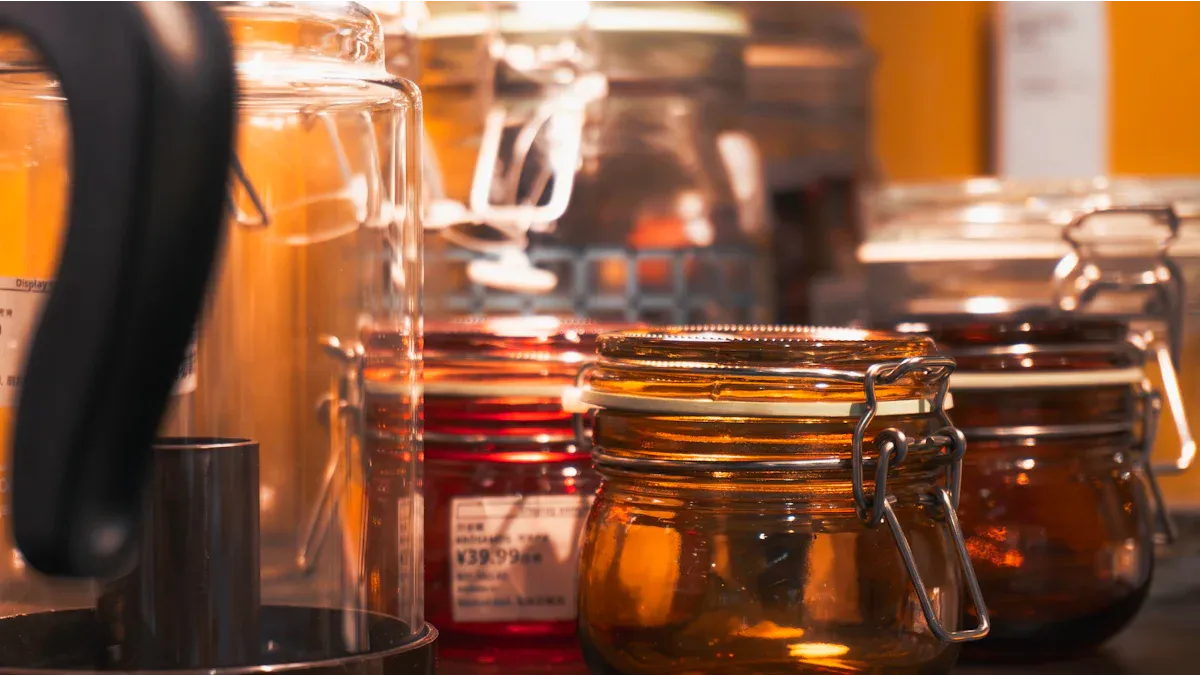
您应该存储 干燥剂 放在密闭的容器中,并放在阴凉干燥的地方。这样可以防止潮气进入,延长干燥剂的使用寿命。很多人把干燥剂放在潮湿的房间或阴凉的地方,这样做是错误的。 一次使用过多. .尝试使用拉链密封袋或盖子严实的罐子。务必检查容器是否密封良好。用正确的方法储存干燥剂非常简单,而且可以省去很多麻烦。.
主要收获
将干燥剂放入密闭容器中. .这样可以防止水渗入,延长使用寿命。.
挑选合适的容器, 如拉链密封袋或玻璃瓶。根据干燥剂的多少选择合适的容器。.
将干燥剂放在阴凉干燥的地方。使其远离热源和潮湿的地方,这样它才能很好地发挥作用。.
经常检查干燥剂的颜色变化或结块情况。这有助于您了解干燥剂是否仍在工作。.
在容器上写上清晰的标签,注明警告和日期。这样可以防止混淆,保证人们的安全。.
使用先进先出规则,先使用旧的干燥剂。这样可以避免浪费。.
用完容器后要立即关闭。这样可以防止空气和水进入。.
遵守安全规则,让干燥剂远离孩子和宠物。这有助于防止事故发生。.
干燥剂存储基础知识
密闭容器
保持干燥剂的干燥首先需要 右容器. .要尽可能多地阻隔空气和湿气。这有助于干燥剂保持新鲜,随时可用。.
容器类型
您有几种储存干燥剂的好方法。拉链密封袋适用于少量的干燥剂。盖子严实的玻璃罐适合大批量存放。有些人使用金属罐或带扣盖的塑料容器。如果您储存种子、粉末或电子产品,可以将干燥剂包直接放在同一个容器中。这样可以保持干燥和安全。.
小贴士 一定要选择关紧的容器。即使是很小的缝隙也会让湿气进入。.
密封小窍门
在密封拉链袋之前,确保压出多余的空气。对于瓶子或罐子,将盖子拧到感觉合适为止。可以在盖子周围贴上胶带,以加强保护。如果打开容器,应立即重新盖上。干燥剂在露天的时间越短,效果越好。.
干燥剂的工作原理是从空气中吸附水蒸气。它们在以下情况下效果最佳 密闭空间. .科学家使用 气密干燥器 以防止敏感物品受潮。使用密封容器可以延长干燥剂的使用寿命,使其更好地发挥作用。.
凉爽干燥的地方
密封干燥剂后,您需要选择合适的存放地点。高温和潮湿会毁掉您的心血。.
最佳存储地点
找一个阴凉干燥的地方。壁橱架子、抽屉或储藏室都很适合。有些人会在有空调的房间里放一个柜子。如果您住在潮湿的地区,应避免地下室或浴室。这些地方的空气中往往有太多的湿气。.
避免高温和潮湿
让干燥剂远离窗户、炉子或暖气。阳光和热量会使容器内部出汗。这会增加湿度,降低干燥剂的效果。尽量将容器存放在离地面较远的地方,因为地板会变得潮湿。如果您发现房间里有粘稠或温暖的感觉,请将干燥剂移到更好的地方。.
请注意: 阴凉干燥的地方有助于延长干燥剂的使用寿命,并使存放的物品免受潮湿影响。.
为干燥剂选择容器
材料选择
选择合适的容器对保持干燥剂的干燥和安全有很大的影响。您有三种主要选择:玻璃、塑料和金属。每种容器都有自己的优缺点。.
玻璃、塑料、金属
玻璃容器很好用,因为它们不会让异味或细菌附着。您可以轻松地清洗它们,而且它们不会与大多数东西发生反应。缺点是玻璃容器较重,掉落时可能会摔碎。塑料容器既轻又便宜。您可以找到各种形状和大小的塑料容器。有些塑料可能会吸附气味或让化学物质与干燥剂混合,因此如果储存食物,需要选择食品安全塑料。金属容器使用寿命长,防潮效果好。它们坚固且可回收。有时,金属会与某些物品发生反应,因此请检查干燥剂与金属是否安全。.
容器类型 | 优势 | 缺点 |
|---|---|---|
玻璃 | 无孔、易清洁、环保 | 重、易碎、形状有限 |
塑料 | 轻巧、经济实惠、微波炉安全 | 可吸收异味,可能沥出化学物质 |
金属 | 耐用、可回收、阻隔性强 | 较重,对某些食物有反应 |
选择容器时,要考虑其阻隔水汽的能力。玻璃和金属通常比塑料更能阻挡水汽。如果您想获得最佳保护,请选择水蒸气透过率低的容器。.
尺寸和容量
You need to match your container size to the amount of desiccant you plan to store. If you use a container that is too big, you may waste space and let in extra air. If it is too small, you might not fit all your packets or beads.
Matching Container to Amount
Here’s a simple guide to help you pick the right size:
容器尺寸 | Desiccant Size |
|---|---|
1 pint up to 1 quart Mason jar | 50cc |
1 gallon Mylar bag | 300cc |
5 gallon bucket (low air volume) | 1000cc |
5 gallon bucket (high air volume) | 2000cc |
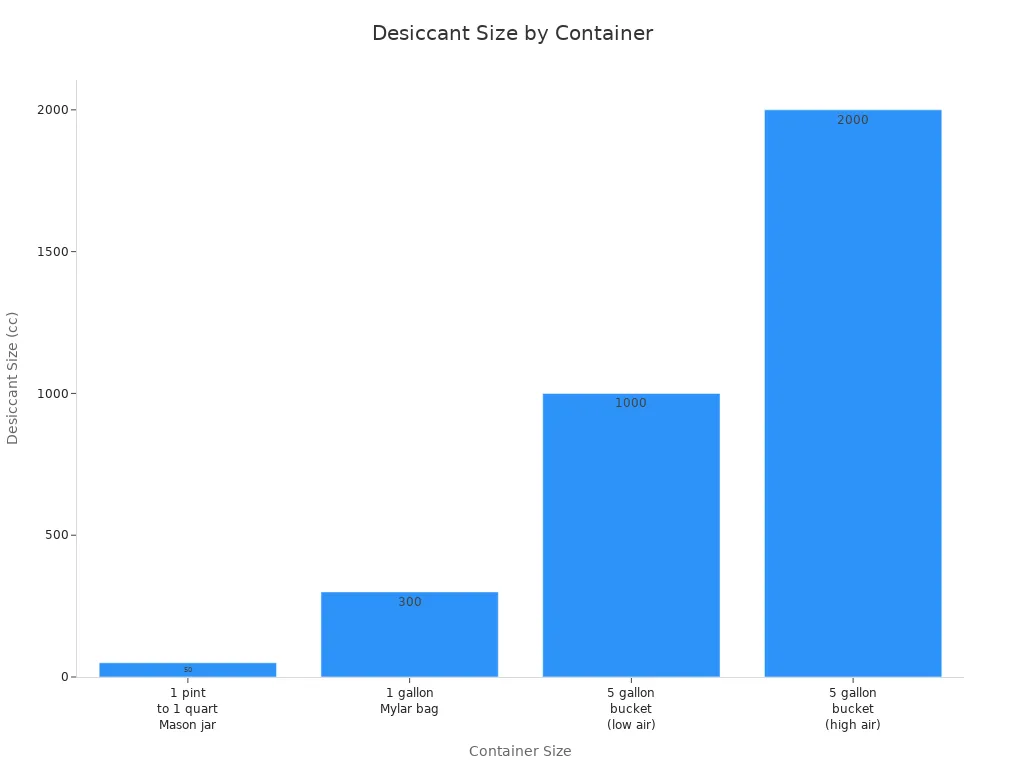
If you store food, seeds, or powders, make sure you use enough desiccant to keep everything dry. Not using enough can lead to mold or spoilage. Always check the air space in your container and adjust the amount of desiccant as needed.
Labeling
Labeling helps you stay organized and keeps everyone safe. You do not want someone to mistake desiccant for food or forget what is inside a jar.
Organizing Multiple Types
Try these tips for labeling your containers:
Write the full name of the product in English. Skip abbreviations.
Add a clear warning like “Do Not Eat” if you store desiccant with food.
Use a permanent marker or a strong adhesive label so the writing does not fade.
Include the date you filled the container.
If you use color-changing beads, make sure the label says what they are for.
小贴士 Check your labels often. If they start to fade or peel, replace them right away.
Clear labeling helps you avoid mix-ups and keeps your storage safe. You can organize different types of desiccant by using color-coded labels or separate shelves. This makes it easy to find what you need and prevents cross-contamination.
Keeping Desiccant Effective
Regular Checks
您希望您的 desiccant to work every time you use it. Regular checks help you spot problems before they ruin your stored items. Experts say you should inspect your desiccant every 6 to 12 months. This routine keeps moisture away and helps you catch issues early.
Signs of Saturation
How do you know when your desiccant is full of moisture? Look for these signs:
Color-changing beads turn from orange or blue to green or pink.
Clay desiccants get clumpy or hard.
Silica gel feels sticky or soggy.
You see condensation or mold inside your container.
If you notice any of these, it’s time to replace or recharge your desiccant. Some brands use color-changing beads, which make it easy to see when you need a new packet.
Contamination Indicators
Sometimes, desiccant can get dirty or damaged. You should check for:
Torn packets or broken beads.
Strange smells coming from the container.
Visible dirt or stains on the desiccant.
Signs of pests or insects.
If you find any of these, throw out the old desiccant and use a fresh one. Clean containers before adding new packets.
Stock Rotation
You want your storage to stay fresh and reliable. Using a first-in, first-out (FIFO) system helps you do that. This means you use the oldest desiccant first and add new packets to the back of your supply.
First-In, First-Out
Here’s why FIFO works well:
You keep your storage fresh and avoid using expired packets.
You reduce waste and save money.
You make sure your items stay dry and safe.
You help products last longer, even during seasonal changes.
小贴士 Place new packets behind older ones. Mark the date on each packet so you know which to use next.
Quick Resealing
Every time you open a container, your desiccant meets fresh air. The longer it stays open, the more moisture it absorbs. You should reseal containers as quickly as possible.
Open the container only when you need to.
Close the lid tightly right after you finish.
Press out extra air before sealing zip bags.
Use vacuum sealing for extra protection if you store sensitive items.
If you keep exposure time short, your desiccant stays strong. Leaving packets out for hours can make them less effective. Always keep them in airtight containers to stop moisture from sneaking in.
请注意: Quick resealing keeps your desiccant working longer and protects everything you store.
Safety Tips for Desiccant
Handling Safely
You want to keep yourself safe when you handle desiccant. Most types are not dangerous, but you should still avoid direct contact. Silica gel can cause mild irritation if it touches your skin or gets in your eyes. Sometimes, you might notice redness or feel a little itchy. If you get desiccant on your hands, wash them with soap and water. If it gets in your eyes, rinse them with clean water right away.
Avoiding Contact
Here are some things to watch out for:
Skin contact with silica gel can lead to irritation.
Eye contact with silica gel can also result in irritation.
In rare cases, desiccants may cause mild irritation to the skin, eyes, or stomach.
You can wear gloves if you handle large amounts. Try not to rub your eyes after touching desiccant. If you feel any discomfort, clean the area and ask an adult for help.
Child and Pet Safety
Kids and pets get curious. You need to keep desiccant out of their reach. Many accidents happen when children or animals find packets and try to play with them or put them in their mouths.
Storing Out of Reach
Let’s look at some smart ways to keep desiccant safe:
战略 | 说明 |
|---|---|
Keep out of reach | Store desiccants in high cabinets or locked areas to prevent access. |
Use appropriate containers | Use child-proof containers or bags that are hard for kids and pets to open. |
Label clearly | Mark storage areas so everyone knows desiccants are inside. |
You can collect silica gel packets and put them in a special spot. Some people make bigger fabric bags to hold the pellets. This makes them harder to swallow. Place these bags in safe places around your home. Always keep desiccant away from play areas. Tell children not to touch packets unless an adult is with them.
Preventing Ingestion
Accidental swallowing happens more often than you might think. In 2009, about 38,000 people reported eating silica gel packets. Most were kids under six years old. Usually, poison control experts tell parents not to worry, since small amounts are not very harmful. Still, you want to avoid these accidents.
Warning Labels
You can make your storage even safer with clear warning labels. Try these ideas:
Use bright or contrasting colors so labels stand out.
Pick unique shapes for containers so they are easy to spot.
Print “DO NOT EAT” in large, bold letters.
Put warning labels on the canister, bottle, lid, and packaging.
小贴士 If you store desiccant with food or medicine, double-check that every container has a warning label. This helps everyone stay safe.
Regenerating Desiccant
When to Regenerate
You might wonder when it’s time to bring your desiccant back to life. You don’t need fancy tools to spot the signs. Just look for simple clues. Color-changing beads make it easy. If most of the beads have turned from orange or blue to green or pink, that means they’re full of moisture. Clay desiccants get hard or clumpy. Silica gel can feel sticky. If you notice condensation inside your container, it’s time for action.
Visual Signs
Here’s a quick table to help you decide when to regenerate:
指标类型 | Warning Signs | Recommended Action |
|---|---|---|
Visual | Color change in beads | Replace when 80% changed |
性能 | Moisture readings >5ppm H2O | Replace or regenerate |
Time-Based | Operating hours exceeded | Follow manufacturer advice |
If you see these signs, don’t wait. Regenerating keeps your storage safe and dry.
再生方法
You have a few ways to dry out your desiccant and make it work like new. Oven drying is the most popular. Microwave drying works for small batches. Always follow safety tips to avoid overheating or damaging your packets.
烤箱干燥
Oven drying is simple. Preheat your oven to the right temperature. Spread the desiccant in a thin layer on a baking sheet. For Tyvek bags, use 245°F and dry for up to 24 hours. Silica gel works best at 220°F for the same time. If you use general packets, bake at 150°F for 12 to 18 minutes. Check every so often to make sure you don’t overheat them.
小贴士 Use a convection oven if you have one. Keep packets spaced out so air can move around them.
Other Techniques
Microwave drying is quick for small amounts. Place silica gel in a Pyrex dish. Set your microwave to medium. Run it in short bursts of 3 to 5 minutes. Stir and check the color after each round. You’ll usually finish in about 10 to 12 minutes. For best results, use intervals of 1 to 2 minutes and check often.
Other methods, like filament dryers, don’t work as well. Stick to ovens or microwaves for safe and effective results.
Storing After Regeneration
Once your desiccant is dry, you need to store it right away. Don’t let it sit out in the open. Put it in an airtight container as soon as it cools. Label each batch with the date you reactivated it. This helps you track how many times you’ve used it. Try to avoid leaving it out for long periods. Check your packets every month for color changes or signs of moisture.
Label batches with reactivation dates.
Avoid prolonged air exposure.
Check monthly for saturation or discoloration.
请注意: Quick storage after regeneration keeps your desiccant working at its best.
Desiccant Storage Checklist
分步指南
You want to keep your desiccant fresh and working well. Here’s a simple checklist you can follow every time you store desiccant:
Choose the Right Container
Pick an airtight container like a zip seal bag, glass jar, or metal tin. Make sure it closes tightly.Check for Cleanliness
Wash and dry your container before you add desiccant. Dirt or moisture can ruin your packets.Add the Correct Amount
Use enough desiccant for the size of your container. If you store food or seeds, check the recommended amount.Seal Immediately
Press out extra air if you use a bag. Twist lids until snug. Add tape for extra protection if needed.Label Clearly
Write the name, date, and a warning like “Do Not Eat” on your container. Use a marker or strong label.Pick a Cool, Dry Spot
Store your container in a closet, pantry, or drawer away from heat and humidity.Keep Out of Reach
Place desiccant where kids and pets cannot get to it. Use high shelves or locked cabinets.Check Regularly
Look for color changes, clumps, or damage every few months. Replace or regenerate if needed.Rotate Stock
Use older packets first. Add new ones to the back. Mark dates to help you remember.Regenerate When Needed
Dry out saturated desiccant in the oven or microwave. Store it again right away.
小贴士 If you follow these steps, you will keep your desiccant strong and your stored items safe.
Quick Tips
Want to make things even easier? Try these quick tips:
提示 | Why It Helps |
|---|---|
🏷️ Label everything | Prevents mix-ups and keeps everyone safe |
🧤 Wear gloves | Avoids skin irritation when handling large amounts |
🚫 Keep away from food prep areas | Stops accidental ingestion |
📅 Set reminders | Helps you remember to check and rotate stock |
🌡️ Avoid hot spots | Keeps desiccant working longer |
🕒 Reseal fast | Reduces moisture exposure |
Always store desiccant in airtight containers.
Never leave packets out in the open.
Use color-changing beads for easy checks.
Keep warning labels bright and bold.
Store regenerated desiccant right after drying.
请注意: You don’t need fancy tools or expensive supplies. Just follow these tips and your desiccant will stay ready for action!
Mistakes to Avoid
When you store desiccant, you want to get the best results. Some mistakes can ruin your efforts and leave your items at risk. Let’s look at the most common slip-ups and how you can dodge them.
Wrong Containers
Choosing the wrong container is a big mistake. If you use a container that doesn’t seal tightly, moisture sneaks in. Desiccant starts absorbing water from the air as soon as you open the packet. If you leave packets exposed or use a lid that doesn’t fit, your desiccant gets saturated before you even use it.
Here are some problems you might face:
Loose lids let air and moisture inside.
Thin plastic bags can tear or leak.
Containers with cracks or gaps don’t protect your desiccant.
Overstuffing with too many packets wastes resources and can mess up moisture control.
Using too few packets means your items won’t stay dry for long.
小贴士 Always pick a sturdy, airtight container. Check for cracks or weak spots before you store anything.
Skipping Checks
You might think your desiccant is fine once you seal it up, but skipping regular checks can cause trouble. Desiccant can get saturated or contaminated over time. If you don’t test or inspect your packets, you risk mold, spoiled food, or damaged electronics.
Common mistakes include:
Forgetting to look for color changes in beads.
Ignoring clumps or sticky spots.
Not checking for torn packets or dirt.
Reusing packets without drying them out first.
If you skip these steps, your desiccant won’t work as well. You could end up with ruined supplies or unhappy customers if you sell products.
错误 | What Can Happen |
|---|---|
Skipping inspections | Mold, spoilage, damage |
Not testing packets | Poor moisture control |
Reusing without drying | Weak protection |
🕵️♂️ Set a reminder to check your desiccant every few months. It only takes a minute and saves you a lot of hassle.
Ignoring Safety
Safety matters when you handle desiccant. If you ignore safety rules, you put yourself, kids, and pets at risk. Some people forget to label containers or leave packets where children can reach them. Others don’t wear gloves when handling large amounts.
Here’s what you should watch out for:
Leaving packets in food prep areas can lead to accidental ingestion.
Not labeling containers makes it easy to mix up desiccant with food.
Storing packets within reach of kids or pets invites accidents.
Handling desiccant with bare hands can cause skin irritation.
⚠️ Always use clear warning labels. Store desiccant high up or in locked cabinets. Wear gloves if you handle a lot at once.
If you avoid these mistakes, you keep your desiccant working well and everyone safe. Simple steps make a big difference!
You now know how to keep your desiccant working its best. Use airtight containers, pick cool and dry spots, and check your packets often. Follow the checklist and safety tips to avoid mistakes. When you store desiccant the right way, you protect your food, gear, and supplies from moisture. Good storage saves you money and keeps everything fresh. Ready to get started? Your desiccant will thank you!