



Quels sont les facteurs qui stimulent la croissance du marché du charbon actif granulé ?
Pelletized activated carbon is one of the fastest-moving segments in the broader carbon filtration industry. Unlike granular carbon, which is used mostly in fixed water beds, pelletized carbon is extruded into uniform cylindrical pellets that handle gas-phase duty well, and that difference is pulling it into solvent recovery, air purification, and emission control systems where granular carbon struggles. Buyers across industrial gas, water, and environmental sectors are watching this segment because its growth reflects where regulatory pressure and industrial spending are heading.
The pelletized activated carbon market is growing because of tightening environmental regulations, rising demand for VOC and odor control in industrial gas streams, expansion of solvent recovery systems, and a structural shift toward high-mechanical-strength carbon that can be regenerated and reused. The market was valued around 3.1 billion USD in 2024 and is projected to reach about 5 billion USD by 2035, with the Asia-Pacific region and the gas-phase application segment growing the fastest.
This article breaks down the market into its measurable parts and then explains who is buying and why. It covers market size and forecast data, the gas-phase applications that dominate demand, the role of environmental regulation, the growing water treatment share, and the regional pattern of growth. It also explains the technical properties that make pellets different from granular carbon, the raw material and production trade-offs, and the cost and regeneration challenges that set the ceiling on adoption. Each section stands alone, so you can jump to the question closest to your business.
What is pelletized activated carbon?
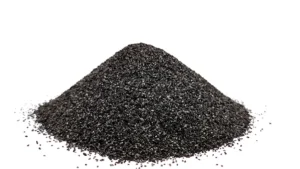
Pelletized activated carbon is activated carbon that has been ground, mixed with a binder, and extruded into uniform cylindrical pellets, typically 1 to 4 millimeters in diameter, giving it high mechanical strength, low pressure drop, and predictable adsorption in gas-phase systems.
The manufacturing route sets the material apart. Pelletized activated carbon starts from raw carbonaceous material, usually coal, wood, or coconut shell, which is carbonized and activated, then milled into a powder, blended with a binder, and extruded through dies to form pellets, which are dried and often re-activated. The result is a product with a well-defined shape and consistent size. That uniformity matters in packed beds because it produces an even flow path for gas, fewer fines, and a lower pressure drop than crushed granular carbon of the same activity.
Those properties make pelletized carbon the default choice where gas must move through the bed under controlled draft. Its high mechanical strength means it survives thermal regeneration cycles without crumbling, and its cylindrical shape packs evenly in large vessels. Pellets are produced in a range of diameters so an engineer can match the pellet size to bed depth, gas velocity, and pressure constraints. The same material family also serves some liquid-phase duties, but its engineering advantages show up most clearly in gas adsorption.
How big is the pelletized activated carbon market?
The pelletized activated carbon market was estimated at roughly 3.1 billion USD in 2024, is projected to grow from about 3.2 billion USD in 2025 to around 5 billion USD by 2035, and is expected to grow at a compound annual growth rate of about 4.4 percent over that period.
Les pelletized activated carbon market size and forecast is best read by segment rather than by headline total. The gas-phase segment holds the largest share at roughly 58 percent, and it is also growing faster than the liquid-phase segment, driven by VOC removal, air purification, and biogas desulfurization. Coal-based feedstock leads supply at about 52 percent by volume, followed by coconut shell at roughly 29 percent and wood at about 19 percent, while steam activation, the physical process, accounts for roughly two-thirds of production. Regionally, Asia-Pacific dominates with more than a third of the market and a growth rate near 6 percent, ahead of North America and Europe.
|
Market dimension |
Leading segment |
Approximate share |
Growth context |
|
Application |
Gas phase |
58% |
VOC removal, air purification, biogas H2S |
|
Raw material |
Charbon |
52% |
Cost-effective, high gas-phase capacity |
|
Manufacturing process |
Physical (steam) |
68% |
Eco-friendly, high mechanical strength |
|
Région |
Asia-Pacific |
36% |
|
Why does gas-phase demand dominate pelletized carbon growth?
Gas-phase applications drive most pelletized carbon demand because pellets are engineered for moving air and gas streams, where their uniform cylindrical shape, low pressure drop, and high attrition resistance outperform granular alternatives in VOC removal, solvent recovery, odor control, and toxic gas filtration.
The largest single pull is VOC capture. Industrial processes that emit volatile organic compounds, from printing and painting to chemical synthesis and storage tank vents, route their exhaust through carbon beds before discharge. Pelletized carbon recovers solvents by adsorption so the captured material can be condensed and reused, which turns an air compliance cost into a material recovery stream. Evaporative emission controls on tanks and loading facilities are another steady source of demand, because pellet beds can handle the frequent flow changes these vents produce.
Beyond VOCs, pelletized carbon removes a broad class of airborne contaminants, including gaseous pollutants, toxic organic impurities in natural gas, and odor compounds from wastewater treatment and industrial sites. Its ability to run at low pressure drop means operators can push large volumes of air through smaller vessels with lower fan energy, a cost advantage that compounds over the life of the system. Because the pellets survive thermal reactivation, the same charge of carbon can serve the same installation for years, and that reuse economics is what keeps gas-phase buyers loyal to pellets over single-use media.
How do environmental regulations drive demand?
Tighter emission and discharge limits directly expand pelletized carbon demand because compliance forces industrial plants, utilities, and municipalities to install adsorption systems, and gas-phase applications that rely on pellets are usually the cheapest compliant option.
Regulation works on pelletized carbon through several channels at once. Air quality rules that cap VOC emissions push paint, chemical, and semiconductor plants toward recovery systems that use pellet beds, and the broader move of activated carbon into environmental infrastructure means compliance spending now shows up in utility and industrial capital plans. Drinking water standards that limit disinfection byproducts and emerging contaminants such as PFAS are pulling carbon contactors into municipal treatment, where pelletized media competes with granular carbon. Odor regulations around wastewater plants and landfills create a steady market for gas-phase filtration that often specifies pelletized carbon because of its low pressure drop.
The regulatory trajectory is one way: standards get stricter over time, and once a plant installs carbon capacity, the carbon needs replacement or regeneration on a cycle. That gives the market a recurring revenue base underneath one-time project demand. In many regions, the same regulation also creates the budget line that pays for the system, because a plant either installs controls or faces shutdown. From a market standpoint, regulatory tightening is the most reliable demand generator in the sector, which is why the fastest-growing regional markets are those where industrial expansion and new environmental rules are running in parallel.
What role does the water treatment segment play?
Liquid-phase applications account for roughly 42 percent of pelletized carbon demand, with municipal dechlorination, potable water polishing, groundwater remediation, and gold recovery providing growing volumes, although granular carbon still holds most conventional water-filter duty.
Water treatment pulls on pelletized carbon where handling, dust, and bed uniformity matter. Municipal plants use pelletized media in pressure contactors for dechlorination and organic removal, taking advantage of its low pressure drop in deep beds. The material also serves point-of-use and point-of-entry drinking water filters, where pellet form reduces the dust and fines that can contaminate the outlet. In industrial water, pelletized carbon treats process streams that would quickly erode softer grades.
Gold recovery is a smaller but steady liquid-phase consumer. Pelletized carbon is used in carbon-in-pulp and carbon-in-leach circuits to adsorb gold cyanide complexes, where its hardness limits the losses from mechanical abrasion in agitated tanks. The same attrition resistance that helps in gas beds protects pelletized carbon in slurry contactors. While granular carbon remains dominant in municipal adsorption for now, the liquid-phase share of the market is growing, and PFAS-focused installations are increasingly specifying pelletized formats where regeneration capability and bed stability are part of the design.
Why is Asia-Pacific leading the market?
Asia-Pacific is the largest and fastest-growing regional market for pelletized activated carbon, roughly a third of global demand, because of rapid industrialization, new environmental enforcement, growing water infrastructure spending, and expanding solvent-intensive manufacturing.
The region’s growth has clear drivers. Dense manufacturing bases in chemicals, electronics, paint, and textiles generate continuous VOC and solvent emissions, and air-quality enforcement in major industrial zones has moved from paper to practice, creating real compliance spending. Municipal water projects across the region are adding carbon contactors as drinking water standards tighten and as cities face pollution in raw water sources. Local production of activated carbon, especially coal-based grades, keeps supply close to demand and prices competitive.
North America and Europe still matter. North America holds roughly a quarter of the market, supported by strict EPA emission rules, PFAS remediation, and mature solvent recovery industries, while Europe accounts for about a fifth, driven by industrial emission directives and circular economy pressure on solvent and carbon reuse. But the higher growth rates are in Asia-Pacific and Latin America, where the combination of new plants, new regulations, and expanding infrastructure creates the fastest accumulation of carbon bed capacity.
How do pellets compare with granular carbon?
Pelletized carbon beats granular carbon in pressure drop, mechanical strength, and regeneration durability, while granular carbon wins on simple packed-bed versatility and lower unit cost for standard water duties, so the choice follows the application rather than a single winner.
|
Propriété |
Pelletized carbon |
Granular carbon |
|
Forme |
Uniform cylinders |
Crushed irregular granules |
|
Pressure drop |
Lower, even flow paths |
Higher, uneven packing |
|
Mechanical strength |
High, survives regeneration |
Moderate, abrades into fines |
|
Taille des particules |
1 to 4 mm typical |
0.2 to 5 mm typical |
|
Best duty |
Gas phase, solvent recovery |
Water beds, general filtration |
|
Dust and fines |
Faible |
Plus élevé |
The engineering trade-offs are straightforward. Pelletized carbon packs into a bed with consistent void spaces, so gas and water flow more evenly and at lower pressure drop, and its strong pellets survive repeated thermal reactivation with less carbon loss. Granular carbon is cheaper per kilogram in many grades and easier to handle in bulk, which keeps it attractive for large municipal contactors where pressure drop is less critical. For deep gas beds, solvent recovery systems, and any installation where the carbon must be regenerated in place, pellets justify their higher price with longer service and lower operating cost.
What drives raw material and production choices?
Coal is the dominant feedstock because it is cheap and gives high gas-phase capacity, while coconut shell grades serve microporous water applications and wood grades handle food and liquid duty; steam activation dominates because it is cleaner and preserves mechanical strength.
Raw material selection follows the contaminant and the price target. Coal-based pellets offer high capacity at the lowest cost, which is why they lead gas-phase and general industrial supply, and why Asia-Pacific coal-producing countries host large manufacturing capacity. Coconut shell feedstock produces higher micropore volumes, which suit water treatment and trace contaminant capture, and remains preferred where low ash and purity matter. Wood-based grades serve food-grade and beverage applications where stringent purity and taste neutrality are required.
Production route is the second variable. Physical activation with steam produces high mechanical strength and a clean surface, and it accounts for most production because it is regarded as more environmentally friendly and retains the pellet hardness needed for regenerable service. Chemical activation with agents such as phosphoric acid can push specific surface area higher and is used where maximum capacity matters more than regeneration life. Across both routes, the pellet manufacturing step adds cost, so the economics only work where the product’s strength and flow properties earn it back in operation.
What limits pelletized carbon market growth?
Growth is constrained by higher unit cost than granular carbon, the energy cost of thermal regeneration, variability in raw material supply, and competition from alternative adsorption media such as zeolites and resins in specific applications.

Cost is the main brake. Pelletizing adds grinding, binding, extrusion, and re-activation steps that granular carbon does not need, so pelletized grades carry a price premium that buyers weigh against pressure drop and service-life savings. Regeneration, while a strength, also has a cost: thermal reactivation consumes significant energy and shrinks the bed through attrition, so some operators simply replace carbon instead. Raw material markets add cyclical uncertainty, since coal, coconut shell, and wood prices move with unrelated sectors, and pellet producers face margin pressure when feedstock spikes.
A second constraint is competition at the edges. Zeolites and specialty resins outcompete carbon in narrow niches such as high-temperature or moisture-sensitive gas streams, and membrane or catalytic technologies capture some VOC duties that carbon once owned. These alternatives rarely displace carbon at scale, but they hold the ceiling down in specific segments. The practical ceiling for pelletized carbon is therefore set less by demand and more by how much operators are willing to pay for strength, longevity, and low pressure drop relative to cheaper granular grades and single-use alternatives.
Summary
Pelletized activated carbon is growing because stricter environmental rules, expanding VOC and solvent recovery, water treatment investment, and the material’s regeneration durability are all pushing demand higher, with gas-phase applications and the Asia-Pacific region leading the way.
The market sits near 3.1 billion USD and is heading toward roughly 5 billion USD by 2035, growing about 4.4 percent a year. Gas-phase duty holds close to 58 percent of demand because pellets solve real engineering problems, low pressure drop, high strength, and long regeneration life, while water and gold recovery applications add volume on the liquid side. Regional growth is led by Asia-Pacific, where new industry and new enforcement arrive together. The segment grows fastest where compliance is consistent, spending on industry and infrastructure is high, and operators have learned that paying a little more per kilogram for carbon that lasts and regenerates is cheaper across the life of the system.